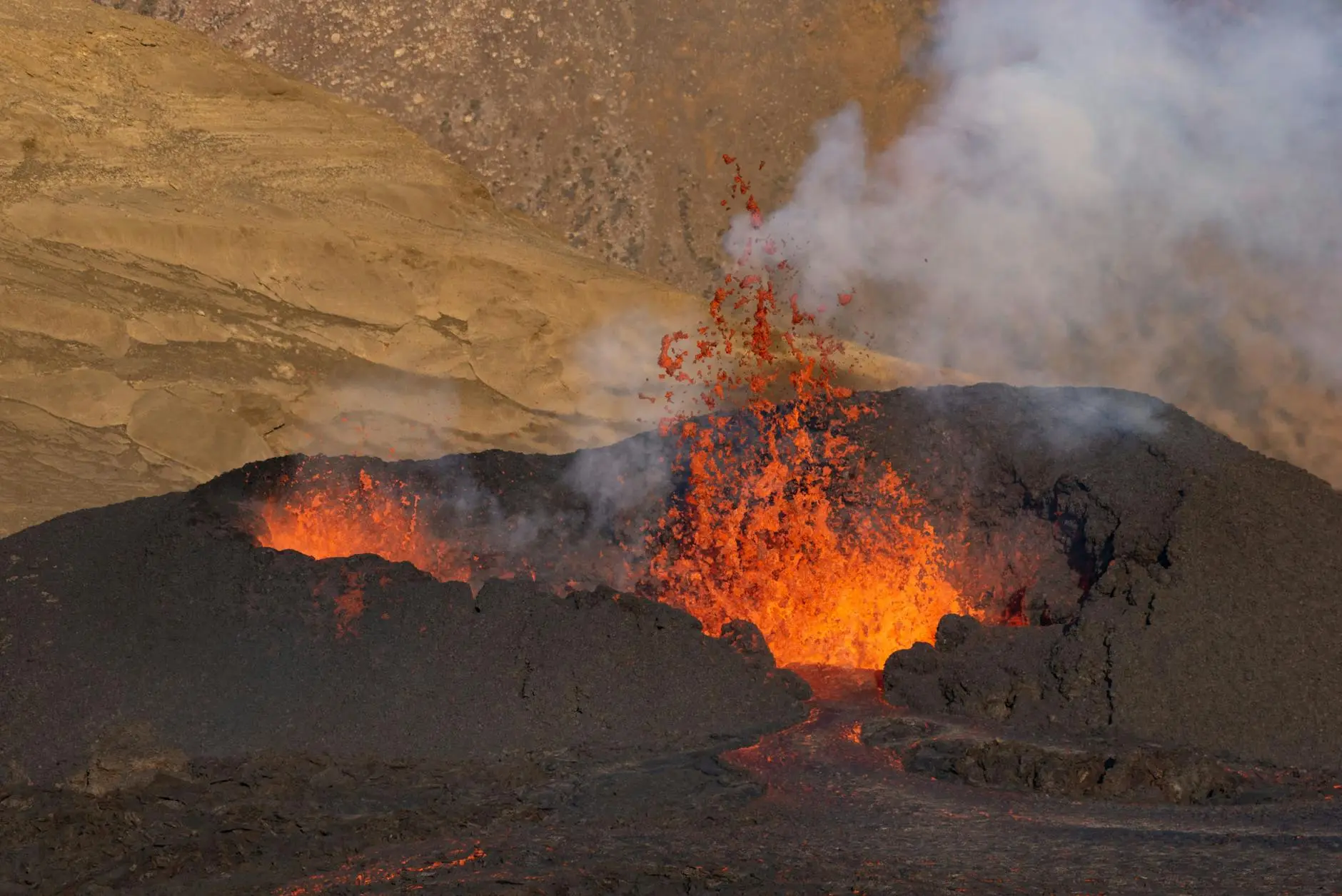
Scientists have made a groundbreaking discovery that could revolutionize volcano eruption prediction, potentially saving thousands of lives worldwide. A research team has developed a simple new "Jerk" signal detector that can warn of volcanic eruptions hours before they happen, representing a major advancement in volcano monitoring technology[^1]. This breakthrough comes after more than a decade of testing at the Piton de la Fournaise volcano on La Réunion, an island in the Indian Ocean that has experienced numerous eruptions. The volcano eruption prediction system represents a new era in how communities near active volcanoes can prepare for disaster.
The new detection method for volcano eruption prediction, tested for more than a decade at the Piton de la Fournaise volcano, successfully predicted 92% of eruptions between 2014 and 2023, sometimes giving up to eight hours of warning[^2]. This remarkable accuracy rate could give evacuation teams precious time to evacuate nearby communities and save lives. The research was conducted by analyzing extensive datasets from previous eruptions of the volcano, allowing scientists to identify subtle patterns that precede volcanic activity. The success of this volcano eruption prediction system has attracted attention from volcanologists worldwide.
How the Jerk Signal Detection Works
The volcano eruption prediction Jerk signal represents a subtle but distinctive change in earthquake patterns that occurs before a volcanic eruption. Scientists first identified these signals more than a decade ago while analyzing extensive datasets from previous eruptions of the Piton de la Fournaise volcano on La Réunion[^3]. Unlike traditional seismic monitoring that focuses on the magnitude and frequency of earthquakes, the volcano eruption prediction Jerk signal detects changes in the rate of acceleration of seismic waves, providing a more reliable indicator of imminent eruption. According to research published in scientific journals, this method represents a significant advance in our ability to forecast volcanic activity.
The volcano eruption prediction detection method works by identifying specific patterns in seismic data that occur when magma begins moving toward the surface. As magma pushes through rock layers, it creates distinctive earthquake patterns that the volcano eruption prediction detector can identify. The system compares current seismic activity against historical patterns that preceded previous eruptions, allowing it to predict with high confidence when an eruption is likely to occur. This approach to volcano eruption prediction has proven remarkably reliable at the test site. According to coverage from ScienceDaily, the method achieved a 92% success rate in predicting eruptions.
Global Implications for Volcanic Safety
The implications of this volcano eruption prediction discovery extend far beyond the Piton de la Fournaise volcano. There are approximately 1,500 potentially active volcanoes worldwide, with about 500 having erupted in recorded history[^4]. Many of these volcanoes are located near populated areas, including some near major cities like Naples (Vesuvius), Jakarta (Mount Merapi), and Quito (Cotopaxi). The ability to predict eruptions hours in advance through improved volcano eruption prediction could give authorities critical time to implement evacuation plans and save countless lives.
Current volcano eruption prediction systems rely primarily on seismic monitoring, gas emissions measurement, and ground deformation tracking. While these methods can detect increased volcanic activity, they often cannot provide precise timing for when an eruption will occur. The addition of volcano eruption prediction Jerk signal detection to existing monitoring systems could create a more comprehensive early warning network that provides both earlier detection and more accurate timing predictions. As noted by researchers, this method represents a paradigm shift in how we approach volcano eruption prediction and volcanic disaster preparedness.
The volcano eruption prediction technology could be particularly valuable in developing countries where volcano monitoring infrastructure is limited. Many of the world's most dangerous volcanoes are in regions with limited resources for sophisticated monitoring equipment. A relatively simple volcano eruption prediction Jerk signal detector could be deployed at these sites to provide basic eruption warning capabilities that currently do not exist. The cost-effectiveness of the volcano eruption prediction system makes it particularly attractive for implementation in resource-constrained environments where it could have the greatest impact on saving lives.
Future research will focus on testing the volcano eruption prediction Jerk detection method at other volcanoes around the world to determine how generalizable the findings are. Different types of volcanoes may produce different precursor signals, and further research will be needed to adapt the volcano eruption prediction detection method for various geological settings. Scientists also plan to integrate volcano eruption prediction with other monitoring techniques to create even more reliable warning systems. The goal is to eventually have a global network of volcano monitoring stations that can provide accurate eruption predictions for communities around the world through improved volcano eruption prediction technology.
The discovery of the volcano eruption prediction Jerk signal represents a triumph of persistent scientific research spanning more than a decade. What started as an observation of unusual seismic patterns has evolved into a potentially life-saving technology that could transform volcanic disaster preparedness worldwide. As climate change increases volcanic activity in some regions and population growth puts more people at risk near volcanoes, this kind of volcano eruption prediction early warning technology becomes increasingly valuable. The simple yet powerful volcano eruption prediction Jerk signal detector reminds us that sometimes the most significant scientific breakthroughs come from paying close attention to subtle details that others might overlook.
Comments 0
No comments yet. Be the first to share your thoughts!
Leave a comment
Share your thoughts. Your email will not be published.