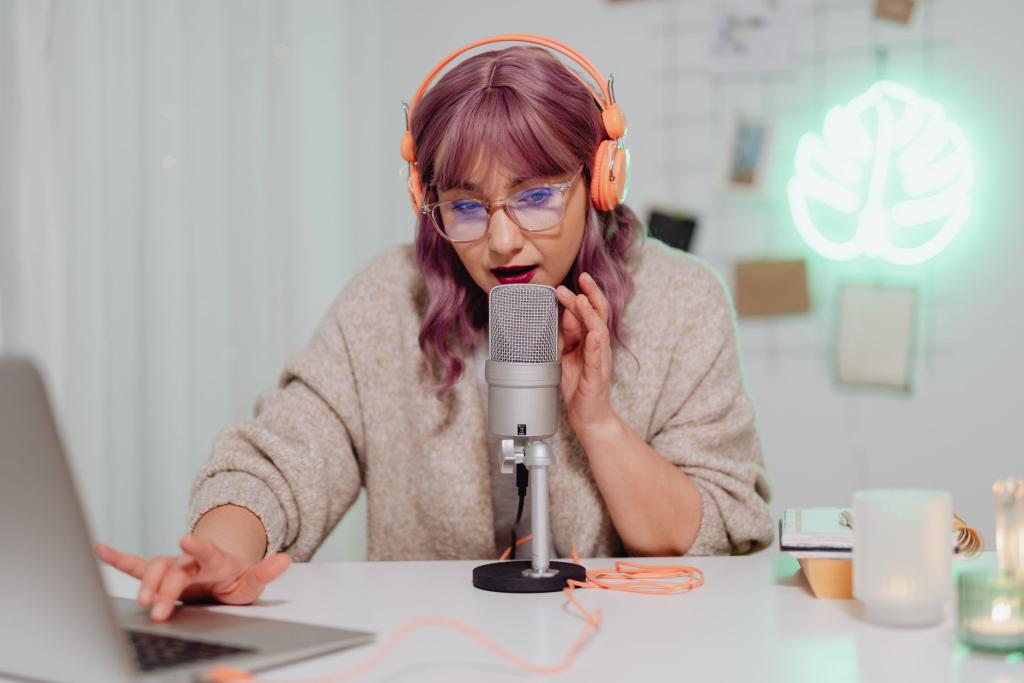
Video podcasts have quietly taken over your feed — and Gen Z led the charge. At the Interactive Advertising Bureau's 2026 Podcast Upfront this month, industry executives delivered a clear message: video podcasts are no longer a bonus feature. They are the main entry point to the medium. "Video's become the front door to podcasting," said IAB Media Center director Jason Adamski, describing video as the primary way younger audiences discover and consume shows. The event capped a year in which podcasting stopped being the scrappy underdog of media and started looking like its future.
Video Podcasts Won the Format War
The numbers tell the story. Research from Cumulus Media and Signal Hill Insights, cited by Adamski at the event, found that 49 percent of podcast consumers watched video versions of shows in 2026 — up from just 30 percent four years ago. Among Gen Z listeners, 37 percent now consume podcasts via video more often than audio alone. Inside Radio reported the figures alongside the bureau's release of its new "Podcast Continue to Evolve" framework, a set of measurement standards for multiplatform delivery that is meant to bring order to a fragmented landscape.
The audience was already there. The bureau says digital audio now reaches 220 million people every week in the United States and accounts for 87 minutes of daily consumption — roughly matching the time Americans spend with social media. Edison Research's Infinite Dial 2026 pegged monthly podcast listening at 167 million Americans, or 58 percent of the population aged 12 and up. A Libsyn roundup of 2026 statistics, drawing on Edison, the IAB and the Reuters Institute, put the number of active shows at roughly 478,000 — podcasts that released at least one new episode in the last 90 days. The crowd is enormous, the catalog is bottomless, and video podcasts increasingly are where it all happens.
The Money Is Still Catching Up
Here is the odd part: advertisers have been slow to follow the ears and eyes. Audio now represents 16 percent of all media time in the U.S. but collects just 2 percent of advertising spending, according to the bureau. Podcasting's own slice is even starker — nearly 5 percent of digital media time against less than 1 percent of digital ad dollars. "The channel broadens before it scales, and right now, podcasting is broadening," Adamski said, pointing to a buying infrastructure that still leaves smaller and independent shows outside the advertising marketplace.
The gap is closing fast, though. Podcast ad revenue jumped 17.6 percent in 2025 to nearly $3 billion — a pace 27 percent faster than digital advertising overall. The top 10 podcast advertisers spent $130 million in the first quarter alone, and 1,300 brands bought podcast ads for the first time last year. The IAB outlook for 2026 projects podcasts will grow another 8.7 percent this year, comfortably ahead of the 3.6 percent forecast for the rest of digital audio. Politics is pouring fuel on the fire: TheWrap reported that spending on political podcast ads leapt 42 percent in the first half of 2026, citing Magellan AI estimates, on the way to a projected record political-ad cycle. For creators, the message is that the money is moving — it just has not finished arriving.
What Video Podcasts Mean for New Creators
If you have ever thought about starting a show, the rules have changed. A microphone and a quiet room are no longer the full toolkit; video-first formats, discoverable on YouTube and social feeds, are how new listeners find you. IAB chief executive David Cohen urged brands not to overlook what makes the medium work at any size: "Podcasting has always had another asset that is harder to quantify and incredibly difficult to replicate, and that is relationships." Repeated listening turns audiences into communities, he argued — a dynamic that gives even small creators an advantage no algorithm can manufacture.
Artificial intelligence is quietly reshaping the production side. A Descript survey cited by Adamski found that nearly two-thirds of podcasters already use generative AI for editing, transcription, chapter summaries and clip creation. "AI is for the workflow, not for the microphone," Adamski said — with translation flagged as one plausible exception, and more IAB work on AI disclosure planned for 2027. The counterweight is trust: Edison found that 22 percent of weekly U.S. podcast consumers have already encountered AI-narrated shows, and listener reception remains an open question in a medium built on authentic voices. "Podcasting is growing up," Adamski concluded. "It's more complex than it was five years ago. It's more multi-format, more multi-platform, more multi-everything." For Gen Z creators, that complexity is the opportunity — the barrier to entry is a camera you already own, and the audience is already watching.
Want to go deeper on where the medium is headed? Follow the industry's evolving measurement standards and the full 2026 outlook — and keep up with the beat on the Podcasts topic page. The AI industry itself is hitting growing pains of its own, as covered in OpenAI Model Delay Signals an Industry-Wide Safety Slowdown.
Sources for this story include Inside Radio's coverage of the IAB 2026 Podcast Upfront, Libsyn's 2026 podcast statistics roundup and TheWrap's analysis of political podcast ad spending.
Comments 0
No comments yet. Be the first to share your thoughts!
Leave a comment
Share your thoughts. Your email will not be published.