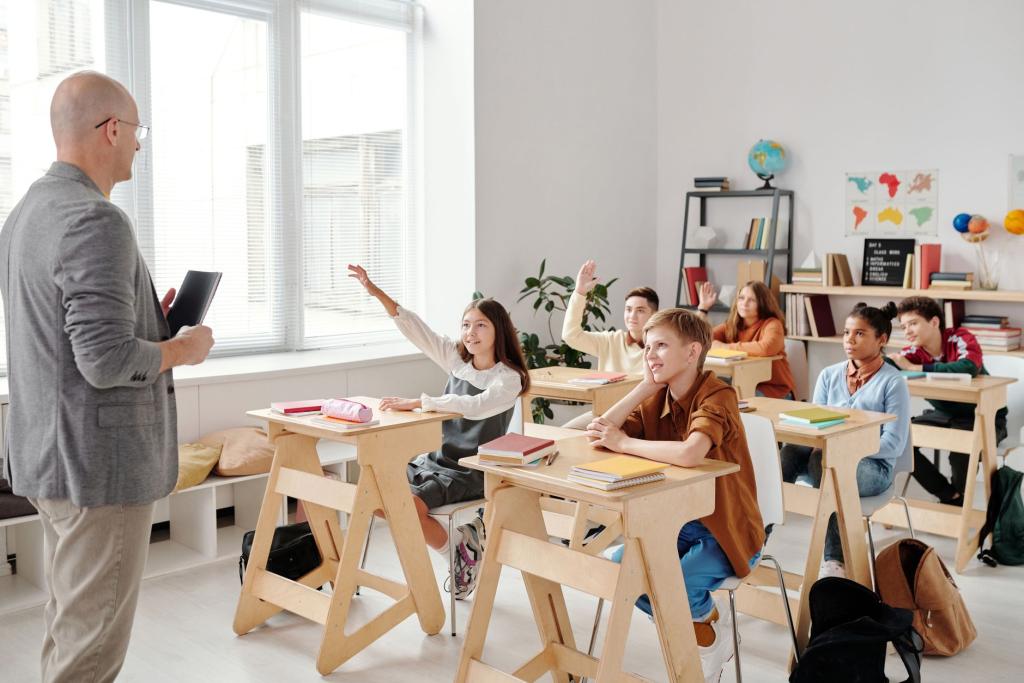
New York City just did the thing every tech optimist said would be a disaster. Mayor Zohran Mamdani announced a one-year moratorium on student-facing generative AI in public schools from 2-K through 8th grade, a policy affecting roughly 600,000 kids. Schools will also halt the use of about 40 educational AI tools currently in classrooms, according to Reuters' September 2 report.
I will say the quiet part out loud: the NYC AI school ban is good news. While the tech world writes obituaries for these kids' futures, the country's largest school district looked at the industry's sales pitch and said no thanks, at least for a year.
Mamdani's case for the pause is simple enough to sound naive. "Children need teachers and human connection in order to learn and grow," he said at the announcement. "They need to develop skills alongside their peers, build relationships with educators and wrestle with tough problems on their own." That this sounds radical tells you how far the default has shifted. Learning includes the wrestling. A third grader who has a chatbot finish her paragraph did not learn to write. She learned to delegate. That is an excellent skill for a middle manager and a terrible foundation for an eight-year-old.
"Inevitable" is a sales pitch, not a fact
The line from the announcement I keep returning to is this one: "The tech industry wants us to believe that A.I.-powered early education is not only inevitable, but necessary. We do not see it that way." Inevitable is what you say when you would rather people not ask whether something is actually good. New York spending a year asking whether it is good is exactly the right move.
It helps that this is a pause, not a bonfire. High school students still get twice-yearly AI literacy lessons covering bias, ethics, and critical thinking, and some classrooms will run closely supervised pilot programs. Teachers keep their AI for lesson planning and admin work. There are carve-outs for assistive technology, multilingual learners, and computer science students, as Engadget reported. The one thing banned at every grade level is companion chatbots, which is the smartest line in the whole policy. A homework helper and an AI "friend" that never gets tired of you are different products with different risks, and GenZ NewZ has already asked whether AI relationships are really the problem. For kids, the city decided the bots can wait.
The adults are the ones panicking
Much of the outrage about this ban is not really about the kids. It is about grown-ups who can no longer picture learning without the shortcut. The workforce conversation is real: a Deloitte survey found 63% of employees now use AI at work, and a third of them hide it. But a 30-year-old drafting emails with AI and a second grader who never learns to build a sentence on her own are not the same situation. Foundations come first, automation later. You cannot outsource thinking you never learned to do.
The screen-time rules are the quietest part of the NYC AI school ban, and they deserve more attention than they got. The city capped daily screen time at 30 minutes for grades 3-5 and 45 minutes for grades 6-8, with restricted one-to-one device time for the youngest students. Enforcement will be messy, but a school district formally admitting that a full day of screen time might not count as education was overdue years ago.
And it is temporary. A coalition of educators, parents, experts, and elected officials will study the effects over the year and issue recommendations in April 2027. If the data shows kids are falling behind without the tools, the policy changes. That is how regulation is supposed to work: experiment, measure, adjust. It beats the usual pattern of deploying first and studying the damage a decade later.
One year, one district, 600,000 kids get to be bad at things in private before the algorithm starts grading them. They get actual teachers, actual classmates, and the old-fashioned experience of sitting with a hard problem that has no instant answer. Nobody is saying these kids will never touch AI. The bet is just that they will be better at it once they know how to think without it. That used to be called school.
Comments 0
No comments yet. Be the first to share your thoughts!
Leave a comment
Share your thoughts. Your email will not be published.