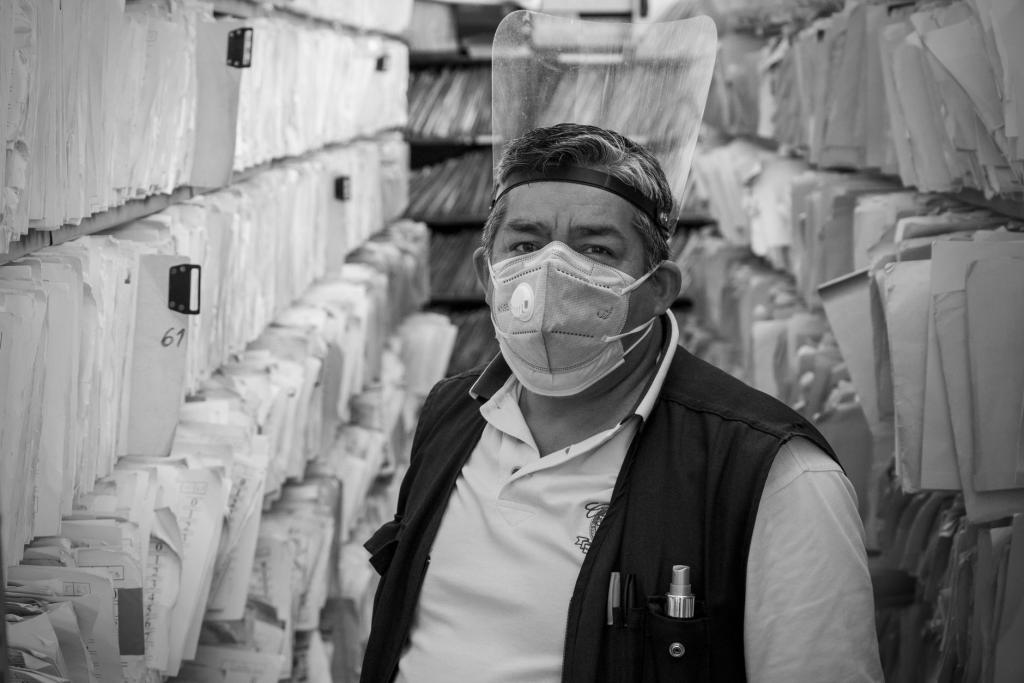
The scientists Washington put in charge of studying UFOs are already knocking on the archive doors. Members of the UAP Science Advisory Council have filed more than 50 formal UAP declassification requests to pry government records on unidentified anomalous phenomena loose from the archives, according to one of the council's physicists.
Matthew Szydagis, an associate professor of physics at the University at Albany whose research covers dark matter detection and particle detectors, disclosed the figure during an interview with journalist Ross Coulthart published September 22 on NewsNation's Reality Check. The episode's description states that Szydagis described what the council can and cannot do without security clearances, including the more than 50 declassification requests its members have already filed, and named the Varginha UFO case as the one he most wants disclosed.
The council itself is a recent creation. Earlier this year, Harvard astrophysicist Avi Loeb said he had been asked to assemble the advisory group after discussions involving the White House, the Pentagon's All-domain Anomaly Resolution Office, the Office of the Director of National Intelligence, the FBI and other parts of the intelligence community. Loeb listed Szydagis as responsible for instrumentation and data collection, alongside researchers covering statistics, artificial intelligence, biology, psychology, oceanography and materials science.
The council's paper chase lands in the middle of a busy season for UFO disclosure. Washington has been feeding the public archive in batches, from the sixth batch of Pentagon UAP files released in September to UFO whistleblowers asking the president to waive their NDAs. The scientists now want named files, not just more tranches.
That is a lot of paper to ask for from a panel that does not hold the keys to the vault. Szydagis told Coulthart that council scientists work without the security clearances that would let classified UAP files be placed directly in front of them. Filing declassification requests is one of the few routes available to move potentially useful records out of classified holdings and into material scientists can examine, compare and, where permitted, discuss in public.
The case they want opened most: Varginha
Asked which file he would open first, Szydagis named the Varginha incident. The case dates to January 1996, when reports from Varginha, Brazil, described an unusual object, military activity and witnesses who said they encountered strange beings. Three decades of competing explanations and disputed testimony have followed, and the episode has become a fixture of UFO conspiracies in Brazil. None of the extraordinary interpretations has been backed by publicly available physical evidence, which is exactly why a scientist would want the paperwork first. Naming Varginha is not an endorsement of the strangest versions of the story. It is a request to see the evidence.
The request makes sense for a physicist who has tested alleged UAP material and watched it come back ordinary. In the same interview, Szydagis described his lab examination of a sample connected to the long-running "Art's Parts" story, which was entrusted to him by Tom DeLonge and Hal Puthoff. He found millimeter-scale holes that point toward a human manufacturing origin. He also said the harassment that followed his testing came not from debunkers but from people who want the sample to be alien, and that it has been worse than anything skeptics have sent him.
Why the paper chase matters more than the sightings
A declassification request is not evidence that a document hides anything strange. The files the council wants could turn out to describe conventional aircraft, drones, balloons, intelligence platforms, sensor errors or incomplete observations. In a September 24 report, Above The Norm News pointed out that declassification cuts both ways: it can expose overlooked anomalies, but it can also hand scientists the sensor data and flight records needed to finally close cases that stayed mysterious only because nobody had the full file.
There is a caveat worth keeping in mind. A standalone federal webpage setting out the council's structure, powers and full record of activity has not been located, so the figure of 50-plus requests and the details of the council's mandate rest on what the scientists involved have said publicly unless agencies release documentation of their own. The council's stated remit, as described in interviews, is to advise on anomalous signals using open, unclassified information and to brief a governing board that includes agency representatives.
Still, the shift is real. For years, the public argument about UFOs circled the same demand: release everything. What the scientists are doing now is different. They are naming specific records, filing formal requests and testing the material that already exists. Whether those 50 requests turn up extraordinary evidence, ordinary explanations or pages of black redaction marks, the next phase of the UFO conversation looks like it will be fought in the archives, not in the skies.
Comments 0
No comments yet. Be the first to share your thoughts!
Leave a comment
Share your thoughts. Your email will not be published.