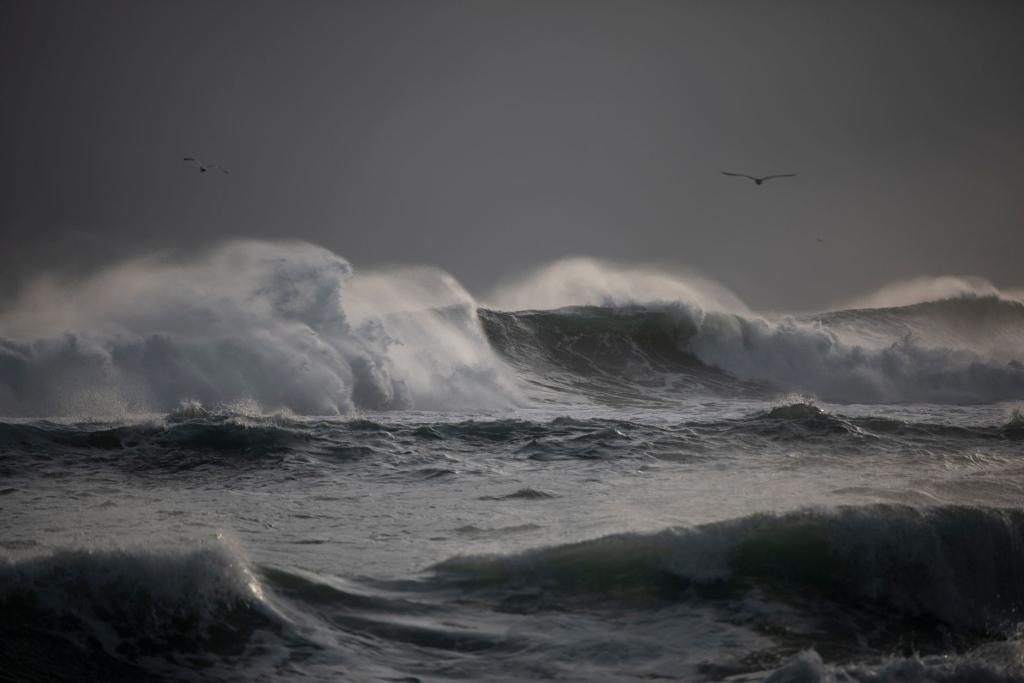
A pair of named storms struck northern Europe within a day of each other, killing two men in Britain, cutting power to a large share of homes in the affected regions, and forcing a wide clean-up that continued into Monday. The twin storms arrived so close together that repair crews in several areas could not safely reach damaged lines until the winds eased, according to the Energy Networks Association.
Storm Austen reached north-west France and south-west England on Friday, and Storm Boelo followed across Scotland, northern England and Northern Ireland over the weekend. The Met Office recorded a gust of 85 miles per hour at Machrihanish in Argyll and Bute, with gusts of 84 miles per hour at Stornoway in the Outer Hebrides and at Capel Curig in north Wales, according to reports of its readings.
Police Scotland said a man aged 60 died after a tree fell on a minor road at Mid Kelton, near Castle Douglas in Dumfries and Galloway, late on Sunday morning. In north London, a man in his twenties died when a tree fell on to a moving car in Dollis Road, near Finchley, on Sunday afternoon, according to the Metropolitan Police. A pair of women were taken to hospital after another tree fell in Aberfeldy, Perth and Kinross, shortly before one o'clock on Sunday afternoon.
First Minister John Swinney expressed condolences over both deaths, and the Scottish Government's resilience room met on Sunday to assess the response. Shirley-Anne Somerville, the Scottish social justice and housing secretary, urged people to check official sources before travelling and warned that travel disruption was likely to continue.
Power cuts and the clean-up
Across both storms, more than eight hundred thousand properties in Britain lost power at some stage, according to the Energy Networks Association, which represents network operators in Britain and Ireland. By Sunday evening, more than ninety thousand properties remained without electricity. Engineers restored power to most affected customers over the weekend, the association said, but the short gap between the storms meant that work in exposed areas had to wait for safer conditions.
That delay was a central problem for the clean-up. Lawrence Slade, chief executive of the association, explained that Boelo arrived so soon after Austen that winds stayed high for an extended period, leaving little time for crews to replace poles and repair wires. In Scotland, around twenty-five thousand customers of Scottish and Southern Electricity Networks remained without power on Monday morning, according to reports of company figures, and dozens of schools stayed closed because of damage and safety checks.
Network Rail said most train services would resume as normal on Monday, while passengers were advised to check journeys before setting off. ScotRail said the vast majority of its services were running on Monday morning. On the roads, the A78 Shore Road between Skelmorlie and Largs in North Ayrshire stayed closed in both directions after damage to the carriageway and sea wall, and several ferry services faced disruption.
Disruption beyond Britain
The storms also cut power and disrupted transport in France, Germany, Belgium and the Netherlands, according to Agence France-Presse. In France, tens of thousands of homes remained without power at midday on Sunday, mainly in Normandy and Brittany, after Austen had cut power to French homes on Friday. French utility Enedis had reported widespread outages at the peak of that earlier storm, with Brittany and Normandy among the worst affected areas.
In Germany, Austen cut power to at least ten thousand homes in and around Freiburg-Breisgau on Sunday. The town's main hospital limited its service to emergency cases because the blackout also cut the mobile phone network, according to reports of local accounts. Falling trees injured four people in Brussels on Saturday, and a runner in a marathon in Lille in northern France was injured when a tree was felled by strong winds, according to Agence France-Presse.
Air travel was disrupted across northern Europe. Agence France-Presse counted flights cancelled on Amsterdam Schiphol airport's website, and airports in Belfast and Dublin also reported cancellations over the weekend. In Northern Ireland, the Department for Infrastructure reported hundreds of storm-related incidents involving flooding and fallen trees, and the Foyle Bridge in Londonderry closed on Saturday before reopening on Sunday evening.
What forecasters expect next
Flood risk remained a concern after the storms passed. The Environment Agency issued warnings that flooding was expected in parts of England, alongside alerts that flooding was possible in other areas, while the Scottish Environment Protection Agency and Natural Resources Wales also had warnings and alerts in place. Emergency services were called on Sunday evening to a flooded care home on Sidney Street in Saltcoats, North Ayrshire, and Police Scotland confirmed that all residents were accounted for.
Met Office deputy chief forecaster Steven Keates said: "While the start of this week will be notably wet and windy, high pressure is expected to bring a quieter spell of weather later in the week." He added that high pressure building from Wednesday should ease the winds and bring a quieter and largely drier end to the week for many areas, although some rain was still possible in the north and west. A yellow wind warning remained in place for parts of Scotland into Tuesday, covering areas north of Peebles and west of Lockerbie.
For households still without power, the immediate task was restoration rather than any wider assessment of the damage. Engineers were working through lists of damaged poles, fallen cables and blocked roads, and local authorities were checking schools, care homes and transport routes before reopening them. Readers can follow further updates on the Climate Emergency topic page and on the GenZ NewZ homepage, and the original reporting is available from Agence France-Presse via UAE News Network and the Glasgow Times.
Comments 0
No comments yet. Be the first to share your thoughts!
Leave a comment
Share your thoughts. Your email will not be published.