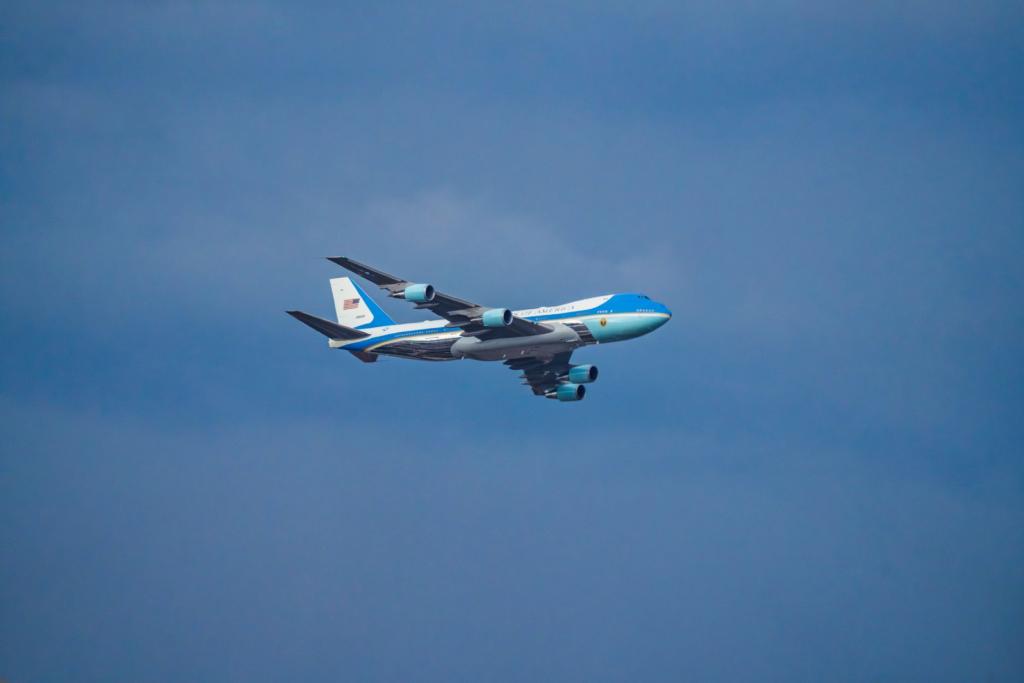
United States President Donald Trump plans to personally greet Chinese President Xi Jinping on the tarmac at Joint Base Andrews when the Chinese leader arrives in the Washington area next week, a senior United States official told reporters on Friday, according to Reuters. The unusual welcome gesture signals how much weight Washington is placing on the Trump-Xi summit September 24, the first formal meeting of the two leaders on American soil in more than a decade.
The Trump-Xi summit September 24 at the White House will be the second face-to-face meeting between Trump and Xi this year. Their first came in Beijing on May 14 and 15, when Trump became the first sitting United States president to visit China in nine years. The return leg carries extra protocol weight: the visit has been described as a state visit, with a formal welcome ceremony and a state dinner on the program. That would make it the first Chinese state visit to the United States since 2015, when Xi was received by then-President Barack Obama. As of Friday, Beijing had not publicly confirmed the exact details of Xi's travel, which is standard practice for the Chinese government ahead of high-level presidential trips.
Preparations have been building for weeks. Treasury Secretary Scott Bessent is scheduled to meet Chinese Vice Premier He Lifeng in New York over the weekend to clear the way for the leaders. That session follows a July 22 meeting between Secretary of State Marco Rubio and Chinese Foreign Minister Wang Yi on the sidelines of the ASEAN foreign ministers' gathering in Manila, where both sides agreed to lay the groundwork for the visit. The White House has been making physical preparations as well, including work on a new helipad and rehearsals for the ceremonial welcome.
Trade is the central fight
Tariffs sit at the heart of the agenda. According to SFG Media, citing Reuters and AP reporting, the two sides are discussing a package of reciprocal tariff reductions worth about $30 billion that could restore some energy shipments currently constrained by tariffs. The talks come with a hard deadline: the current trade truce between the two countries expires on November 10, and negotiators are racing to shape what replaces it.
Rare-earth metals remain Beijing's strongest card. China holds a dominant position in supplying the minerals that American industry depends on, and in early September some Chinese suppliers suspended shipments to American customers, citing geopolitical risks. The Trump administration has made uninterrupted access to those materials a prerequisite for progress. According to Zamin.uz, in talks held in late July, Bessent and United States Trade Representative Jamieson Greer told their Chinese counterparts that Washington expected Beijing to fulfill all of its commitments on rare-earth supplies.
Agricultural purchases are the other traditional bargaining chip on the table. Beijing has used promises of American farm buys as leverage in past rounds, and officials are now discussing specific purchase volumes alongside export controls and energy trade. According to the two sides are also working on a framework for a bilateral Board of Trade, with discussions focused on easing tensions in less sensitive areas of the economic relationship.
The commercial stakes are visible in the guest list taking shape around the summit. According to SFG Media, Xi is preparing to bring executives from companies including BYD, CATL, Xiaomi, Gotion, Hisense and the Bank of China to Washington, some of which face United States restrictions or close regulatory scrutiny. Nvidia chief executive Jensen Huang is expected to attend the state dinner on September 24, underlining how central the technology contest has become to the relationship.
Beyond trade: AI, Taiwan and Iran
Artificial intelligence is expected to be a major topic in its own right as the United States and China race for technological leadership. Bessent has said Washington is open to discussing shared AI risks with Beijing, even as the two countries pursue separate approaches to AI development and regulation. Washington has restricted China's access to some advanced technologies, and those controls are part of what Beijing wants loosened.
Taiwan and Iran sit separately from trade on the agenda, and analysts expect little measurable progress on either. The International Centre for Defence and Security notes that the same issues carried over from the leaders' May summit, including a proposed concept of a "constructive relationship of strategic stability" that Beijing is eager to turn into a working framework. For Europe, the summit carries awkward implications: Ukraine is a priority for neither side, and Washington is unlikely to increase aid to Kyiv as a result of the meeting.
For readers following the wider United States and China story, GenZ NewZ's politics coverage has been tracking the economic and security threads of the relationship throughout 2026.
What success would look like
The clearest measures of the September 24 meeting, according to SFG Media's analysis, come down to four outcomes: whether the two sides extend the trade truce beyond the November 10 deadline, remove some tariffs, agree on guarantees for rare-earth supplies, and settle on specific volumes of agricultural purchases. Anything short of movement on those fronts would leave the relationship roughly where it is now: managed, but fragile.
With midterm elections approaching in November, Trump is looking for quick economic wins he can show American voters, while Xi arrives seeking a more stable long-term framework and further concessions on issues like Taiwan. Both leaders have reasons to call the summit a success. The real test will be whether the handshake at Andrews leads to signatures in the weeks that follow.
Comments 0
No comments yet. Be the first to share your thoughts!
Leave a comment
Share your thoughts. Your email will not be published.