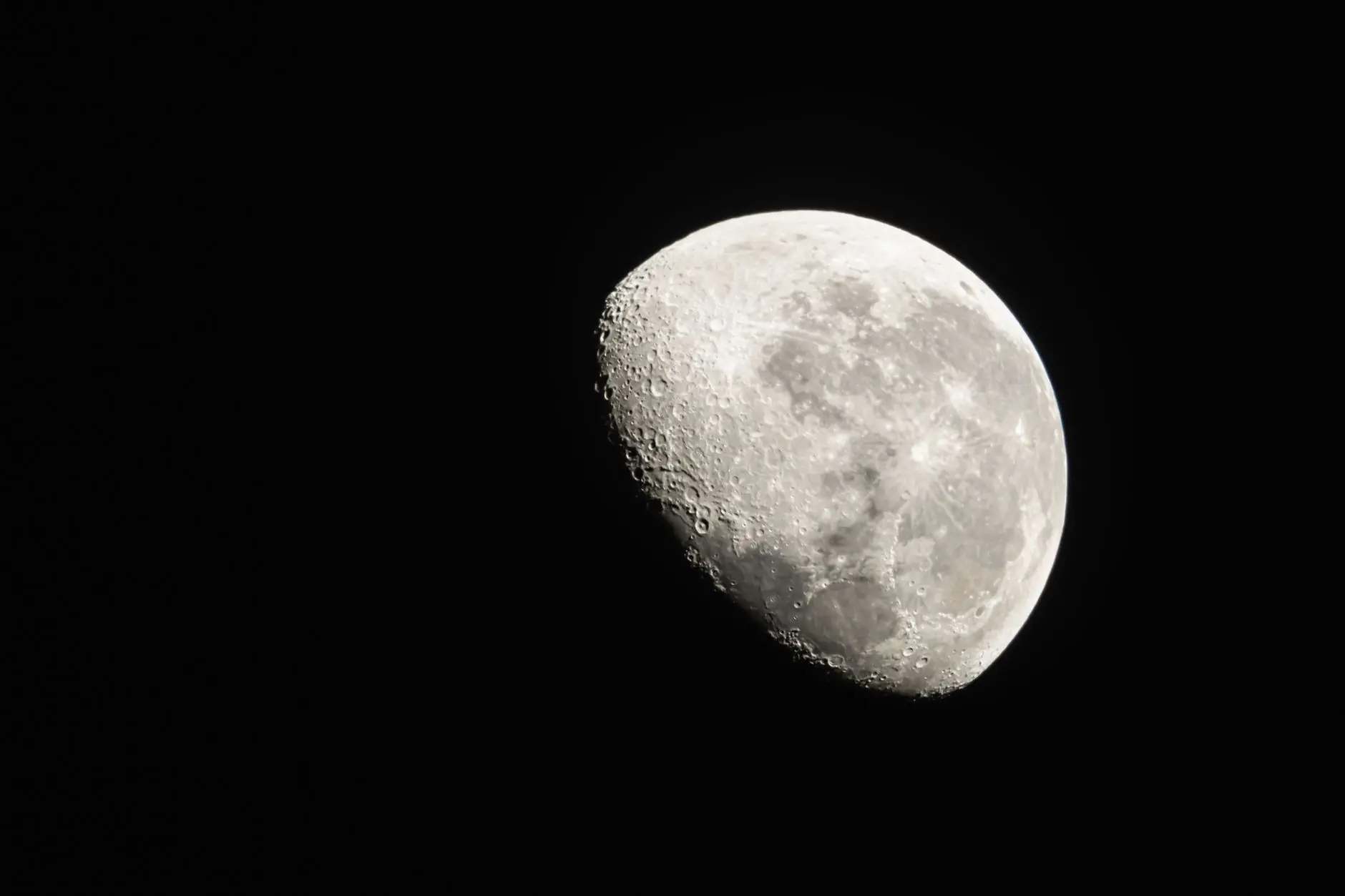
More science coverage. For the first time in more than fifty years, humans left low Earth orbit and went around the Moon. The crew of NASA's Artemis II mission, launched in early April 2026, returned to Earth ten days later after a free-return trajectory that took them past the far side of the Moon without ever entering lunar orbit.
For most of the people alive today, this was the first crewed lunar mission they had ever witnessed. Only about one-quarter of the global population was old enough to remember Apollo 17 in 1972, the last time astronauts walked on the Moon, according to Wikipedia's summary of the mission en.wikipedia.org.
Artemis II did not land. It was a proving flight for the Orion spacecraft and the Space Launch System rocket. But the cultural impact, and the engineering, were both enormous. NASA coined a new term for what the mission felt like to watch: "Moon joy."
What Actually Happened on the Mission
The mission profile was modeled after Apollo 8 and Apollo 13, two earlier crewed flights that swung around the Moon. The crew launched from Kennedy Space Center, spent about a day testing Orion's systems in Earth orbit, then used a free-return trajectory to swing past the Moon, picking up speed from lunar gravity before slingshotting back to Earth.
Unlike Apollo 8, which entered lunar orbit, Artemis II did not have enough propellant in its European Service Module to both insert into lunar orbit and then depart for the return journey. The mission used the same trick Apollo 13 was forced into after an oxygen tank exploded on the way to the Moon in 1970: rely on the Moon's gravity to bend the spacecraft's path back toward Earth.
The crew was honored during President Trump's America 250 speech on the National Mall on July 4, 2026, alongside Apollo 17 astronaut Harrison Schmitt, who is the most recent living person to have walked on the Moon.
What We Are Learning From the Mission
Artemis II returned data that NASA had been waiting more than a decade to collect.
The first is how the Orion spacecraft behaves in deep space. Orion is the only crewed vehicle ever designed for operations beyond low Earth orbit, where the radiation environment is harsher and the thermal swings are larger. The mission confirmed that Orion's heat shield performed as designed during the high-speed reentry into Earth's atmosphere.
The second is how the Deep Space Network, the system of giant radio antennas NASA uses to communicate with spacecraft beyond Earth orbit, handles a crewed mission. The mission pushed the network to its limits and surfaced several bottlenecks that NASA is now working to address.
The third is the human side. Crew interviews and live broadcasts during the flight became a cultural moment. According to a quote carried by Wikipedia, NASA's Associate Administrator Amit Kshatriya said: "If you can't take love to the stars, then what are we doing? That's why we send humans instead of robots sometimes, that's why we have that firsthand witness." More science coverage
NASA released the wake-up songs the crew listened to during the flight as an official Spotify playlist, the first time the agency has done that. Several of the songs saw huge streaming spikes. A Young and Sick track called "Sleepyhead" jumped more than 2,000 percent in streams in the days after the crew picked it.
What Comes Next
The next mission, Artemis III, is the landing. NASA has said it is targeting no earlier than 2027 for the first crewed lunar landing since 1972, though the schedule has slipped multiple times. The mission will use a Starship-derived lander from SpaceX to take two astronauts from Orion down to the lunar surface near the south pole.
The south pole is the focus because it is where scientists have detected water ice in permanently shadowed craters. Water ice is the foundation of any long-term lunar presence, because it can be broken into hydrogen and oxygen for rocket fuel and for life support.
Beyond Artemis III, NASA and its international partners are planning a small lunar space station called Gateway that would orbit the Moon and serve as a waypoint for crews heading down to the surface. The Canadian Space Agency has committed to building Canadarm3, a robotic arm for the station. The European Space Agency is providing the ESPRIT refueling and communications module. The Japanese Aerospace Exploration Agency is contributing life support and logistics.
Why This Matters for Gen Z
For most of Gen Z's life, crewed spaceflight has meant SpaceX launches, billionaire space tourism, and the steady drumbeat of commercial activity in low Earth orbit. Artemis II changed the frame. It put humans back on a path that only nine countries' citizens had ever been on, and it did it in a way that millions of people followed live.
The next decade in space is going to be defined by what happens after Artemis II. The south pole of the Moon is going to become the most contested real estate off Earth, with the United States, China, India, and a handful of private companies all working to build a presence there. The economics of launching and operating in deep space are finally starting to bend in a way that makes long-duration activity plausible, not just one-off stunts.
The mission also brought back the word "exploration" in a way that has not been true for a generation. The same word that applied to the Apollo astronauts in 1968 now applies to the Artemis II crew in 2026. For Gen Z, that is a rare chance to remember what it feels like to watch humans do something that no one alive has done before.
Comments 0
No comments yet. Be the first to share your thoughts!
Leave a comment
Share your thoughts. Your email will not be published.