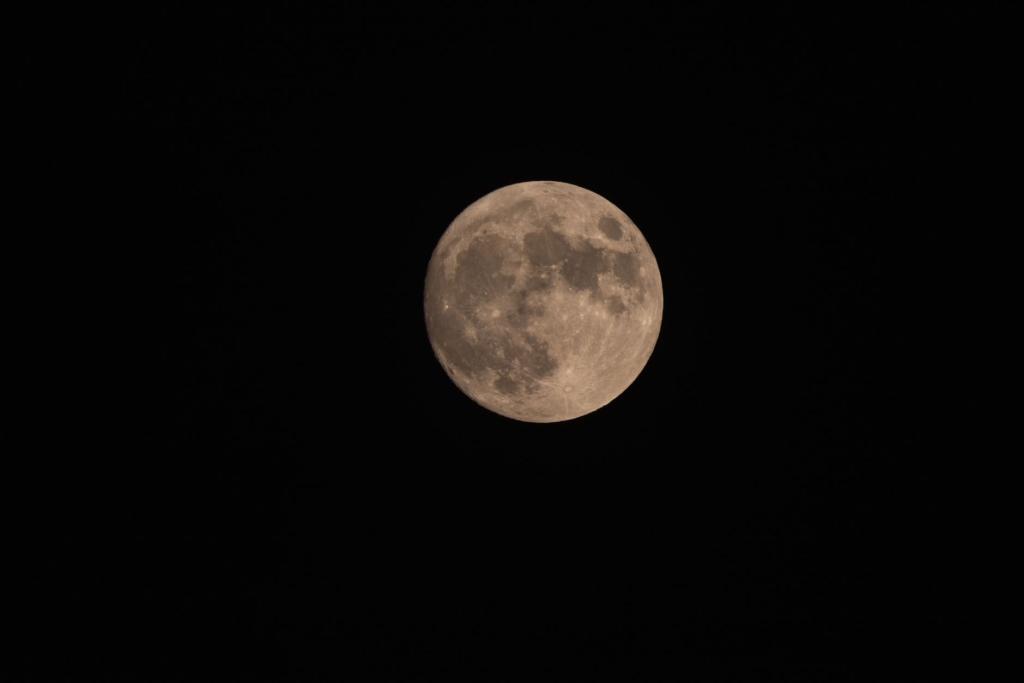
They were everywhere: Facebook pages, TikTok clips, and forwarded posts promising that September 29, 2026 would bring a "two-moon night," with Earth's familiar Moon sharing the sky alongside a second one. According to the posts, a small asteroid called 2025 PN7 would swing close enough to be seen with the naked eye. It is the latest chapter in the two-moon night hoax, and it fell apart the same day it peaked.
There was never any second moon to look at. A fact check by GoGoSpoiler gave the claim a false rating, reporting that asteroid 2025 PN7 is invisible to the naked eye, to binoculars, and even to standard amateur telescopes. The site fielded reader inquiries from people who wanted to know whether the viral graphics were real. They were not.
How the rumor spread
One widely shared Facebook graphic announced "A RARE 'TWO-MOON' NIGHT IS COMING," telling readers that Earth's Moon would "share the night sky" with asteroid 2025 PN7, described as a temporary quasi-moon. Others showed the real Moon next to a smaller brownish duplicate. The wording was carefully hedged in places ("Earth may seem to have two moons in the sky"), which let the posts feel educational while implying something spectacular.
That hedging did the real work of the two-moon night hoax: readers who asked what they would actually see on the night itself got no useful answer, because there was nothing to see. NASA's official September skywatching guide made no mention of any two-moon event among its monthly highlights, according to the fact check. A spectacle that real would have been headline news at every observatory on Earth.
The posts leaned on rendered graphics, not telescope images: the fact check documented imagery of Earth's Moon beside a smaller brownish duplicate. There was a reason for that choice. A real photograph of 2025 PN7's position would have shown empty sky, and empty sky does not get shared. The two-moon night hoax needed something printable, and a graphic did the job.
What 2025 PN7 actually is
The grain of truth behind the two-moon night hoax is a real rock. Astronomers found 2025 PN7 on August 2, 2025, at the Pan-STARRS observatory at the University of Hawaii, and researchers Carlos and Raul de la Fuente Marcos described its orbit in a study published through the American Astronomical Society, as the Beacon Journal reported. It is roughly the length of a city bus, and it circles the Sun on a path that stays in step with Earth's own, which makes it look, from our vantage point, as though it travels alongside us. Scientists call that arrangement a quasi-moon: an asteroid orbiting the Sun, not Earth, that merely appears to keep us company.
The numbers explain why nobody saw a thing. The asteroid sits about four million kilometers away, more than ten times the distance to the Moon, and it glows at around magnitude 26, far beyond what any amateur telescope can pick up. That is also why it went unnoticed for so long: it has apparently been trailing Earth since the 1950s, and its dimness kept it out of sight until Pan-STARRS caught it during a close pass this past summer, the researchers explained.
One in a long line of phantom moons
The confusion has been building for months. Social media posts asking whether Earth had gained a second moon circulated long before the end-of-September date, and each wave repackaged the same real fact, the asteroid's quasi-moon orbit, with fresh certainty. The late-September posts were simply the version with a calendar date attached, which made the two-moon night hoax feel like an event instead of a misunderstanding.
Earth has collected these almost-moons before, and each one has carried its own exaggeration. Asteroid 2024 PT5 drifted by last fall and stayed only a few weeks before leaving; some scientists thought it might be a chip of our own Moon. Kamo'oalewa, another quasi-moon, is the target of China's Tianwen-2 spacecraft, which is scheduled to reach it late next year to collect samples, according to UNILAD. 2025 PN7 is the long-staying member of the family: astronomers expect it to keep its quasi-moon status until it drifts onto a new path later this century.
The appeal of the two-moon night hoax is obvious. Two moons in the sky would be genuinely beautiful, and the real science, a small dark rock keeping time with Earth, is interesting without the embellishment. The hoax endures because each new quasi-moon gives it fresh vocabulary. The debunking, at least, is easy: one Moon, visible; one asteroid, invisible.
Comments 0
No comments yet. Be the first to share your thoughts!
Leave a comment
Share your thoughts. Your email will not be published.