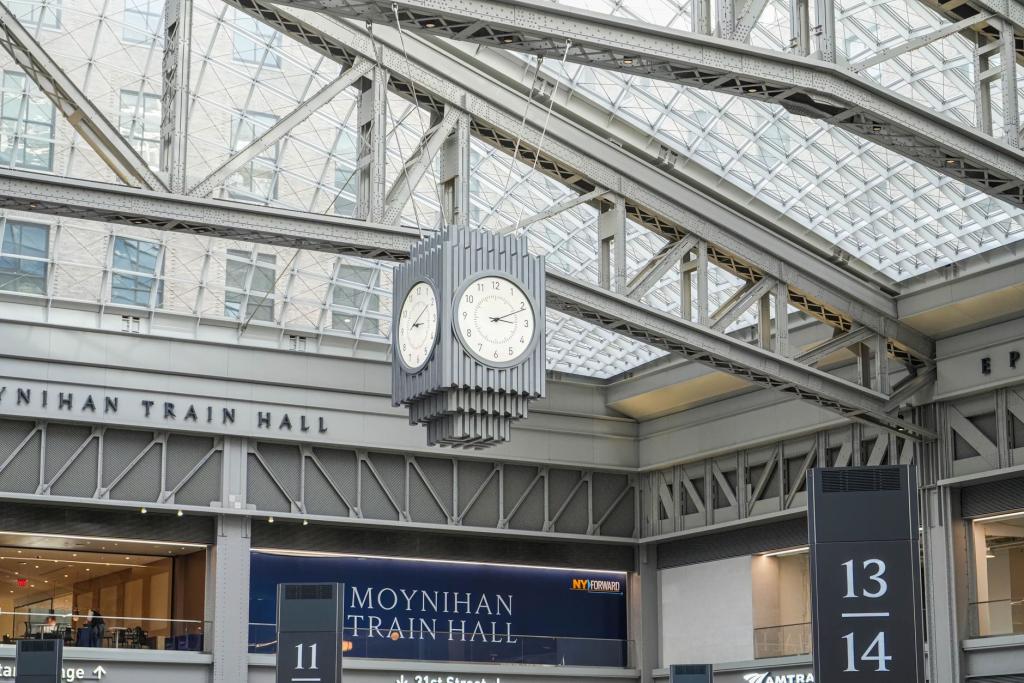
On Thursday, delegates at the 28th General Conference on Weights and Measures in Versailles, France, voted to abolish the leap second, the one-second correction that has kept atomic clocks in step with Earth's unsteady rotation since the early nineteen-seventies. According to Nature, the resolution passed by majority vote and turns Coordinated Universal Time, or UTC, into a continuous scale. The change takes effect on May 20, 2027, World Metrology Day, Scientific American reports.
For most people, the decision changes nothing on the clock. Time zones stay put, the daylight saving ritual stays put, and the phone on the nightstand keeps showing the right time. The difference lives in the machinery underneath: data centers, phone networks, satellite navigation, and power grids, all of which depend on time that flows without sudden jumps. The engineers who keep the internet's clocks synchronized are the real audience for this decision; everyone else can keep taking the correct time for granted.
Why one extra second kept breaking computers
Civil time actually runs on two clocks. One is UTC, set by atomic clocks that tick with the steady vibration of cesium atoms. The other is astronomical time, set by the planet itself, and Earth is a poor timekeeper: its spin speeds up and slows down with the seasons, the tides, and the slosh of its molten core. Earth's rotation is a "lousy" clock, as NIST physicist Jeff Sherman told CNN. To keep the two scales within a second of each other, timekeepers have inserted 27 leap seconds into UTC since 1972, most recently at the end of 2016. Each insertion created a minute with 61 seconds, a quirk software was rarely built to expect. Past leap seconds have disrupted computing systems and online services, and officials warn the risk extends to telecommunications, energy networks, transport, and space systems, as Harava reported.
What finally forced the vote was the prospect of a negative leap second. In recent years Earth has been spinning slightly faster, raising the possibility that timekeepers would have to subtract a second for the first time. No digital system has ever had to handle a minute with 59 seconds, and Nature framed the decision as a bid to avoid a catastrophic negative second. Removing the leap second entirely takes that scenario off the table.
What comes next: the leap hour
The resolution does not sever the link between atomic time and the turning planet. It relaxes the tolerance instead: UTC may now drift up to a full hour from astronomical time before anyone must act. When the gap approaches that size, future generations will decide whether to insert a leap hour, a correction with no scheduled date and no agreed procedure. Scientists estimate it will not be needed for more than a thousand years, effectively handing the problem to a civilization that may measure time very differently. Christian Bizouard, director of the IERS Earth Orientation Center in France, described the move to the Guardian as pushing the decision far into the future. The BIPM says it will keep measuring and publishing the gap between the two scales for astronomers and navigators who still need Earth's exact orientation.
The vote caps three decades of argument. A 2022 resolution from the same body had set 2035 as the target for widening the gap; Thursday's Resolution 5, published in draft by the International Bureau of Weights and Measures, brings the change forward and locks in the details: continuous UTC from World Metrology Day, and a one-hour ceiling on the drift. "This is a historical moment, a decisive step for UTC," said Noël Dimarcq, the metrologist who introduced the resolution, according to Nature. Georgette Macdonald of Canada's National Research Council said the decision "will ensure the continuity and relevance of UTC for centuries to come."
The same Versailles meeting also began work on two longer-term projects: a time standard for the Moon and a new definition of the second itself. For everyone checking a wristwatch, though, the takeaway is simpler. Civil time stays tied to the turning Earth, just more loosely, and the second hand ticks forward without interruption.
Sources: Nature, Scientific American, BIPM draft resolution.
Comments 0
No comments yet. Be the first to share your thoughts!
Leave a comment
Share your thoughts. Your email will not be published.