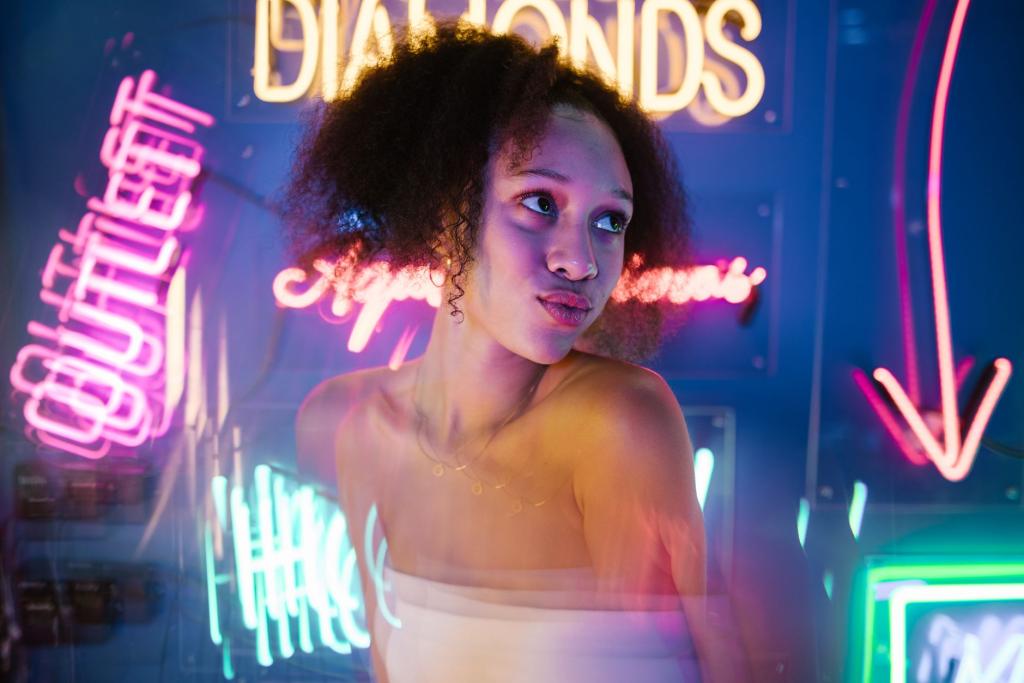
Tilly Norwood has an Instagram audience in the tens of thousands, a film credit, and a year of headlines. She is also the AI Actress Hollywood cannot stop arguing about — and the argument is not really about the technology. It is about consent, compensation, and what a performer actually is in 2026.
The AI Actress Timeline: From the Zurich Reveal to the 2026 Flashpoint
In September 2025, Particle6 founder Eline Van der Velden used the Zurich Film Festival to launch Xicoia, a studio built to generate synthetic performers — and introduced Tilly Norwood as its first star. The pitch was deliberately provocative: talent agencies were already circling the AI Actress. The backlash was instant. That October, SAG-AFTRA condemned synthetic performers, warning signatory producers they "may not use synthetic performers without complying with our contractual obligations, which require notice and bargaining whenever a synthetic performer is going to be used," as reported by Variety. And to be clear, the union said, Tilly Norwood "is not an actor, it's a character generated by a computer program that was trained on the work of countless professional performers — without permission or compensation."
Across the Atlantic, Equity, the UK actors' union, went further. Its audio and new media organizer Shannon Sailing told the BBC: "Tilly is not an actress. She is an AI tool. Or it is an AI tool. That's not a performer." The union's general secretary Paul Fleming told Sky News the creation was "fundamentally disconnected from the work of acting, the craft of acting — but also the soul of a human being," according to the Hollywood Reporter. Sailing raised the core issue behind the rhetoric: the tool is assembled from performers' work, and the union wants to know where that work came from — and whether it was used with consent.
But 2026 handed the AI Actress a second act. Norwood was announced as the star of Misaligned, a feature film built around a synthetic performer, and that September she toured the morning shows — ITV's Good Morning Britain, NBC's Today — before returning to the Zurich Summit on September 26, 2026. There, Van der Velden admitted the creation still had no agent, then reframed it as power: "We don't need it," she said, adding that the company gets "loads of offers" and has declined anything where Tilly would appear "in a traditional film," as reported from the Deadline-moderated session. Particle6, she said, had grown four times over since launch.
Why the AI Actress Debate Is Really About Consent and Compensation
The October 2026 escalation brought Hollywood's biggest names into the fight. Joseph Gordon-Levitt — a co-founder of the Creators Coalition on AI alongside filmmaker Daniel Kwan, Natasha Lyonne, and former Academy president Janet Yang — challenged the classification of Tilly Norwood as an actress, as reported by WiseVoter. The coalition, which more than five hundred artists have backed, holds that the threat is "not from generative AI as a technology, but from the unethical business practices many big AI companies are guilty of" — with transparency, consent, and compensation for training data as its core pillars.
Strip away the press cycles and that is the whole argument in one sentence. A synthetic performer does not sleep, does not unionize, does not collect residuals — yet it performs in a voice, face, and style learned from people who do. SAG-AFTRA's line in the sand, Equity's "tool" label, and the coalition's consent demands all point at the same unanswered question: who gave permission for the training data, and who got paid? If you are an actor, writer, or musician in your twenties trying to build a career on work that can be scraped and recombined, the AI Actress is not an abstraction. She is a preview of the bargaining table you will sit at.
The Counterpoint: a New Paintbrush
Van der Velden has never conceded the premise. She calls the technology a "new paintbrush," insists Norwood is "not a replacement for a human being, but a creative work," and points to the writing, prompting, and direction as the human labor inside the machine. In her telling, the AI Actress is a new medium rather than a cheaper substitute — a tool that lets small studios attempt what once took a cast of hundreds. And the business case keeps getting easier to make: no agent, no traditional film roles, and a company that quadrupled in a year suggests an audience willing to treat the experiment as entertainment.
What This Means for Young Creatives
This is not the first synthetic-media fight, and the comparison is instructive. The 2023 writers' and actors' strikes ended with hard-won guardrails around AI replicas and synthetic performers — the very language SAG-AFTRA is now invoking. Virtual influencers have headlined campaigns for years without collapsing the modeling industry. The difference is the pitch: Xicoia is not selling a brand mascot, it is selling a repertory company. GenZ NewZ has been tracking the public mood on AI in entertainment — the uproar over the Altman film shows audiences are already litigating it title by title.
So here is the take: the AI Actress deserves scrutiny — not because she is fake, but because she is unpriced. Every frame of her performance runs on training data that came from somewhere, and right now "somewhere" means uncompensated human work. The unions and the coalition want Hollywood to price that input before the precedent is set. Van der Velden wants audiences to judge the output on its own terms. Both can be true: a synthetic performer can be a genuine creative experiment and still owe a debt to the performers it learned from. The argument Hollywood cannot stop having is really the invoice nobody wants to write. For more strong opinions on the industry's AI era, see the Hot Takes beat.
Comments 0
No comments yet. Be the first to share your thoughts!
Leave a comment
Share your thoughts. Your email will not be published.