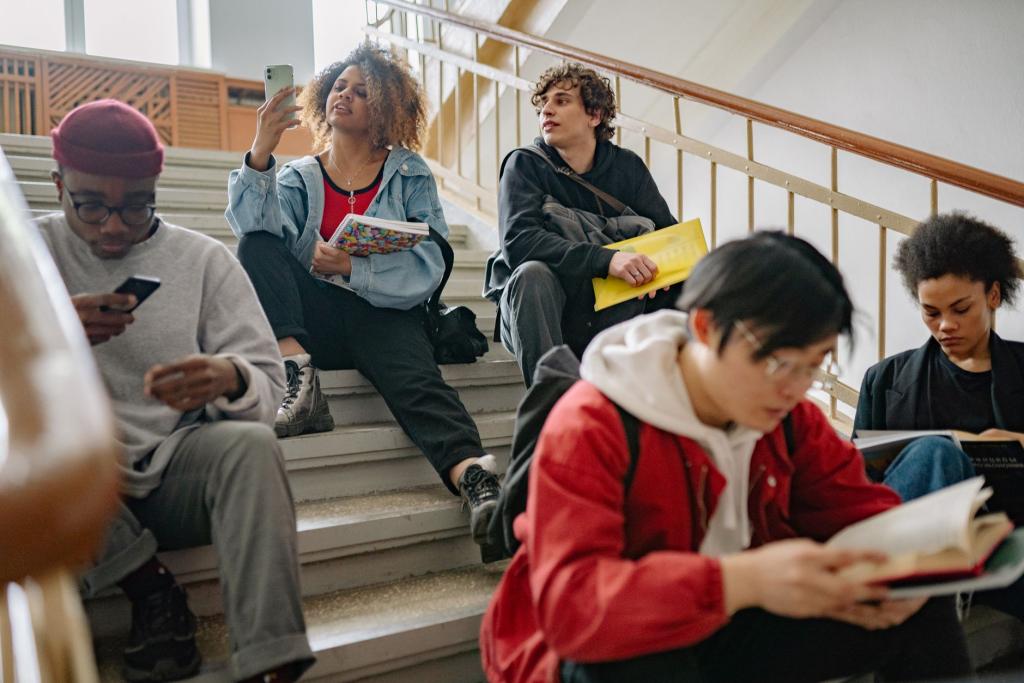
Streamer University 2026 did not take place in an arena, a stadium, or a Las Vegas casino. The biggest live production in streaming history happened on a college campus in Conway, Arkansas, and the cameras were 150 smartphones. Kai Cenat’s Streamer University 2026 ran July 15 through 20 at Hendrix College, put more than 150 creators live at the same time, and pulled a peak of 1.5 million concurrent viewers with 58.3 million total hours watched across six days. That is more than double the inaugural 2025 event, and according to TVU Networks, it is officially the largest live streaming production the medium has ever seen. But the numbers are only half the story. The other half is the technology that made it possible, and what it means for anyone who has ever wanted to stream IRL.
Streamer University 2026: the biggest live streaming production ever
Streamer University is exactly what it sounds like: Kai Cenat gathered a campus worth of creators, from established names to rising streamers, for six days of nonstop programming, all of it broadcast live across Twitch and YouTube. Streamer University 2026 drew 800,000-plus concurrent viewers across both platforms on an average basis, peaked at 1.5 million at once, and racked up 58.3 million hours watched, more than doubling the first event in 2025. Beyond the campus itself, roughly 6,000 separate channels broadcast Streamer University-related content, and clips from the week pulled in hundreds of millions of views across social platforms. No single-channel broadcast could touch that kind of footprint.
What makes Streamer University 2026 a genuine industry moment instead of just a big number is the scale of the production itself. This was not one broadcast that a lot of people watched. It was 150 simultaneous broadcasts, all happening on the same campus, all competing for the same wireless spectrum, each one belonging to a creator whose audience expects the feed to look and sound as good as anything else on their channel. A traditional production at that scale would require a compound of broadcast trucks, miles of cable, and a crew in the hundreds. None of that fits on a college campus, and none of it fits how creators actually work. So the entire thing ran without trucks, without fiber, and without a single cable pull.
Your phone is the broadcast truck
The technical backbone of Streamer University 2026 was almost absurdly simple in concept: give every creator a phone and make that phone good enough to be a broadcast camera. Every participant was equipped with a Samsung Galaxy S25 Ultra running TVU Go, an app that bonds 5G and Wi-Fi into a single resilient stream using TVU’s ISX transmission technology. More than 127 of those feeds poured into TVU MediaHub, where a single control room monitored, switched, and processed them in real time on a full multiview wall, then routed them through IRLToolkit’s cloud infrastructure and out to Twitch and YouTube over RTMP. More than 40 TVU transmission packs, including the TVU RPS One, were deployed across campus for roaming shots and higher-production moments like the closing ceremony and crowd scenes.
The technical details are what make it remarkable. The app’s disconnect protection keeps a stream alive even when the signal drops and recovers automatically when conditions improve, which matters enormously when 150 people are all hammering the same campus network. TVU Go supports dual-camera picture-in-picture, overlays, chat, screen sharing, and multistreaming to up to five platforms at once.
A creator can start on OBS or IRL Toolkit on a desktop and hand off to a phone mid-stream without ever dropping. As Josh Tucker, TVU Networks’ head of streaming, put it, executing an event of this size required bringing the right partners together: UnlimitedIRL, IRLToolkit, and TVU Networks all working in sync. The result looked less like a YouTube event and more like a television network with 150 channels.
This is bigger than one event
Streamer University 2026 was the proof of concept. The commercial launch is the follow-up. TVU Go is now publicly available on the Apple App Store and Google Play, with a three-day free trial and plans starting at $29 per month for the Starter tier, according to a Kyodo PR release on the launch. UnlimitedIRL, the crew known for powering some of the biggest IRL productions in the world, signed on as the official support partner, so new streamers get hands-on expertise from day one. Paul Shen, TVU Networks’ CEO, framed it directly at creators building real audiences on their own: the app exists to give them reliability that matches their ambition. Broadcast-grade IRL streaming, in other words, just became a $29 monthly subscription instead of a five-figure hardware rig.
And TVU is not alone in this race. Streamlabs launched Network Boost in August 2026, a mobile feature for its Ultra tier that turns the phones a creator already owns into relay links, bonding cellular and Wi-Fi connections so a dropped signal no longer means a dropped stream, reported by Logitech’s press release. It works on both iOS and Android, runs in the background, and requires zero specialized hardware. The company says the tech exists because unstable connections on crowded convention floors and city streets have been the single biggest barrier to IRL streaming, and the barrier historically cost thousands of dollars in bonding backpacks. Streamlabs’ own numbers say Twitch viewers consumed more than 391 million hours of IRL content last year alone, which is exactly why every streaming company is racing to own the tech underneath it.
Why IRL streaming actually matters
The trend underneath is unmistakable. IRL streaming has gone from a niche category Twitch launched back in 2016 to one of the dominant forces in live entertainment. Twitch’s own State of Gaming 2026 report noted 8.6 billion hours of gaming content watched in the first eight months of the year, with the GTA VI community showing up in numbers so large they broke the site, according to a WebWire press release. IRL content has ridden that same wave, and the audience behavior explains why: viewers do not come to IRL streams for polish. They come for the unfiltered window into somebody’s actual life — which is also why deep digital-age friendships form around these streams — epic journeys, the unpredictability of a city street, the feeling that anything could happen because it is live and nobody can edit it. Streamer University 2026 worked because 150 creators each gave their audience their own authentic perspective on the same event.
None of this is without friction. Events at the scale of Streamer University 2026 amplify an ongoing debate about safety on Twitch, where the same unfiltered quality that makes IRL streams compelling has fueled repeated controversies over streamers broadcasting while driving. Coverage of the latest backlash in realhacker.news showed Twitch ambassadors and prominent creators calling for a crackdown on driving streams, arguing a streamer should not be the driver if they are streaming, even as Twitch’s guidelines allow hands-free in-car broadcasts. It is a difficult problem: the category thrives on real life happening in real time, and real life includes cars. Platforms, creators, and audiences are still negotiating where the line is.
But the direction of travel is clear. A decade ago, serious live broadcasting meant a crew, a truck, and a budget. Today it means a phone, a $29 app, and a campus full of creators willing to go live. Streamer University 2026 proved that IRL streaming can operate at a scale no traditional broadcast could ever attempt, with 150 perspectives beating one polished feed. The tools that powered Streamer University 2026 are now on sale to everyone. For Gen Z creators who grew up watching the chaos instead of the ceremony, the barrier between watching an IRL stream and starting one has never been thinner — and for a generation living much of its life on screen, mindful living tips may come in handy. The result is a clear shift in what live broadcasting requires: the broadcast truck is now optional.
Comments 0
No comments yet. Be the first to share your thoughts!
Leave a comment
Share your thoughts. Your email will not be published.