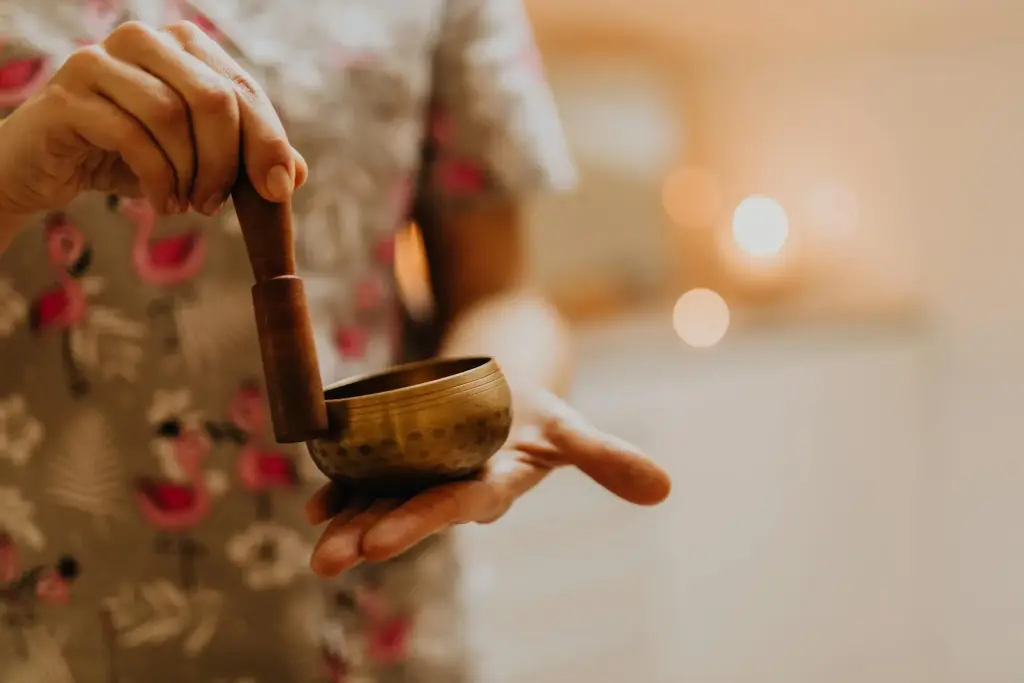
Sound healing is having a major moment right now, and Gen Z is fully here for it. What started as an alternative wellness practice has exploded into a full-blown cultural phenomenon, with floating sound baths selling out in minutes and TikTok videos tagged #soundhealing racking up millions of views. In a world where doomscrolling feels inevitable and screen addiction is basically universal, young people are desperately seeking ways to unplug and actually feel present. The wellness industry has taken notice, with sound healing experiences popping up everywhere from local yoga studios to major music festivals.
According to reporting by the Chicago Tribune, sound healing sessions are booming across the country, from cramped yoga studios to luxury spa experiences at places like the Ritz-Carlton. The practice uses instruments like singing bowls, gongs, chimes, and even synthesizers to guide listeners into therapeutic brainwave states. Think of it as meditation but with a seriously immersive soundtrack that actually helps quiet the mind instead of letting it wander to unanswered texts and notifications.
Why Sound Healing Hits Different for Gen Z
The appeal is not just about relaxation. It is about finding connection without the usual social pressures that come with going out. Cherish Hicks, a former special education teacher who launched her sound meditation brand Beyond, told the Chicago Tribune that her luxury floating sessions at the Ritz-Carlton spa now have a waiting list. Participants literally float on oversized beds in a pool while sound vibrations wash over them. The experience is giving main character energy in the most therapeutic way possible.
What makes this trend stick is how it solves a problem Gen Z knows too well. This is the generation that grew up with smartphones in hand, and the mental health toll has been brutal. Sound healing offers something radical: a scheduled break from screens where participants are not expected to produce content, respond to notifications, or perform for an audience. The only requirement is to lie there and let the sound do its thing.
Davin Youngs, creator of The RESET immersive sound experience, explained to the Chicago Tribune that COVID-19 accelerated the trend significantly. The pandemic's isolation and destabilization pushed people of all ages to discover new tools for self-regulation. While screen addiction became entrenched in daily life, sound healing emerged as a legitimate alternative for anyone looking to escape the endless scroll.
The Science Behind the Sound
Sound healing practitioners aim to move listeners into what they call the mind's "good idea zone." That is the sweet spot where creativity flows and stress melts away. The practice has existed in various forms for thousands of years, but modern iterations blend ancient techniques with contemporary understanding of brainwave states. Whether using crystal singing bowls or electronic instruments, the goal remains helping participants reach meditative states without the frustrating anxiety that stops many people from traditional meditation.
Kadesh Flow, a musician bringing sound healing to Ravinia Festival for children, told reporters that the foundation of their practice combines vocal training with somatic and breathwork techniques. This approach makes sound healing accessible even to beginners who might feel intimidated by silent meditation practices. The sound literally carries participants into the experience rather than requiring them to force their brain to cooperate.
Younger audiences, especially millennials and Gen Z who are fueling this growth, are specifically looking for ways to connect with others that do not involve late nights and substances. Sound healing events create community around wellness rather than partying, offering a space where vulnerability and relaxation are the vibe instead of social performance. It represents a shift toward conscious socializing that prioritizes mental health over FOMO.
The rise of sound healing speaks to a deeper cultural shift in how society understands mental health maintenance. Rather than waiting until burnout crashes everything, Gen Z is treating practices like sound baths as essential preventive care. It is wellness as lifestyle, not as crisis response. In a world that constantly demands attention, taking an hour to simply listen might be the most revolutionary thing anyone can do for themselves.
Comments 0
No comments yet. Be the first to share your thoughts!
Leave a comment
Share your thoughts. Your email will not be published.