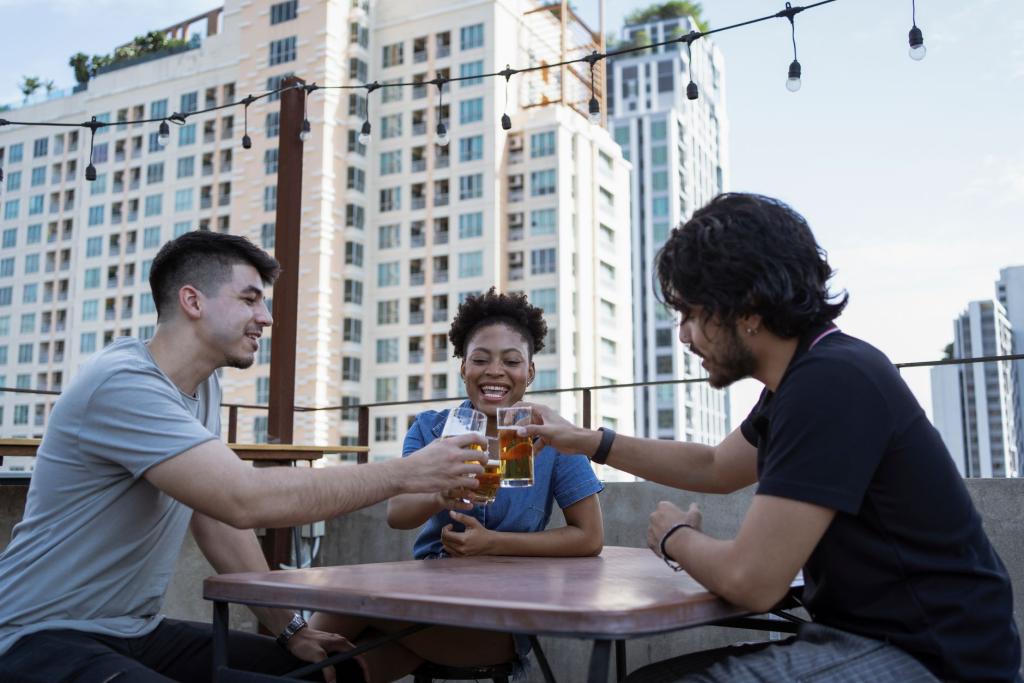
October 1 marks day one of Sober October, and Gen Z is not playing along — at least not the strict version. A national survey released on September 30, 2026 found that half of Gen Z adults plan to skip a fully dry month, opting instead for what the poll calls “Damp October”: a deliberate cutback rather than total abstinence, according to the survey release from the addiction-treatment company behind it.
The timing is striking. Just days earlier, a large medical analysis published on September 21, 2026 reported that American drinking has declined for the first time since the pandemic — with young adults leading the pullback and one older age group moving sharply in the opposite direction, according to a summary of the research.
Why Gen Z is rewriting Sober October
The generation knows the challenge exists — it just does not want to do it the hard way. Gen Z adults who do attempt the month are about twice as likely as older generations to build in planned exceptions for drinking, the poll found, and the generation is nearly three times more likely than Boomers to even know the challenge is happening. Awareness is high; follow-through is the missing piece.
The survey also picked up a striking link to weight-loss medication. About one in five drinkers has taken a GLP-1 medication, and those users were twice as likely to have completed a sober month, pointing to a broader shift in health behavior rather than simply drinking less. Separately, a companion survey from the habit-change app Reframe found that mental health was the top motivation for taking the month off, and roughly two-thirds of participants planned a full break rather than a cutback, according to its release.
The biggest reason people fail may be biology, not willpower. Among those who attempted the challenge, 92 percent experienced alcohol cravings, and strong cravings tripled the odds of quitting early. Nearly three-quarters of those cravings hit before the halfway point of the month. Men were almost twice as likely to attempt the month, while women were more likely to finish it and less likely to report cravings — 52 percent of women versus 61 percent of men.
“Cravings aren’t a failure of willpower,” said Dr. Joseph Volpicelli. He is a senior adviser to the company that commissioned the survey and an emeritus psychiatry professor at the University of Pennsylvania. He noted that FDA-approved medications such as naltrexone can directly reduce cravings, and that knowing the first two weeks are the hardest changes the odds.
The study behind the sobriety streak
The bigger picture comes from a medical journal study led by Dr. Brian P. Lee of Keck Medicine of USC, published in Annals of Internal Medicine. Drawing on 114,352 US adults who answered the National Health Interview Survey between 2018 and 2024, researchers found that any-alcohol use dropped by nearly 2 percent from 2022 to 2024, while heavy drinking fell by more than 8 percent — ending a six-year climb and helping explain why Sober October keeps growing each year.
Young adults drove the shift. Drinkers ages 18 to 29 posted the largest drop in any-alcohol use, at more than 5 percent, while adults 30 to 49 cut heavy drinking the most, with a 17 percent decline over the same window. Men reduced drinking slightly more than women overall, but women’s heavy drinking fell further — though it still sits about 13 percent above where it was in 2018. Lee described the results to Fox News Digital as “a promising turn rather than an established trend.”
The arc is worth tracing. Drinking rose through the first years of the pandemic, then the 2022-to-2024 window produced the first real decline. Researchers point to the sober-curious movement, cannabis use as a substitute, and rising health awareness among younger adults as likely forces behind the turn.
The generation going the other direction
The same study found adults ages 50 to 64 moving against the tide. Between 2018 and 2024, any-alcohol use in that group rose by nearly 4 percent, and heavy drinking climbed by more than 36 percent. Lee said in a statement from the university that the increase is concerning because this age group faces some of the greatest risks of alcohol harm, including cirrhosis and alcohol-related cancers.
There are real stakes attached. The US Surgeon General’s 2025 advisory linked alcohol to at least seven cancers and estimated that drinking contributes to nearly 20,000 cancer deaths in the United States each year, with risk for some cancers beginning to rise around one drink a day or less. Chris Tuell, clinical director of addiction services at the University of Cincinnati, told the outlet covering the study that loneliness, grief, chronic pain, and the loss of structure after retirement may be driving older adults to drink more. He was not involved in the research. Lee added that for people over 50 drinking more than before 2020, it is worth asking a doctor about liver health “even if nothing feels wrong.”
One caution runs through the research: do not mistake a two-year decline for a victory. “I would not see this as a big victory in any way because the rates have been so high, even before the pandemic,” Dr. Jagpreet Chhatwal of Massachusetts General Hospital told CNN. And for readers weighing a damp month against a dry one, Lee offered a flat line on safety: “There isn’t a level the evidence shows to be safe.”
For Gen Z, the damp approach may be the honest version of the trend — aware of the challenge, skeptical of the all-or-nothing framing, and reaching for moderation tools like cutback rules or craving-management medication instead of pure abstinence. For more deep dives like this, browse our deep-dives collection, and read how telehealth is reshaping access to prescription-based care in our coverage of Grindr’s move into in-app health services.
Comments 0
No comments yet. Be the first to share your thoughts!
Leave a comment
Share your thoughts. Your email will not be published.