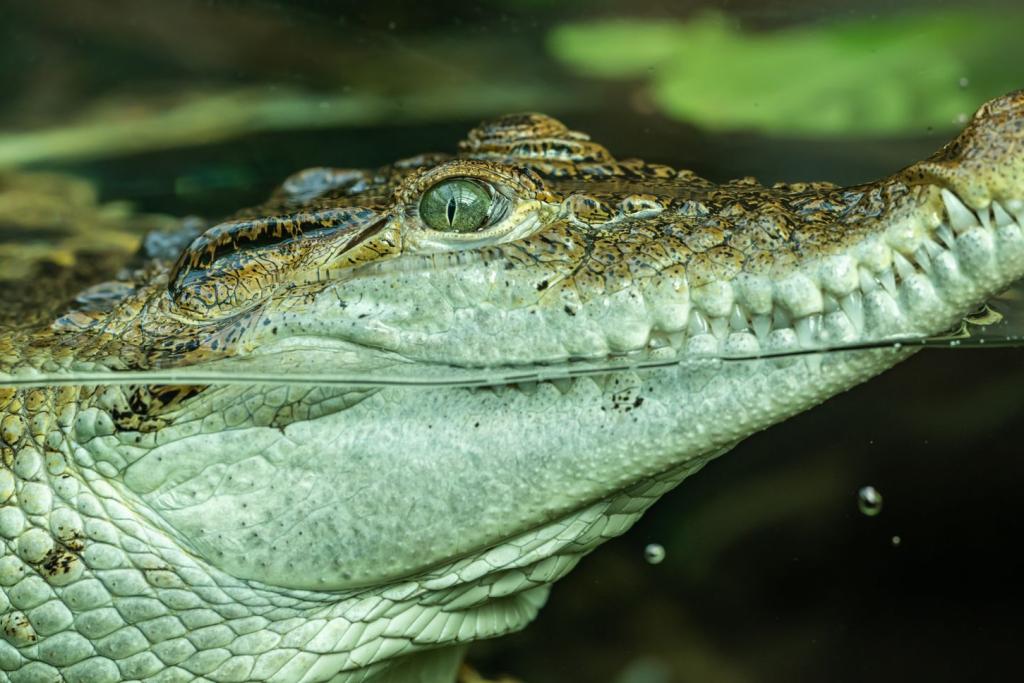
Ye Lin, a 30-year-old Myanmar national, appeared in a Singapore court on September 29 to face criminal charges over an AI-generated crocodile photo he made with Google's Gemini app and sent to a colleague. The image set off a full search-and-capture operation at Pandan Reservoir. He faces one count of communicating a false message and one count of obstructing the course of justice, according to court reporting by CNA. Speaking through an interpreter, he told the court he intends to plead guilty and will not hire a lawyer.
Police say Ye made the image and sent it to a colleague around 3 p.m. on August 20. Court documents name the recipient as Min Min Oo. The AI-generated crocodile photo showed an estuarine crocodile in Pandan Reservoir, which PetaPixel describes as Singapore's largest reservoir and a popular recreation spot. The colleague passed it along until the report reached PUB, Singapore's national water agency. PUB alerted the National Parks Board, and both agencies launched search-and-capture operations. The Singapore Rowing Association and the Singapore Canoe Federation suspended all water activities while officers combed the area.
The photo that emptied a reservoir
The scare lasted one day. On August 21, PUB confirmed the AI-generated crocodile photo was fake and lodged a police report, and water activities resumed, The Straits Times reported. The outlet added that PUB had run the image through several AI-detection tools after the sighting came in, but the results were inconclusive. In an October 1 Facebook post, PUB said it had acted out of caution for public safety. Ye worked for a contractor that maintains the reservoir, and his supervisor flagged the image to the water agency. Officers searched the area and found nothing. Police later cautioned that action will be taken against anyone who circulates falsehoods, saying such acts cause public alarm and needlessly divert resources.
For the athletes and coaches who train at the reservoir, the hoax was no joke. Rowers and canoeists lost training time while the search went on, and staff from two agencies spent hours hunting an animal that was never there. The case also exposes a gap in how authorities handle AI fakes: the detection tools PUB used could not settle the question, so the agency had to treat the image as real until it could prove otherwise. An inconclusive detector result never establishes that an image is genuine, which means agencies facing a similar scare must pair technical screening with basic verification, like checking where an image actually came from and whether anyone saw the real thing.
Deleting the evidence added a second charge
Investigators say Ye deleted the AI-generated images and the Gemini app's log history from his phone the day after he sent the photo, in what police described as an attempt to hide his actions. That deletion drew the obstruction charge. In a statement, the Singapore Police Force said preliminary investigations showed Ye created the AI-generated crocodile photo, sent it to his colleague, and then wiped the picture and the app data. The false-message charge carries up to three years in prison, a fine of up to S$10,000, or both. The obstruction charge is more serious: up to seven years behind bars, a fine, or both. A conviction on both counts could add up to a decade in prison for an AI-generated crocodile photo that took seconds to generate.
Singapore treats AI fakery as a public safety problem
The case is drawing attention because it shows what an AI fake can do once it leaves the group chat. Making the image look real was the easy part. Proving it was fake in time to stop a government response was the hard part. Singapore police have repeatedly warned that spreading false claims can bring criminal charges, and the force's statement in this case repeats the warning. Gizmodo summed up the mood with a headline calling Singapore one of the worst places in the world to post AI slop. For a generation that trades AI memes daily, the message from this courtroom is blunt: a fake image sent to the wrong person can turn into real criminal charges. Ye is expected back in court on November 10 to answer the charges.
Sources: The Straits Times and PetaPixel, citing BBC News and CNA reporting.
Comments 0
No comments yet. Be the first to share your thoughts!
Leave a comment
Share your thoughts. Your email will not be published.