The robots are clocking in. Global shipments of professional service robots jumped 24 percent last year to nearly a quarter-million units, marking the industry's biggest year on record, according to new data released this week by the International Federation of Robotics. The surge spans every major segment, from warehouse haulers to hospital assistants, and it signals that automation is quietly becoming part of everyday operations.
"Service robots are expanding into everyday operations," said Jane Heffner, president of the federation, in a statement accompanying the annual report. Sales rose across all three tracked segments, with medical and consumer machines posting double-digit gains of their own.
Where the service robots are working
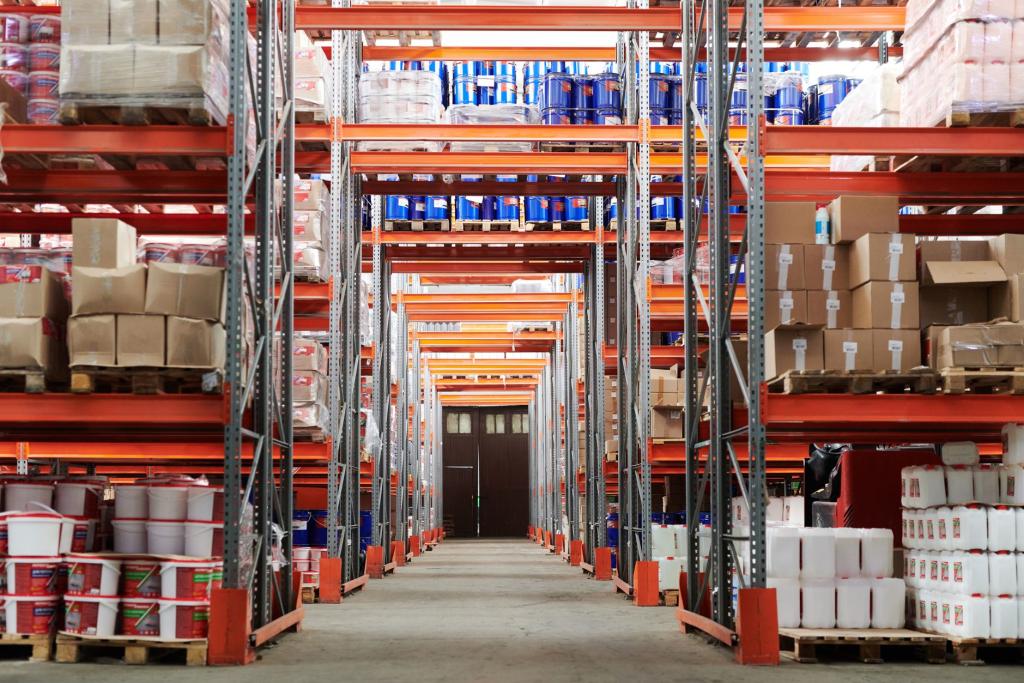
Warehouses are leading the charge. Transportation and logistics machines accounted for nearly half of all professional service robot shipments in 2025, making material handling the single largest application by far. Some 117,500 logistics robots shipped last year — up 21 percent on the previous year — hauling goods, managing material flows, and powering the delivery networks behind your late-night online orders.
Hospitality robots took second place, with machines that guide visitors, staff information points in public spaces, and handle telepresence duties. Professional cleaning robots ranked third, with floor cleaning as the main job.
Medical robotics is having its own moment. Surgical robots drove growth in the segment, with about 8,400 units shipped — a jump of 57 percent — as hospitals adopt the technology more widely. And on the consumer side, robots that vacuum floors and automate household chores surged 37 percent to nearly 34.2 million units, helped by smarter AI and smart-home integration.
Humanoids: a brand-new market
The report's most eye-catching finding is a market that barely existed a few years ago. Roughly seven thousand full-size humanoid robots — machines over 140 centimeters tall designed to work in human-centered spaces — were sold in 2025 for commercial use, beyond research and entertainment. The federation calls humanoids the robotics industry's newest market.
Early deployments are concentrated in warehouses and factories. Agility Robotics' humanoid Digit has moved more than 100,000 totes in live operations at Amazon and GXO warehouse facilities, according to reporting by Archyde on the company's CES 2026 appearance. Figure AI's machines have logged more than 1,250 hours on BMW's assembly lines, handling tens of thousands of parts. The pattern is consistent: factories first, where the environment is controlled and the tasks are repetitive.
Still, widespread adoption remains a way off. Most current humanoids operate in narrow roles or need human teleoperation, and the report flags safety standards, high training and maintenance costs, and the lack of a strong business case as key hurdles — particularly in industrial settings.
What service robots mean for workers
There's a reason robots are spreading through workplaces rather than living rooms: the economics work. Although traditional sales remain the main way service robots are monetized, robotics-as-a-service — renting robots by subscription rather than buying them outright — keeps gaining ground. In the United States it is already the dominant business model, which lowers the barrier for warehouses, hotels, and hospitals to automate without a huge upfront investment.
For young workers, that means the robot shift is less about a sci-fi future and more about the jobs you'll apply for next. Roles in logistics, cleaning, and hospitality are increasingly built around supervising, maintaining, or working alongside machines. The growth in medical robotics is also creating demand for technicians who can install and service clinical systems — a field that barely had job listings a decade ago.
That optimism has a counterpoint. Labor advocates warn that automation in warehouses and hospitality can displace the entry-level jobs many people rely on, and that efficiency gains don't automatically translate into better wages or safer conditions. The IFR's own data hints at the tension: humanoids are still in pilot territory precisely because the business case for replacing people remains uncertain in many settings.
One important caveat: the federation's figures come from a sample of 238 service robot suppliers and are not projected to cover the entire industry — so treat the totals as a snapshot of a booming sector, not a census. The full report is available from the International Federation of Robotics, and the press release is republished on LiveNews.co.nz. For more on how automation is reshaping work, see GenZ NewZ Tech & Games and our earlier piece, Agent Identity Security Becomes the Agent Era's Next Race.
Comments 0
No comments yet. Be the first to share your thoughts!
Leave a comment
Share your thoughts. Your email will not be published.