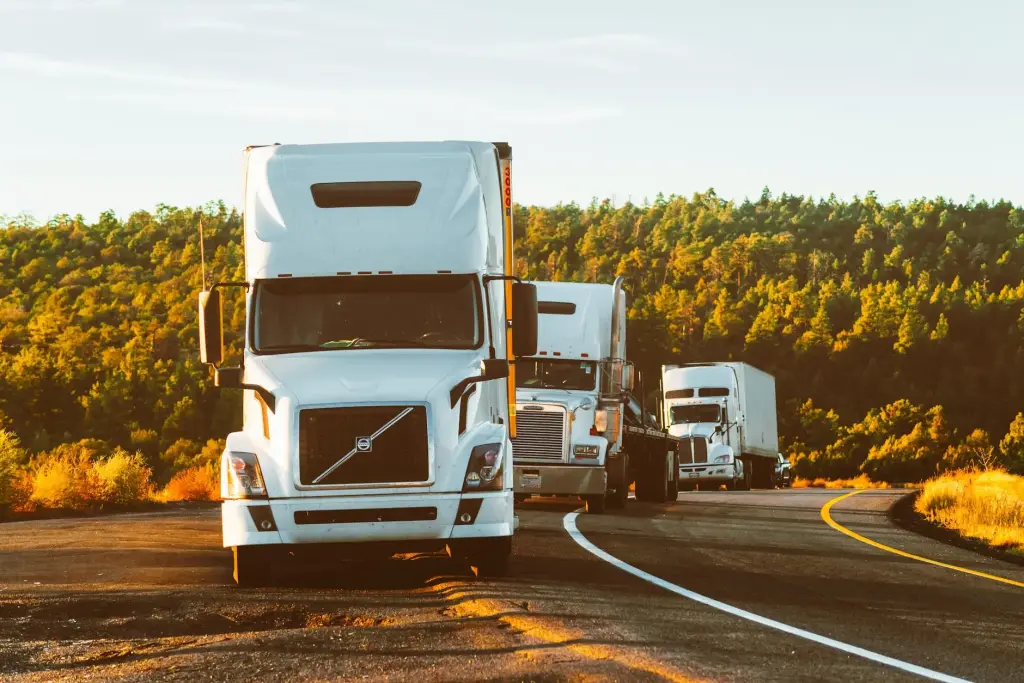
The U.S. plans to keep on truckin'—just without humans behind the wheel. Multiple companies say they'll roll out fully driverless big rigs on American highways in 2027, according to The New York Times. Aurora, Kodiak, and Waabi are racing to eliminate drivers with self-driving trucks—a cost that represents up to 40% of per-mile trucking expenses. The business case is massive: The U.S. freight-truck industry generates more than $900 billion annually.
These self-driving trucks represent one of the most significant technological shifts in the transportation industry in decades. The companies behind these autonomous vehicles are pouring billions into developing technology that could fundamentally change how goods move across America. The technology has reached a tipping point where self-driving trucks are no longer experimental—they're ready for commercial deployment.
The push toward self-driving trucks comes at a crucial time. The trucking industry faces a persistent driver shortage that has only worsened in recent years. With an aging workforce and fewer new drivers entering the profession, companies see autonomous vehicles as the solution to keeping supply chains moving efficiently.
The Race to Autonomous Trucking
Aurora plans to grow from a handful of autonomous trucks to more than 200 by year's end, then thousands by 2027. The company recently launched a 1,000-mile route between Fort Worth and Phoenix that surpasses what human drivers can do without stopping due to work-hour limitations. This route demonstrates the potential of self-driving trucks to cover more ground faster than traditional trucking operations.
Kodiak is making interstate runs with 15 self-driving trucks for customers including J.B. Hunt and Werner Enterprises from a Texas hub. The company is rapidly expanding its autonomous delivery network across major shipping corridors, proving that self-driving trucks are more than just a concept. Each successful run builds confidence in the technology and provides valuable real-world data to improve the systems.
Waabi is taking a different approach, focusing on safety and regulatory compliance from the start. The company has been working closely with federal and state regulators to ensure their self-driving trucks meet all necessary safety standards before deployment.
Why Texas?
Most deployments will happen first in Texas because of the Lone Star State's favorable routes, weather, and regulatory environment. Texas offers long stretches of highway with minimal traffic interruptions and a business-friendly regulatory framework that has welcomed autonomous vehicle testing. The state has become the de facto testing ground for autonomous trucking in the United States.
The state's combination of major logistics hubs, favorable climate conditions, and progressive autonomous vehicle legislation makes it the ideal launchpad for self-driving truck deployments. Companies can test and refine their technology in real-world conditions while building public trust. Texas highways connect major population centers and shipping destinations, providing meaningful routes for testing commercial operations.
Other states are watching closely. If Texas proves successful, expect rapid expansion to other states with favorable conditions. The regulatory framework developed in Texas could become a model for the entire country.
The Business Impact
Driver costs represent up to 40% of per-mile trucking expenses, according to The New York Times. Self-driving trucks can operate around the clock without rest breaks, potentially doubling or tripling shipping efficiency. This could fundamentally reshape supply chains across North America. Shipping costs could decrease significantly, benefiting consumers and businesses alike.
The transformation could also address the chronic driver shortage that has plagued the industry. With autonomous trucks handling long-haul routes, human drivers could focus on last-mile delivery where human judgment remains essential. This shift could actually create more jobs in the long run, not fewer, as the industry expands to meet growing demand.
The economic implications extend beyond just shipping costs. Retailers could potentially reduce inventory levels thanks to more reliable delivery schedules. Manufacturers could implement just-in-time production with greater confidence in their supply chains. The entire logistics ecosystem could become more efficient and responsive to consumer demands.
For more details on this developing story, visit The New York Times and Entrepreneur.
The self-driving revolution is coming to American highways sooner than many expected, and it could reshape the entire logistics industry. Self-driving trucks are no longer science fiction—they're becoming reality on Texas highways right now. The next few years will determine how quickly this technology spreads and what it means for the millions of Americans who work in the trucking industry.
Comments 0
No comments yet. Be the first to share your thoughts!
Leave a comment
Share your thoughts. Your email will not be published.