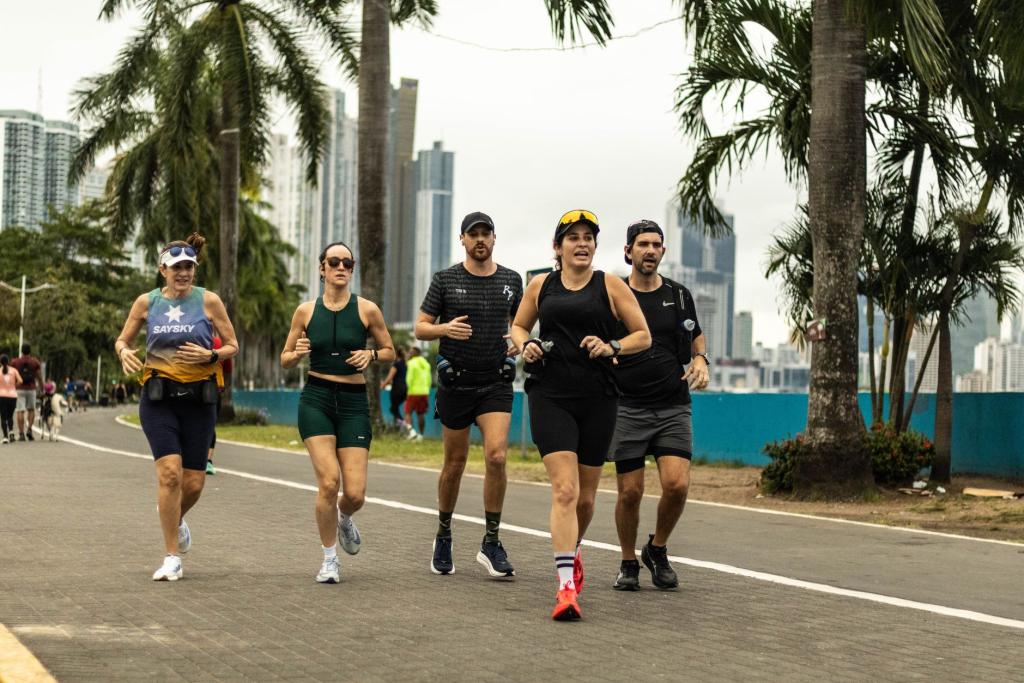
At 6 a.m. on a Saturday, thousands of young people are gathering in parks and city streets — not stumbling home from a club, but lacing up for a run. What started as post-lockdown jogging has hardened into something bigger: social run clubs have become Gen Z's go-to third place, the spot between home and work where friendship, fitness and even dating now happen. More than a million runners entered the lottery for this year's London Marathon, and only 59,000 got a spot — a crush of demand that the race director of the Illinois Marathon, Jan Seeley, calls "the third running boom." The first was in the 1980s, then around the financial crisis, and now this one, post-pandemic.
Seeley's theory for why this wave is different is blunt: "Gen Zers are all over that," she told reporters, because "these social running clubs are kind of an alternative to dating apps." Races are "selling out sooner and with higher numbers," she added, and the crowds skew young. Run clubs, in other words, have absorbed the social function of the nightclub — meeting people, burning off the week, belonging somewhere — minus the hangover. As GenZ NewZ reported on Gen Z trading smartphones for flip phones, the generation keeps rewriting its social defaults, and the weekend may be the biggest rewrite yet.
From the 1980s to now: the timeline of running booms
The current boom did not come out of nowhere. The first running boom swept through the 1980s on a wave of aerobics culture and city marathons. The second arrived around the financial crisis, when cheap, gear-light exercise fit a straitened mood. "Running does boom in periods of instability," said Lee Glandorf, the writer behind the sports-fashion newsletter The Sweat Lookbook, in an interview reported by Marketplace. She argued the appeal is progress you can feel: "You see like marked improvement day in day out if you commit to a running practice."
The commercial world has noticed. Peloton, the pandemic-era spin bike icon, announced in September 2026 that it is going "all in" on a new treadmill line, jumping on the boom as its bike business cooled. Strava, the fitness-tracking app now used by more than 150 million people worldwide, has turned running into something social, shareable and lightly competitive — kudos replace likes, and progress charts replace highlight reels. According to the fitness app's data, running groups formed on the platform grew 3.5-fold from 2024, and 58 per cent of people surveyed said they made new friends at exercise groups. One in five Gen Zs said they had gone on a date with someone they met through exercise, as reported by the Independent.
Cheaper than a night out — and a better third place
Money explains a lot of it. A Harris Poll survey of weekend habits of 4,100 adults found that 74 per cent of 18-to-29-year-olds spend more than half their monthly weekends at home. The reasons were blunt: nearly seven in ten said going out is simply not worth the cost, while almost nine in ten said they deliberately avoid alcohol-centered gatherings, as reported by the Seoul Economic Daily. The cash freed up goes into wellness instead. A McKinsey survey found Gen Z and millennials are 36 per cent of the adult population but account for more than 41 per cent of wellness spending, and more than half of US Gen Z call exercise a "very high priority."
In Sydney, where 90,000 runners packed the streets for the City2Surf race in August, the economics are visible at street level. One drink costs ten to twenty dollars for what one twenty-year-old described as "maybe five minutes of fun," while running asks for nothing but shoes. "Especially in this economy," he said, running is "a financially wonderful way to spend one hour," as reported by Newsworthy. A 2025 Australian sport participation report named running the most popular form of exercise for 15-to-24-year-olds, and the Sydney race's own media director said organizers were "thrilled to see so many people who are part of run clubs taking part," especially younger runners.
The sober-social shift shows up in the people. Brianna Liao, a 20-year-old Sydney runner, started running at the end of 2024 out of curiosity and gradually cut back on drinking. "Running was giving me something that drinking never really could," she said. "It was making me feel better physically and mentally … rather than going home quite drunk and feeling pretty awful the next morning." Her verdict on where she stands now: "drinking just doesn't feel particularly attractive to me anymore." One viral video from a Sydney run club even captioned footage of a mass pre-dawn run with the line "Sydney is replacing night clubs with this."
Not everyone's invited — yet
There are cracks in the feel-good story. Kesli Agolli, a 29-year-old London runner, stopped attending group runs like Park Run or Friday Night Lights (a fitness alternative to a big night out) altogether: "They've turned very datey and they're a bit scary now," she said. "I want to enjoy running without worrying about what my hair and makeup looks like." And the biggest caveat comes from ParticipACTION's 2026 research, which found Gen Z adults aged 18 to 27 reported more barriers to physical activity than any other generation — including self-consciousness, fear of judgment, and not having someone to exercise with. The image is Gen Z crushing dawn runs; the findings say some young people are choosing to stay home because they need belonging and judgment-free entry points, not another free pass.
That is also the opening for the clubs that do it right. The beginner-friendly ones advertise "all paces welcome," publish their routes, and split into pace groups so nobody gets dropped — the features that turn a fitness scene into an actual third place. Running costs almost nothing, the group is free, and the shared suffering of a 6 a.m. run builds the kind of repeated, low-stakes contact that friendship runs on. The nightclub promised strangers and noise; the run club promises the same people, every week, moving in the same direction. For a generation that told pollsters going out is not worth the cost, that is a trade worth making. For more on real-life culture, follow the IRL Streams topic.
Comments 0
No comments yet. Be the first to share your thoughts!
Leave a comment
Share your thoughts. Your email will not be published.