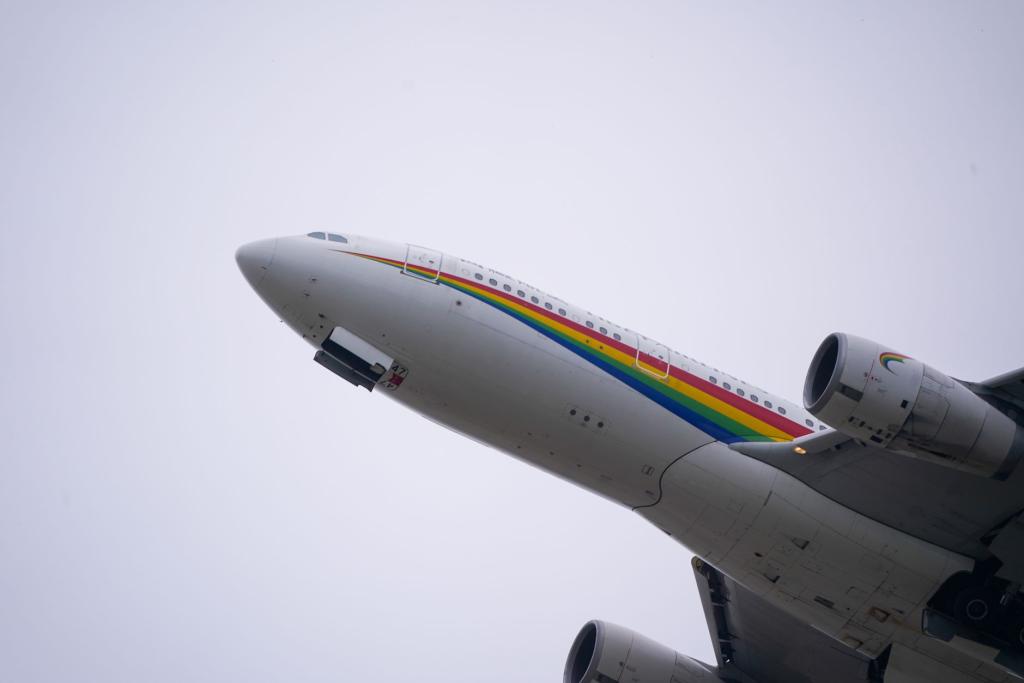
The most powerful religious leader on the planet says he sleeps just fine at night — even as he warns that fears about artificial intelligence destroying humanity are not fake news. Pope Leo XIV, returning to Rome on September 28, 2026, from a four-day visit to France, told more than 80 journalists aboard the papal plane that he was not in "panic mode" over AI extinction risks and slept fine at night, while insisting expert warnings should be taken seriously rather than dismissed, according to Catholic News Service reporting from the flight.
Pope Leo XIV — the first American pope, now 71 — was answering a direct question: was he worried AI could pose catastrophic risks, or even wipe out humanity? His answer split the difference between the loudest camps in the debate. He said the concerns raised by AI specialists should be taken seriously, rejecting suggestions that they amounted to "fake news" spread for financial gain.
The warnings he takes seriously
The pope had fresh reasons to be asked. Earlier in September, Evan Hubinger, a former top safety researcher at AI company Anthropic, said he believed there was a greater than one-in-ten chance that AI could kill all humans within a decade. Anthropic CEO Dario Amodei responded by publicly calling on the industry to slow advanced model development — a plea other tech leaders backed, and one President Donald Trump dismissed, arguing US restrictions would hand an advantage to China. the two men later dined together to try to narrow their differences, according to EWTN Vatican's account of the 23-minute press conference.
Pope Leo XIV also showed he follows the industry's internal contradictions closely. He told reporters he had just read that Nvidia's chief executive claims to have found a way to build guardrails into AI systems — then noted the contradiction of touting safety features while opposing limits and government regulation altogether, according to EWTN's account.
The anxiety is not confined to labs and boardrooms. A survey of 1,000 Americans this month found one in five had dreamed about AI, with the most common theme being machines taking over the world, according to a report by the tech outlet The JOAI. Pope Leo XIV's verdict on the moment: the situation is a problem leaders need to sit down and talk about, and he expressed hope that political leaders, AI executives, and civil-society groups could meet to discuss what is happening.
A pontiff who made AI his signature issue
Pope Leo XIV's comments cap a trip that put technology ethics at the center of his papacy. At the Élysée Palace on September 25, 2026, addressing President Emmanuel Macron and France's diplomatic corps, he warned that unchecked AI risks creating a "paradise of machines" that could erode human dignity — invoking mid-century French writer Georges Bernanos, who cautioned against blind obedience to machines and systems, as DNTWOK reported from the address. Pope Leo XIV called for "urgent" education in ethical discernment, later pressing the same theme before diplomats and UN staff at UNESCO's Paris headquarters.
The France journey — spanning Paris, Saint-Denis, Lourdes, and Metz — was the first papal state visit to the country in roughly 18 years, and it drew enormous crowds along with one of France's largest security operations outside the Olympics. But AI has been Leo's signature theme well beyond this week. His first encyclical, Magnifica Humanitas, published about four months ago, was devoted to ensuring artificial intelligence serves human dignity rather than dominating it. He told reporters the Vatican has formed its own AI commission — initially to coordinate the technology's use inside Vatican City — and that since the encyclical, experts from numerous fields have reached out to Rome. The Vatican's engagement is not new: it partnered with Microsoft and IBM on ethical AI principles back in 2020, and US bishops formed an AI task force this month.
Why the middle ground matters for the AI generation
For young people who use AI tools every day — for homework, job applications, and creative work — the pope's position is arguably the most useful one in the debate. He rejects both the doomer script and the dismissal script. The extinction warnings deserve scrutiny, he says, but panic is not a strategy; what is needed is a shared table where governments, companies, and the public hammer out guardrails before the technology outruns them. President Macron, standing beside him at the Élysée, backed the creation of an international body to regulate AI and warned that advanced models must not remain controlled by a handful of companies.
That framing puts a 2,000-year-old institution on the same side as a growing slice of Gen Z. Recent polling has shown young adults are simultaneously the heaviest users of AI and among the most uneasy about where it is heading — a tension our own reporting on Gen Z's AI attitudes has explored. Pope Leo XIV is betting that the answer is neither blind trust nor blind fear, but deliberate, collective rules. He said the Vatican would keep promoting dialogue, study and investigation to keep AI from reaching a point where it could, in his words, "destroy humanity or remove humanity from the conversation." For more on where the technology is heading, follow our AI news coverage.
Comments 0
No comments yet. Be the first to share your thoughts!
Leave a comment
Share your thoughts. Your email will not be published.