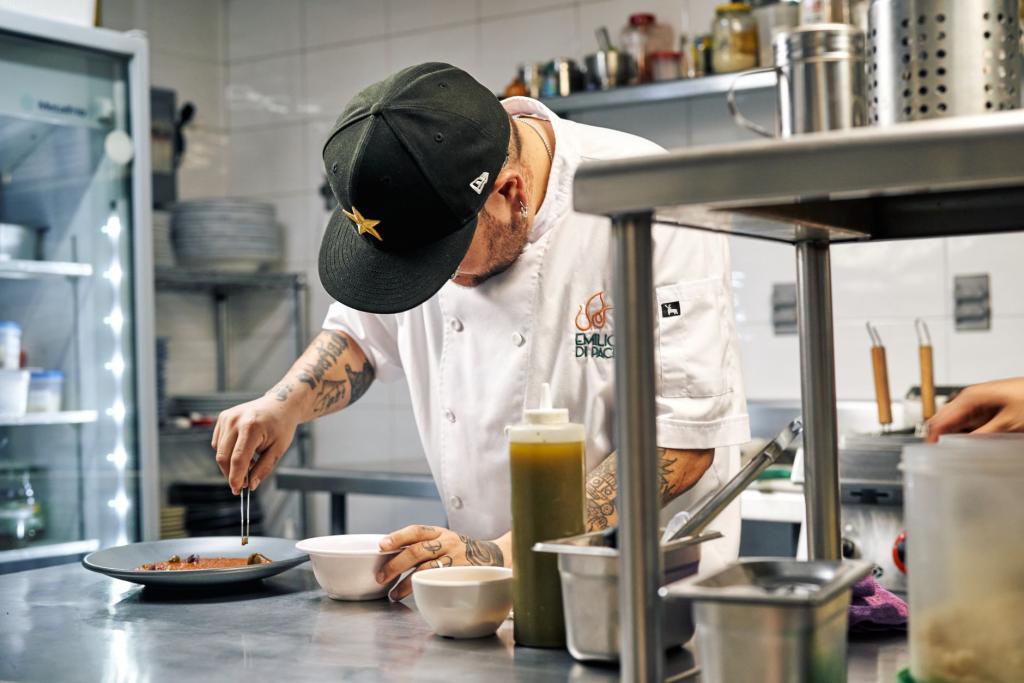
The peels, bones and pits that usually hit the trash in a New York restaurant kitchen are on the menu this week. Chefs across the city are cooking zero-waste dishes for Mill's third annual Make Food Not Waste Restaurant Week, a citywide zero-waste restaurant week running from September 28 through October 4. The lineup spans Michelin-starred rooms, James Beard Award winners, honorees on North America's 50 Best list and neighborhood staples, all committing to zero waste for the week with Mill's food recyclers running in their kitchens.
Mill launched the event in fall 2024, and it has grown each year. This time the roster includes newcomers like Chambers, Cynthia, Somssi and Oberon, alongside returning favorites such as Bangkok Supper Club, Corima and Raf's. It has also expanded beyond New York, with a pop-up dinner series in Los Angeles earlier in the year, according to the company. It joins a run of New York food stories this month, from the city's record tree-planting push to the Cracker Barrel all-you-can-eat pancake comeback. For the first time at the zero-waste restaurant week, restaurants are taking part in four distinct formats: a single featured dish, a curated three-course menu, an exclusive cocktail, or a paired dish and drink.
Fish scales, mango seeds and six-month garum
The dishes read like a dare. At Corima, the Michelin-starred Mexican restaurant that has landed at number 36 on North America's 50 Best list two years in a row, the kitchen replaces the pumpkin seeds in a traditional Mayan sikil pak with mango seeds, a part of the fruit that almost always gets thrown out. The same menu serves hamachi collar grilled over fire and a sope made from quelites, the wild edible greens that grow around Mexican farm fields and are usually treated as weeds.
Ops, the James Beard semifinalist pizza spot, tops a corn pizza with corn cob cream, scallion tops and young taleggio cheese, rind and all, and shakes a margarita flavored with leftover peach pits and spent chile peppers. Bar Chucho, chef Fidel Caballero's newly opened Lower East Side bar, goes further on time as well as thrift: its burger is finished with a dry-aged beef garum made by fermenting scraps and beef bones for six months, plus a burnt onion and beef bone marrow mayo.
At Family Meal at Blue Hill, leftover fish scales from the sustainable seafood company Dock to Dish become rice crackers, served with shaved Montauk tuna scraps and herb stems. The Musket Room rolls passatelli pasta from leftover breadcrumbs and enriches the brodo with parmigiano reggiano rinds and oyster mushroom trim. At Bangkok Supper Club, the botan ebi toast uses the whole shrimp, head to shell: the shells become a coconut chili cream, the raw sweet shrimp sits on top, and the head is deep-fried for a crisp, savory contrast.
What the chefs say
Caballero, returning with Corima again this year, said every ingredient represents the work of farmers, producers and his team, and that using it thoughtfully honors that work. He said guests can experience the full potential of an ingredient, including parts that might otherwise be overlooked.
Sherry Cardoso, the executive chef and partner at Cynthia in the West Village, grew up in Brazil, where she said wasting food was simply not an option. In her kitchen a peel can become a seasoning, vegetable trim can become a sauce, and something at the end of its life can be pickled, fermented and preserved for months. Her restaurant's contribution to the zero-waste restaurant week is a bite called Rosette: a beer-battered waffle topped with a bearnaise made by roasting vegetable trim, seasoned with a signature blend created from dehydrated scraps, and finished with sea urchin.
"When the best chefs and kitchens in the city treat scraps as an opportunity instead of waste, that's a signal the rest of us should be paying attention to," Harry Tannenbaum, cofounder and president of Mill, said in a statement announcing the week. He added that there is no trade-off between preventing food waste and preparing incredibly delicious meals.
The machine behind the week
Mill, founded in 2020 by Nest alumni Matt Rogers and Harry Tannenbaum, makes a kitchen appliance that dries, grinds and deodorizes food scraps overnight, turning them into dry, nutrient-rich grounds. The bin preserves the nutrients left in scraps so they can be reused rather than decomposing in landfills, where food waste generates potent greenhouse gases, as reported by Fast Company. The grounds can be used at home, put in a curbside organics bin, or sent back to Mill to be processed into chicken feed, according to the company.
Early next year, the company plans to roll out Mill Commercial, an AI-powered system that identifies, quantifies and dehydrates the food commercial kitchens throw away, aimed at helping them save money and waste less. During restaurant week, Mill is partnering with Reclaimed Organics on scraps collection: food scraps and grounds processed by Mill food recyclers at participating restaurants will be transported to a community garden in downtown Manhattan, where they will be composted and used at the garden and on street trees throughout the city.
For diners, the pitch is straightforward: book a table and taste what low-waste cooking looks like when the city's best kitchens do it on purpose. The full restaurant lineup and reservations are listed in Mill's announcement, and the week runs through October 4.
Comments 0
No comments yet. Be the first to share your thoughts!
Leave a comment
Share your thoughts. Your email will not be published.