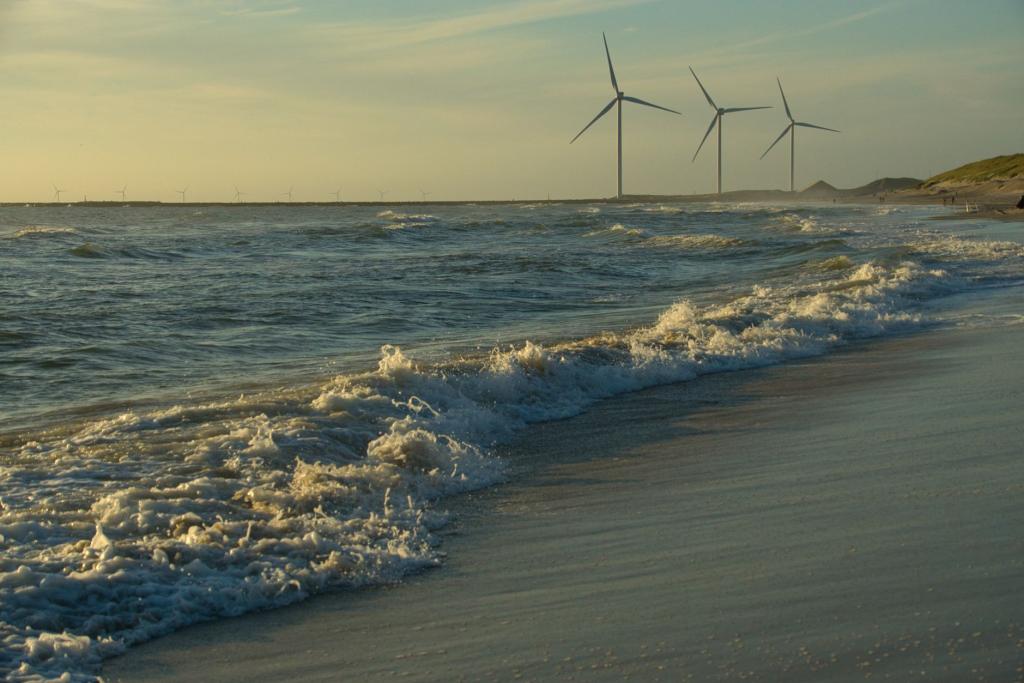
A Nova Scotia data centre just became the biggest private bet in the province's history, and the tenant is the company behind Claude. According to CTV News and The Canadian Press, energy developer EverWind announced the plan on Friday for its Point Tupper site on the Strait of Canso in Cape Breton.
What was actually announced
EverWind says it will invest more than ten billion Canadian dollars. Roughly eight billion goes to building the data centre campus, and about two billion goes to expanding onshore wind power in the province. The company calls it the largest privately funded investment in Nova Scotia's history.
The first phase is a ninety-five megawatt facility targeted for late next year. A bigger expansion is pencilled in for the year after that, and at full build the campus would reach four hundred and twenty megawatts, according to the company's release as reported by the Epoch Times. Think of it as a giant warehouse of chips that needs a small city's worth of electricity.
Anthropic steps in as the first big tenant
EverWind first described its customer only as a leading frontier AI developer. Later that day Anthropic confirmed it had signed a lease for capacity at the site. According to Reuters via KSEV Radio, it is the Claude maker's first data centre agreement in Canada.
The AI race is mostly a race for compute, and compute needs buildings, power and cooling. Reuters notes Anthropic spent seven point three three billion dollars on computing and infrastructure last year, roughly triple the year before. Canada gives it cold air, wind energy and a politically friendly address.
The promises and the pushback
Jacob Glick, Anthropic's head of public policy for Canada, said the company would protect ratepayers and water resources while making sure local communities benefit. Nova Scotia's premier has pointed to roughly two thousand construction jobs and about two hundred and fifteen permanent jobs, according to the Epoch Times.
Not everyone is cheering. Data centres are widely criticized for heavy power and water use and for the strain they put on local infrastructure. Tech-Insider reports dozens of Nova Scotians gathered in Halifax this week to push back against the proposal, which still faces regulatory conditions.
Why Gen Z should care
Every chatbot answer, AI image and homework helper runs on buildings like this one. The question is who pays for the power, and whether wind projects built for the grid end up feeding servers instead. Canada has been courting AI infrastructure as a way to keep tech talent and investment at home.
It also matters for jobs. Construction work is temporary, while permanent roles are far fewer than the headline number suggests. For young people in Atlantic Canada, the real test is whether this Nova Scotia data centre brings careers in energy and tech, or mostly big electricity bills.
The Nova Scotia data centre would sit at an existing EverWind industrial site, which the company has previously pitched for wind and hydrogen development. Reusing a site with grid and port access is one reason developers like it. Cape Breton has long wanted big projects after years of losing traditional industry, so a deal this size lands loudly there.
What to watch next
Regulators, the province and Indigenous and local communities all get a say. Watch for details on how much water the campus will use, how the wind power is priced, and whether the second phase actually gets built. For more Canadian stories, see our Canada coverage.
Another thing to track is the money trail. A tenant on a long lease gives a developer the confidence to borrow and build, which is why the lease announcement mattered as much as the headline investment figure. Reuters also reports Anthropic is preparing for a United States public offering, so the company has every reason to show it can secure power and capacity at scale. Critics, including a New York City official quoted by Reuters, want the company to slow down over safety and governance questions, which adds a layer of scrutiny to any big expansion.
Meanwhile, the wind half of the plan could be the part that wins over skeptics. If the new turbines add clean generation rather than just feeding servers, the province could see real benefits. If not, expect louder protests.
Big announcements are easy, and shovels in the ground are harder. If this goes ahead, it will be one of the clearest examples yet of AI turning into physical infrastructure on Canadian soil, with all the jobs and trade-offs that come with it.
Comments 0
No comments yet. Be the first to share your thoughts!
Leave a comment
Share your thoughts. Your email will not be published.