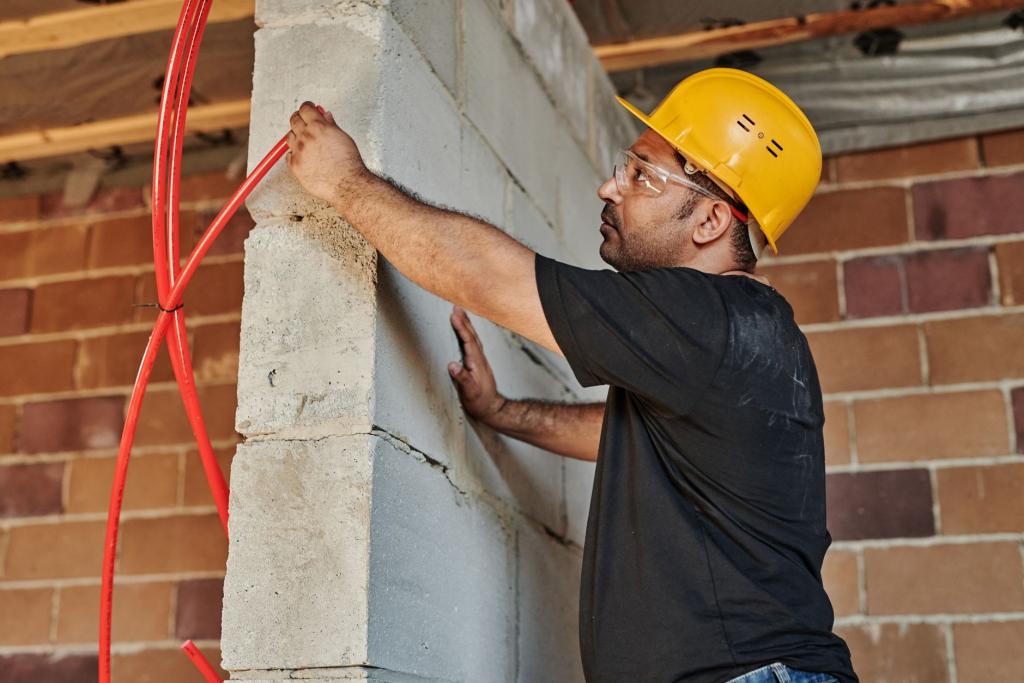
The advice American teenagers have heard for generations just stopped working the way it used to. Go to college, get a degree, land a good job. But new labor market analysis finds that young workers without college degrees are having one of their best job markets in roughly twenty years, while young college graduates are going through one of their weakest stretches. For two decades, the fortunes of the two groups rose and fell together. Since 2023, they have been moving in opposite directions.
The analysis, from the Burning Glass Institute and first reported by The Wall Street Journal, looks at workers ages twenty-two to thirty-four. Among those without a college degree, unemployment sits near the lowest levels recorded in the past two decades. Among those with at least a bachelor's degree, unemployment is worse than it has been in roughly seventy percent of months since 2003, exceeded only during the pandemic and the slow recovery from the 2007 to 2009 recession. Gad Levanon, the institute's chief economist, told the Journal the cause is simple supply and demand: "There's a rapidly growing supply of people with a bachelor's degree, and you have a rapid decline of people who don't." He added, "I don't think it's a temporary thing."
To be clear, the degree still pays on an absolute basis. Prime-age workers with bachelor's degrees had an unemployment rate of about two-point-seven percent in the year ending in July, compared with four-point-seven percent for workers with only a high school diploma. Graduates are not doing worse than non-graduates overall. They are doing far worse than graduates have historically done, while non-graduates are doing far better than non-graduates have historically done. That reversal, the Job Market Flipped on its head, is what makes the moment so strange.
Why the lines crossed
Several forces are pushing from both sides. On the non-degree side, demand for skilled tradespeople is strong as older workers retire, and the pipeline of new workers is thinner than it used to be. On the graduate side, artificial intelligence is absorbing some of the entry-level office work that companies once handed to recent graduates. Analysis cited by The Economist estimates that roughly one percent of American professional jobs, on the order of a million positions, would not exist without AI, with the share reaching four to five percent in computer occupations and life sciences. Young people with graduate degrees in scientific and technical fields are reportedly facing even tougher conditions than typical bachelor's holders.
There is also a hiring freeze dynamic that hits newcomers hardest. The Bureau of Labor Statistics' turnover survey showed hires holding at a 3.3 percent rate in August, with quits at 1.9 percent and layoffs at 1.0 percent. Companies are neither cutting staff nor adding much of it. When nobody leaves, few seats open, and the people left standing are the ones trying to get in the door for the first time. Economists at the Economic Policy Institute have flagged that low hiring rate as a central reason the class of 2026 is struggling.
Students are already voting with their feet
The trend is visible on campuses. Trade-focused public two-year colleges grew enrollment by nearly twelve percent in the spring of 2025, up almost twenty percent since 2020, according to the National Student Clearinghouse Research Center. Heating and air-conditioning programs grew another sixteen-plus percent this year after a jump of nearly twenty-nine percent in 2025. Young people are not just reading the job numbers; they are rearranging their education around them.
None of this means the answer is to skip college reflexively. Apprenticeship slots in many trades are limited, trade work is physical and often starts with early hours, and the earnings premium of a degree over a lifetime remains substantial. What the data does suggest is that the credential alone no longer decides who gets hired. Demonstrated skill does, whether it comes from a degree program, a trade certificate, or a portfolio of work. The old script was a guarantee. The new one is a calculation: what you study, what it costs, and whether the career actually requires four years.
Sources: Consumer Affairs reporting on the Burning Glass Institute analysis; LinkedIn News on chief economist Gad Levanon's findings; Scholaro on enrollment and hiring data.
Related coverage: more career coverage and more on side hustles.
Comments 0
No comments yet. Be the first to share your thoughts!
Leave a comment
Share your thoughts. Your email will not be published.