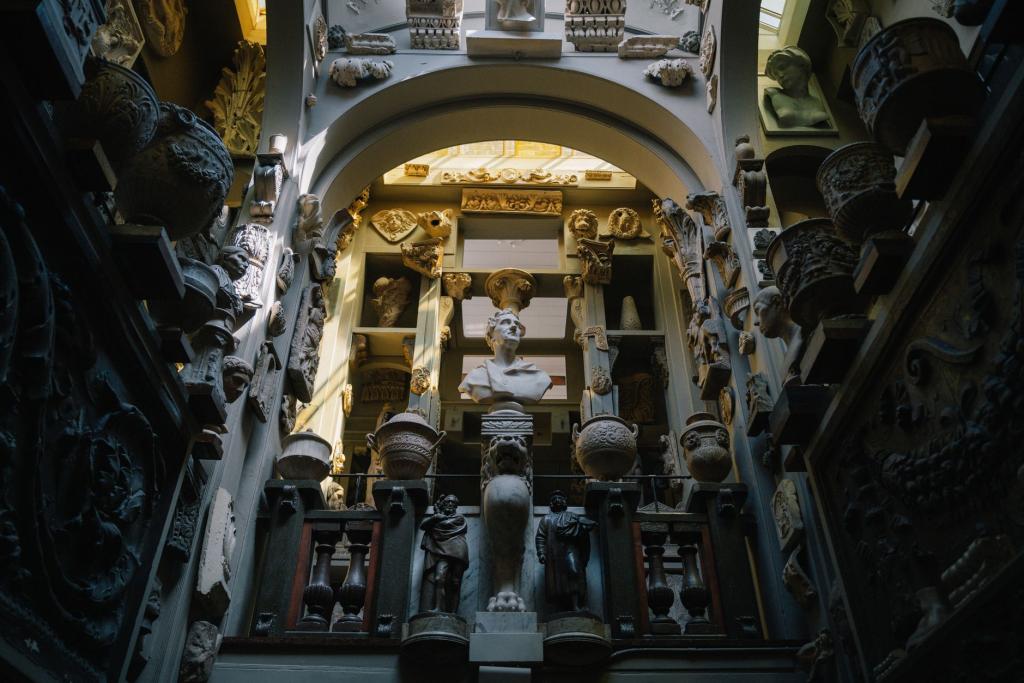
Nigeria's museums chief has publicly rejected the British Museum Loan proposal for the Benin Bronzes, calling the idea "insulting" and insisting that artefacts looted from the Benin Kingdom can only come home through a full transfer of ownership. Olugbile Holloway, the Director-General of Nigeria's National Commission for Museums and Monuments (NCMM), delivered the message during a cultural restitution discussion at the Quramo Festival of Words in Lagos, held October 1-3, 2026, as reported by Posh Reporters.
"We are constantly in communication with the British Museum, and in one of our meetings, I clearly told them that insinuating you want to loan us our artefacts, I find it quite insulting," Holloway said. He added: "I'd rather you keep them till the end of time than for you to loan something that was looted." The remarks draw a sharp line between two very different futures for the bronzes, and signal that Nigeria will not settle for the British Museum loan offer as it stands.
A loan is not restitution
At the center of the dispute is a legal distinction that matters more than logistics. A British Museum loan would leave legal title with the London institution: Nigeria would display the objects for a fixed period and then hand them back. Restitution, as Nigeria defines it, means the ownership itself moves, even if the physical objects remain outside the country temporarily under an agreed arrangement, according to Posh Reporters.
Holloway argued that a British Museum loan cannot substitute for permanent recognition of ownership. For Nigerian officials, the issue extends beyond access to museum collections into historical accountability, cultural identity, and the right of communities to exercise authority over their heritage.
The 1897 raid, and the mask Nigeria refused to rent
The bronzes were seized when British forces invaded Benin City in 1897, stripping the royal palace of brass and bronze plaques, sculptures, and ceremonial objects that recorded centuries of the kingdom's political and spiritual life. The collection runs to several thousand masks, sculptures, and carvings made between the thirteenth and nineteenth centuries, and it has been scattered across museums and private collections ever since, according to the New York Review of Books.
Nigeria has been asking for the bronzes back since at least the 1930s. Ahead of the 1977 FESTAC festival, the country requested the loan of the sixteenth-century ivory mask of Queen Idia, and the British Museum demanded a loan fee plus insurance worth more than sixteen million dollars in today's money. Nigeria refused, and a bronze replica of the mask became the festival's emblem instead, a deliberate symbol of defiance, according to the New York Review of Books.
Nearly half a century later, Holloway's rejection of the British Museum loan model echoes that earlier refusal. Akenzua II, the oba at the time, is said to have told Nigerian officials that "Benin's forefathers made the first bronzes, and they'd do it again," according to the New York Review of Books, a reminder that the claim to the bronzes has always been about origin rather than access.
Other museums chose ownership transfer
Nigeria's hard line stands in contrast to how other institutions have handled the same objects. The Horniman Museum in southeast London transferred ownership of seventy-two looted Benin objects to the NCMM in 2022, becoming the first public institution in Britain to do so, as reported by Artnet News. A handful of pieces returned to Nigeria immediately while the rest stayed in London on loan, but under Nigerian ownership. That arrangement is the mirror image of a British Museum loan: same shelves, different owner.
Cambridge University followed with the legal transfer of ownership of more than a hundred Benin artefacts, and the German government agreed in 2022 to transfer ownership of eleven hundred works, according to The Art Newspaper. The Netherlands returned a further one hundred and nineteen bronzes in June 2026. In each case, the decisive word was ownership, not borrowing.
The British Museum is the outlier. It holds around nine hundred pieces from the Kingdom of Benin, the largest collection of its kind anywhere, and it points to the British Museum Act of 1963, which bars the institution from permanently removing objects from its collection, according to The Art Newspaper. That legal wall is the counterpoint to Nigeria's moral argument, and the reason the British Museum loan debate keeps circling the same impasse.
What happens to the bronzes now
Even when bronzes come home, their destination is contested. The Museum of West African Art (MOWAA) in Benin City was meant to showcase repatriated works, but its preview opening in November 2025 was stormed by protesters, and the museum remains closed indefinitely with visits by appointment only, according to the New York Review of Books. Meanwhile the NCMM has built a secure storage facility in Benin City and is rebuilding the National Museum in Lagos with private funding, according to The Art Newspaper.
Inside Nigeria, the question of who should hold the bronzes has its own fault line. In March 2023 the then-president decreed that returned bronzes belonged in the custody of Oba Ewuare II, the current monarch. Holloway has since signed a five-year agreement with the oba allowing the NCMM to manage returned pieces on the palace's behalf, according to The Art Newspaper, an uneasy truce between federal authority and the royal court from whose palace the bronzes were taken. The British Museum Loan impasse, in other words, is not the only negotiation that matters.
For young Nigerians, the stakes are concrete. A British Museum loan would mean seeing their heritage on a timer, while a transfer of ownership could eventually place the bronzes in Benin City and Lagos permanently, in institutions Nigerians control. Holloway's growing profile, he was named to TIME magazine's inaugural TIME100 Art list in September 2026, suggests the restitution campaign is gaining international weight. The next round of British Museum Loan talks will test whether London's legal position can hold against it.
Related reading: this site's earlier look at how the Met put Krasner and Pollock on equal footing, and more stories in Culture.
Comments 0
No comments yet. Be the first to share your thoughts!
Leave a comment
Share your thoughts. Your email will not be published.