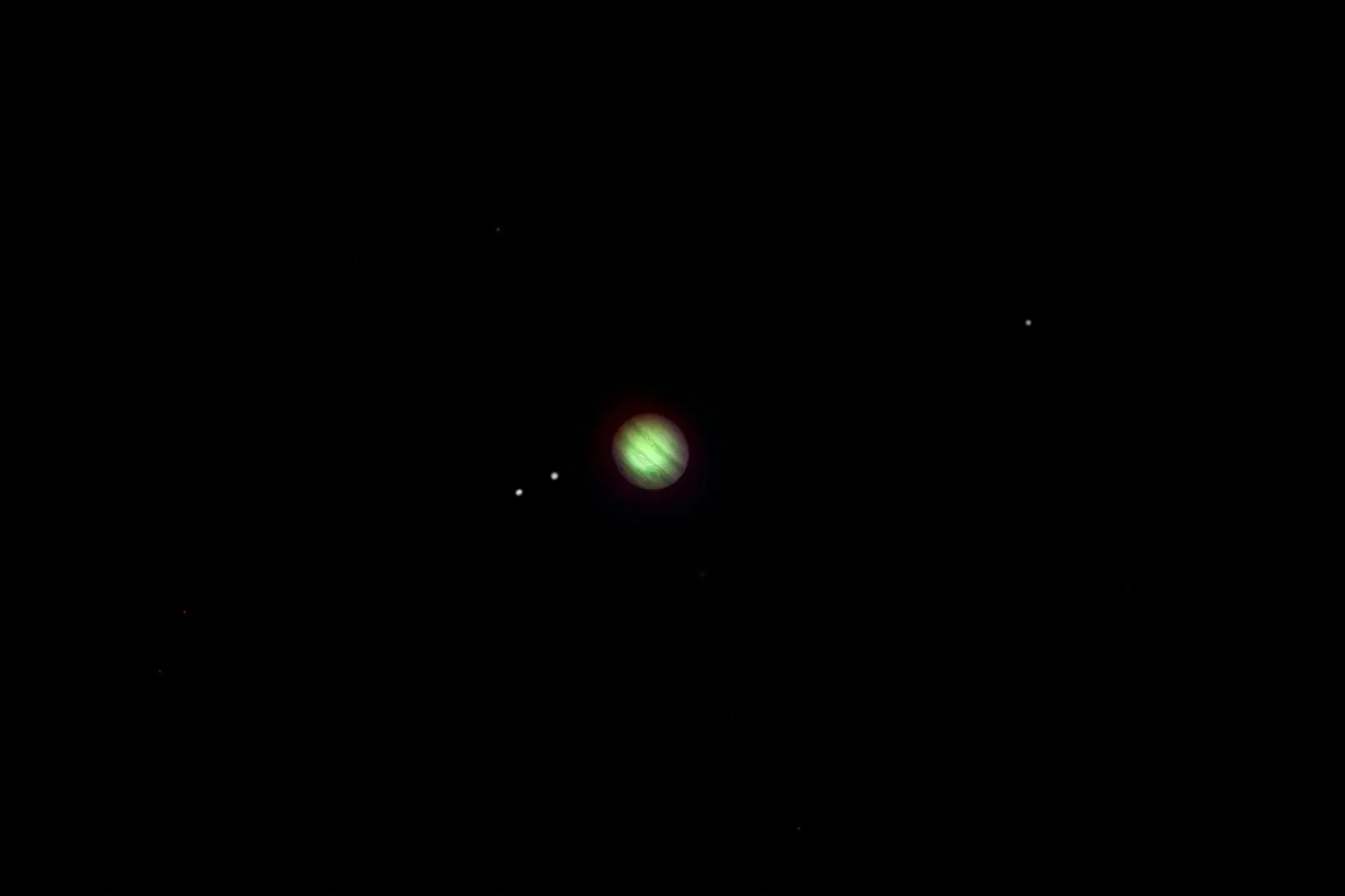
Scientists have announced a remarkable discovery that is reshaping our understanding of the solar system. In March 2026, researchers confirmed that new moons were discovered orbiting Jupiter and Saturn, the two largest planets in the cosmic neighborhood. This exciting news brings Jupiters satellite count to 101 moons, while Saturn now reigns supreme with 285 known moons—the highest total of any planet in the solar system.
The Minor Planet Center officially announced these discoveries, which include 4 new moons around Jupiter and 11 new moons around Saturn. The new moons discovered are incredibly small, measuring only about 2 to 3 miles (3 to 5 kilometers) in diameter. Their diminutive size explains why they have remained hidden from view for so long, despite being present in the solar system for billions of years.
How Astronomers Found These Tiny Moons
The discovery was made possible thanks to advances in observational technology, particularly data from the Vera C. Rubin Observatory. A report from EarthSky explains that these small moons are faint and difficult to detect, requiring powerful telescopes and sophisticated imaging techniques. The moons were first observed in various years including 2011, 2018, 2020, and 2023, with follow-up observations later confirming their orbits around the gas giants.
Most of these new moons are classified as irregular satellites, meaning they follow elliptical orbits that are often highly tilted and sometimes even move in retrograde—opposite to their parent planets rotation. Research published by IOPscience indicates that these characteristics suggest they may have been captured by the planets gravitational pull rather than forming alongside them in the traditional way.
What This Means for Understanding Space
The discovery of these small moons highlights just how much remains to be learned about the solar system. Both Jupiter and Saturn have far more moons than any other planet in the solar system, and these latest additions further cement their status as the undisputed moon kings of the celestial neighborhood. The discovery of new moons shows that even our own solar system holds secrets waiting to be uncovered.
Most of these newly discovered moons lack proper names, as only the largest moons like Ganymede for Jupiter and Titan for Saturn receive official names from the International Astronomical Union. However, these small satellites are still incredibly important for understanding the formation and evolution of planetary systems. Scientists study these tiny worlds to learn more about how the solar system formed and evolved over billions of years.
The findings also reveal new dynamical families of moons, showing distinct groupings within the moon systems that suggest past collision events. Research from IOPscience shows that this information helps scientists piece together the complex history of how these moons came to exist over billions of years. The discovery demonstrates that the solar system is far more complex than previously imagined.
As technology continues to advance, scientists expect to discover even more new moons around these gas giants. The Vera C. Rubin Observatory, formerly known as the Large Synoptic Survey Telescope, is revolutionizing the ability to detect small, distant objects in the solar system. Future observations will likely reveal even more of these tiny worlds hiding in the outer reaches of the solar system.
The new moons discovered represent some of the smallest natural satellites ever detected around the giant planets. Their detection required innovative techniques and years of careful observation. This milestone marks a new chapter in solar system exploration and reminds everyone that there is still so much left to discover right in our own cosmic backyard.
For astronomy enthusiasts, this is an exciting time. The count of known moons in the solar system continues to grow, and each new discovery adds another piece to the puzzle of how the solar system formed and evolved. Reports from EarthSky indicate that these discoveries highlight the importance of continuing to fund and develop new telescopes and observation techniques.
Related topics include planetary science, telescope technology, and the ongoing search for small bodies throughout the solar system. Scientists around the world continue to scan the skies for new moons and other celestial objects that could expand knowledge of the cosmos.
Comments 0
No comments yet. Be the first to share your thoughts!
Leave a comment
Share your thoughts. Your email will not be published.