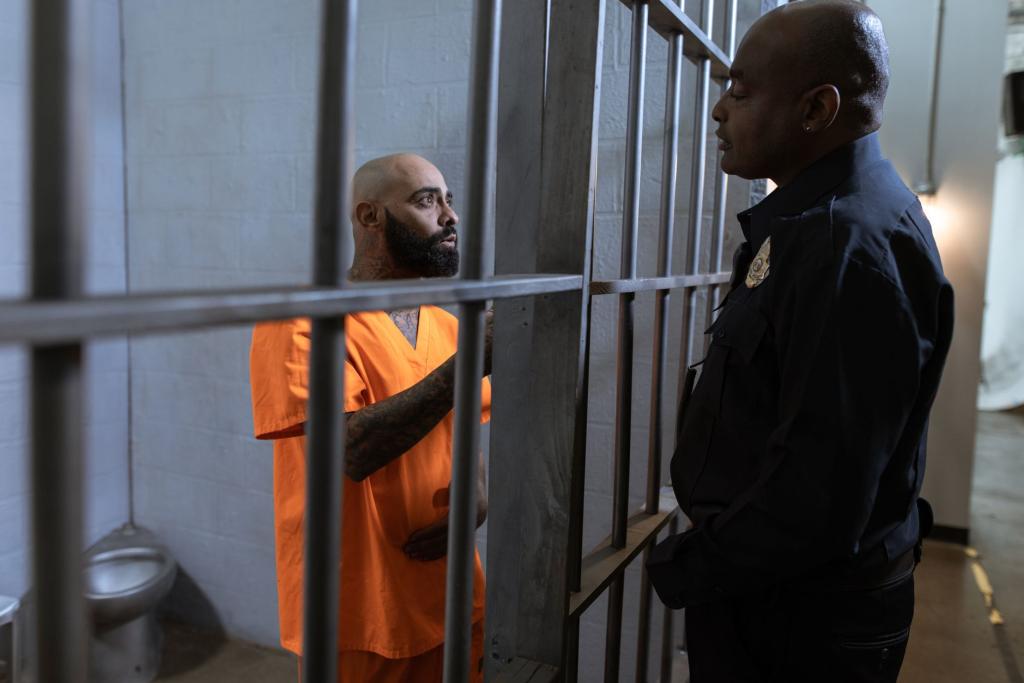
Netflix has released the official first trailer for The New Stanford Prison Experiment, a limited unscripted series that puts 30 volunteers inside a real prison and randomly assigns them to play guards or prisoners. The series arrives on Netflix on October 21, with each episode running about forty-five minutes. The trailer closes on the question the whole show is built around: does power corrupt?
The footage, which PEOPLE debuted as an exclusive first look, runs a little over two minutes and shows the social machinery starting to grind almost immediately. Prisoners push back against the guards as the struggle for control intensifies, and the trailer cuts between emotional breakdowns and confessions. "They're actually convinced they're real prisoners," one participant says. Another tells the camera, "Worst case scenario, my inner monster is stronger than I thought it was." A guard reviewing his own behavior delivers the line that will probably follow this show everywhere: "We went too far. I think we made a mistake." Hypebeast's coverage notes the six-episode order and confirms the October premiere date.
Why the original study still haunts television
The series is a deliberate echo of the infamous Stanford study led by psychologist Philip Zimbardo in 1971, which placed two dozen students in a mock prison built in a university basement and paid them fifteen dollars a day. Researchers had planned to run the simulation for two weeks but shut it down after six days, once the students assigned as guards turned abusive and those assigned as prisoners showed severe emotional distress. The fallout helped bring in the modern rules that protect human research subjects, which is part of why a reality television remake of the concept reads as provocative to some psychologists and as entertainment to others.
The modern version is produced by Alfred Street Industries, with Jane Lipsitz, Dan Cutforth, Nan Strait, Dan Volpe, Jeff Grogan and Mike Odair serving as executive producers. Netflix's own synopsis says the volunteers are thrust into a system of power, hierarchy and control, and the audience learns whether empathy, morality and individuality can survive the pressure. Reporting on the trailer notes its revolt storyline, with prisoners barricading doors and taunting the guards before punishments follow, according to ComingSoon.
The ethics question the series cannot dodge
Commentators have warned about the psychological risk to the participants, and reporting on the announcement points out that the public materials released so far do not spell out the independent oversight, informed consent details or safety protocols behind the production, according to particle.news. That gap is likely where the debate goes once the episodes air. A study that collapsed after less than a week is about to become a season of streaming television, and the line between documenting human behavior and staging it for entertainment is exactly what viewers will argue about online.
There is also the practical reality of where the show lands. It premieres in a crowded month for the streamer, alongside prestige dramas and returning hits. For viewers who came to reality television through true crime docuseries, this one sits at an uncomfortable intersection: a psychology experiment repackaged as appointment viewing. Whether The New Stanford Prison Experiment illuminates how power works or simply monetizes the question is something the episodes themselves will have to answer. The trailer, at least, has done its job. Everyone is talking about it.
The trailer drop itself is a piece of strategy. Netflix announced the commission only weeks ago, and the production was already shot, so the rollout is moving at the speed of a true crime news cycle rather than a traditional prestige launch. The studio gave the first footage to PEOPLE as an exclusive, then let the clip fan out across entertainment press the same day. It is a familiar playbook for the streamer: seed a clip that raises an ethical eyebrow, let the discourse do the marketing, and arrive at the premiere with the audience already primed to watch closely.
What happens next will be judged on details the trailer cannot show. Psychologists who teach the original study will be watching for how the show frames consent and aftercare, because the original version became a cautionary tale precisely on those grounds. Reality television fans will be watching for whether the participants feel like people or props. And Netflix will be watching the viewership numbers, since unscripted social experiments have become one of the most reliable engines on the platform. The original experiment asked what ordinary people do when a system hands them power. The remake asks a second question the trailer leaves hanging: what does the system do with them afterward?
Comments 0
No comments yet. Be the first to share your thoughts!
Leave a comment
Share your thoughts. Your email will not be published.