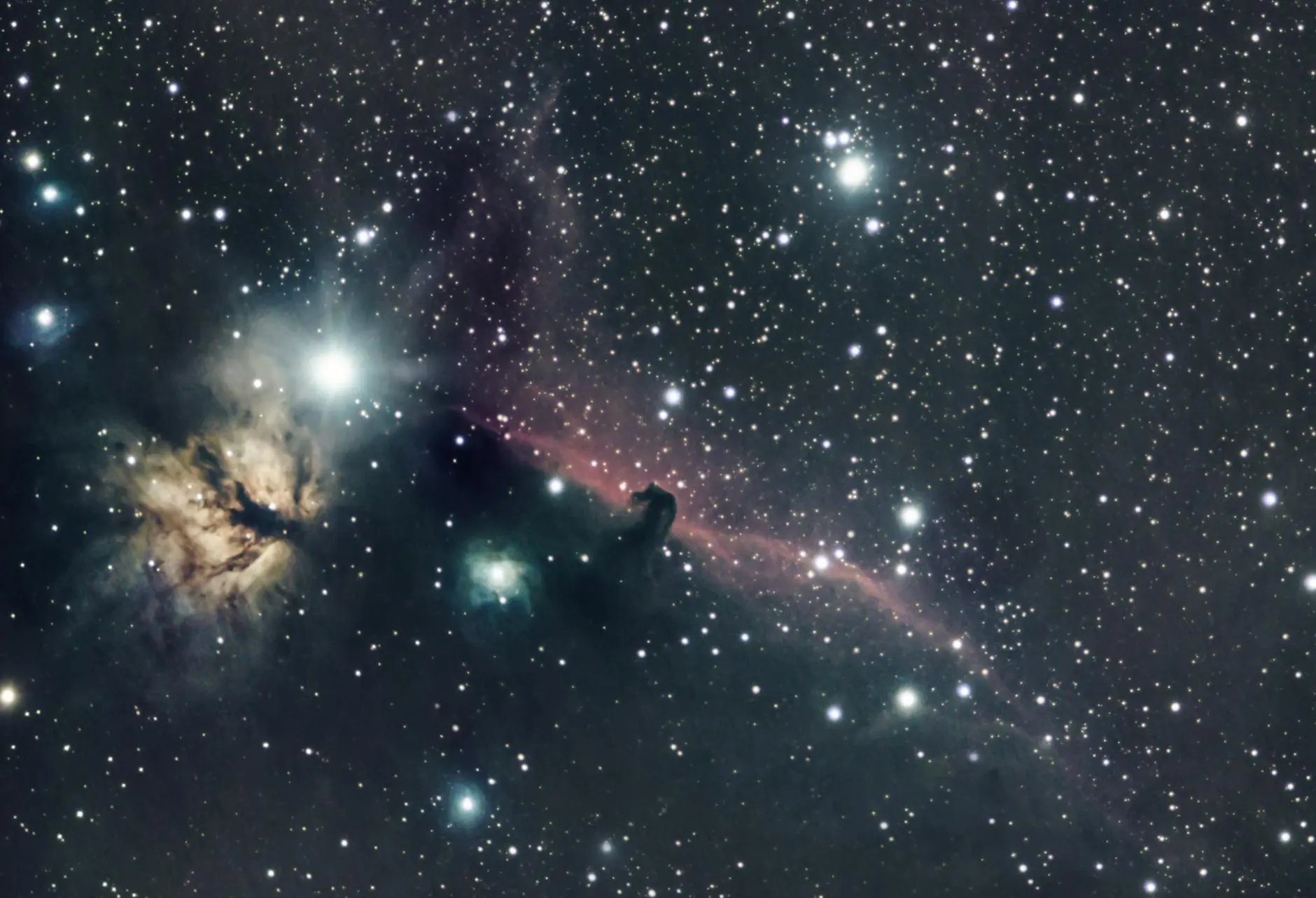
NASA has released a spectacular new image of the NASA Cat's Eye Nebula, created by combining observations from both the European Space Agency's Euclid telescope and NASA's legendary Hubble Space Telescope. This March 3, 2026, image represents a groundbreaking collaboration between two of humanity's most powerful astronomical instruments, offering unprecedented views of one of the most visually intricate remnants of a dying star.
The NASA Cat's Eye Nebula, also known as NGC 6543, is located approximately 3,000 light-years from Earth in the constellation Draco. It has long fascinated astronomers due to its complex structure of gas and dust expelled by a dying star at its core. The new composite image reveals fine details that would be impossible to see with either telescope alone, demonstrating the power of multi-wavelength astronomical observations.
According to NASA, the Euclid telescope contributed its wide-field infrared vision to the observation, while Hubble provided its sharp visible-light expertise. This combination allows scientists to study the nebula's structure in remarkable detail, from the bright central core to the faint outer shells of ejected material that span nearly half a light-year across. The data was processed by teams at both NASA and ESA to create the stunning final image of the NASA Cat's Eye Nebula.
The Science Behind Planetary Nebulae
Planetary nebulae like the Cat's Eye are formed when stars similar to our Sun reach the end of their lives. As the star exhausts its nuclear fuel, it expands into a red giant and then sheds its outer layers into space, creating a shell of ionized gas that glows under ultraviolet radiation from the hot stellar core. These objects have nothing to do with planets, despite their name, which was coined by early astronomers who thought they resembled the disk of a planet.
The NASA Cat's Eye Nebula is particularly complex, featuring multiple concentric shells, jets of material, and knots of denser gas. Scientists believe this complexity may indicate that the central star is actually a binary system, where two stars orbiting each other have influenced the shape of the ejected material. The new observations from Euclid and Hubble may help unravel this cosmic mystery by revealing previously invisible structures in the NASA Cat's Eye Nebula.
The European Space Agency's Euclid mission, launched in 2023, is designed to map the cosmic web and understand dark energy and dark matter. However, its sensitive instruments also prove valuable for studying objects within our own galaxy. The telescope's ability to capture wide fields of view while maintaining sharp resolution makes it ideal for surveying nebulae and other extended astronomical objects. More information about Euclid can be found at the European Space Agency's website.
A New Era of Space Telescope Collaboration
This historic collaboration between Euclid and Hubble marks a new chapter in space-based astronomy. Rather than competing, different missions are increasingly working together to maximize scientific return. The NASA Cat's Eye Nebula image demonstrates how combining data from multiple telescopes can reveal more than either could achieve alone, opening new possibilities for future research. The success of this project highlights the value of international cooperation in space exploration.
NASA scientists say the success of this joint observation has prompted discussions about additional collaborative projects between the two telescopes. Other planetary nebulae, supernova remnants, and star-forming regions are all potential targets for similar combined observations. The partnership between NASA and ESA continues to yield impressive results, as evidenced by this remarkable new portrait of a dying star in the NASA Cat's Eye Nebula. More details about this discovery are available at NASA's official website.
The Cat's Eye Nebula will continue to be studied by astronomers for years to come, and the new image provides a valuable resource for both scientific research and public education. It serves as a poignant reminder of the fate that awaits our own Sun billions of years in the future, when it too will shed its layers and illuminate a planetary nebula that may one day be photographed by future generations of space telescopes. The combined observations from Euclid and Hubble represent a milestone in our ability to study these cosmic wonders.
Astronomers around the world are celebrating this achievement as a demonstration of what can be accomplished when different space agencies and telescopes work together. As more sophisticated instruments come online in the coming years, we can expect even more stunning discoveries and beautiful images from the farthest reaches of our universe.
Comments 0
No comments yet. Be the first to share your thoughts!
Leave a comment
Share your thoughts. Your email will not be published.