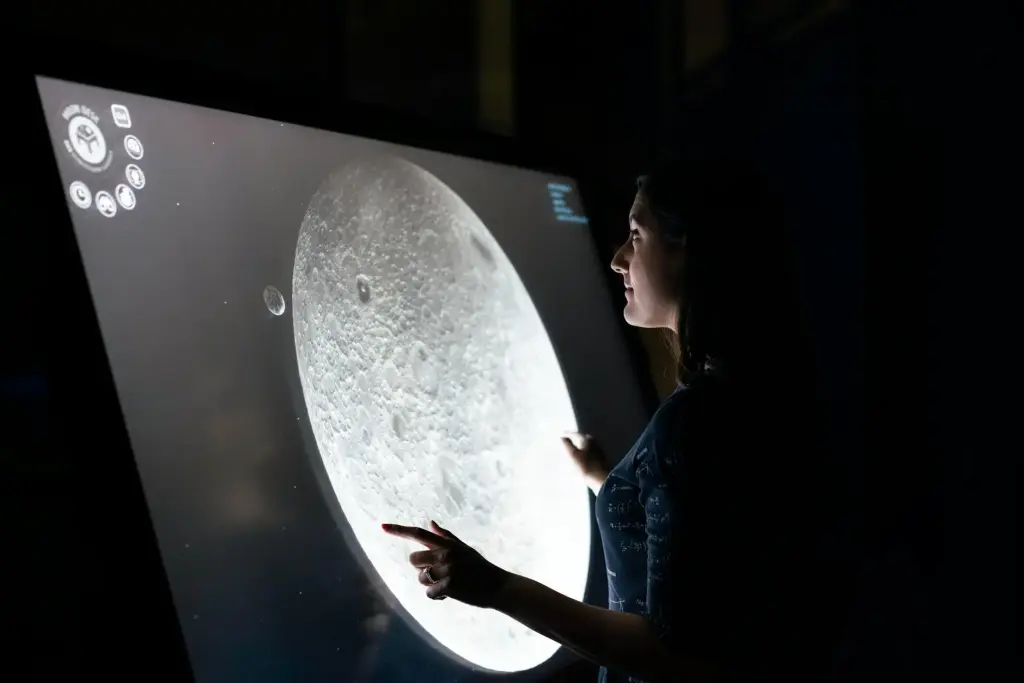
NASA is gearing up for its most ambitious space mission in decades. The space agency has announced that Artemis II is targeting an early April launch, marking humanity’s return to lunar space after more than 50 years. This historic mission will see four astronauts fly around the Moon aboard the Orion spacecraft, the first crewed lunar mission since the Apollo program ended in 1972.
The Artemis II mission represents a critical milestone in NASA’s broader Artemis program, which aims to establish a sustainable human presence on the Moon and eventually pave the way for Mars missions. According to NASA officials, the mission will test key systems and technologies needed for future deep space exploration. The successful completion of this mission will set the stage for Artemis III, which aims to land astronauts on the lunar surface. This ambitious program represents the culmination of years of planning and development.
The Astronaut Crew
The mission will feature four astronauts: NASA astronauts Reid Wiseman, Victor Glover, and Christina Koch, along with Canadian Space Agency astronaut Jeremy Hansen. This diverse crew represents an international collaboration in space exploration. The astronauts have undergone extensive training for the mission, which will involve a lunar flyby and return to Earth over approximately 10 days. Each member brings unique expertise to the mission, from spacecraft systems to scientific research. The crew has been preparing extensively at NASA facilities.
“We want to be sure that we’re thinking about everything that can possibly go wrong, and have we assessed and adjudicated all the risks to put us in the best posture to be successful,” said John Honeycutt, chair of the Artemis II Mission Management Team, during a recent press briefing, as reported by Spaceflight Now (source).
Technical Challenges and Progress
NASA has faced several technical challenges leading up to this mission. The Artemis program has already experienced delays, with the heat shield on the first uncrewed Artemis mission requiring fixes. More recently, teams have been troubleshooting helium flow issues to the rocket’s upper stage, the interim cryogenic propulsion stage. According to NASA’s official blog (source), the crawler-transporter 2 carrying the SLS rocket with the Orion spacecraft arrived inside the Vehicle Assembly Building at Kennedy Space Center in late February 2026.
After addressing the helium issue, teams have made up significant time, potentially allowing for rollout beginning March 19. A rollout on either March 19 or 20 would still preserve the possibility of launching as early as Wednesday, April 1, though weather forecasts continue to be monitored closely. The April 1 launch window represents a significant milestone in NASA’s journey back to the Moon.
What’s at Stake
The success of Artemis II is crucial for NASA’s future space exploration plans. The mission serves as a test flight for the technologies and procedures that will be used in subsequent Artemis missions, including the first Moon landing in over half a century. NASA’s Office of Inspector General has estimated that Artemis missions to the lunar surface could face a 1 in 30 risk of failure, with a 1 in 40 risk during moon operations. These risk assessments are standard for any crewed space mission.
However, the potential scientific and exploratory rewards make this a risk worth taking, according to agency officials. The Artemis II mission will also test the Orion spacecraft’s life support systems, communications, and navigation capabilities in the deep space environment. This data will be critical for planning the more complex Artemis III mission, which aims to land astronauts on the lunar surface. The lessons learned here will inform future Mars missions.
As NASA prepares for this historic launch, the world watches with bated breath. The Artemis program represents not just a return to the Moon, but a giant leap toward humanity’s future among the stars. For a generation that grew up after the Moon landings, this mission offers a chance to witness history in the making, inspiring the next generation of explorers to reach for the red planet and beyond.
Comments 0
No comments yet. Be the first to share your thoughts!
Leave a comment
Share your thoughts. Your email will not be published.