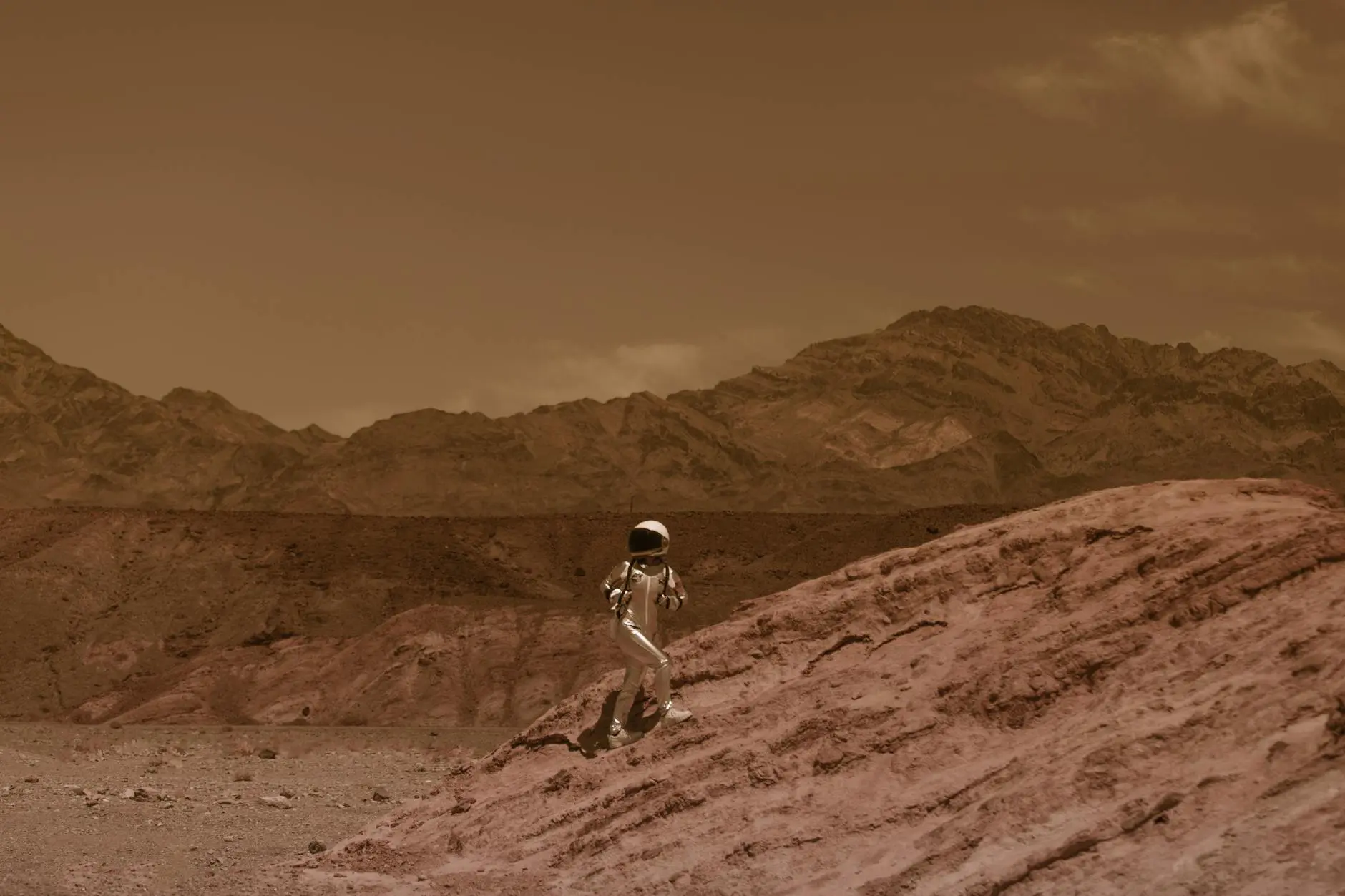
The dream of setting foot on Mars has captivated humanity for decades, but recent advancements in Mars mission innovations are turning science fiction into reality. NASA and SpaceX, two of the most prominent players in space exploration, are pioneering breakthrough technologies that could make humanity a multi-planetary species within our lifetime. From revolutionary propulsion systems to autonomous habitats, these innovations are not just about reaching Mars—they're about transforming how we explore space. According to NASA, the agency's Mars Sample Return mission, planned for the 2030s, will be the first to bring Martian materials back to Earth, a milestone made possible by cutting-edge robotics and sample preservation techniques. Meanwhile, SpaceX's Starship, currently under development, promises to reduce the cost of Mars missions by 90% compared to traditional methods, potentially enabling thousands of humans to travel to the Red Planet by 2050. These developments are reshaping the future of space exploration, making Mars more accessible than ever before.
Background: The Evolution of Mars Exploration
Mars has long been the focus of robotic exploration since the 1960s, but it wasn't until the 21st century that missions became increasingly sophisticated. The first successful Mars mission was NASA's Mariner 4, which flew by the planet in 1965, capturing the first close-up images of its surface. Since then, missions like Viking 1 and 2 (1976), Mars Pathfinder (1997), and the Mars Exploration Rovers (Spirit and Opportunity, 2004) have provided invaluable data about the planet's geology and climate. However, these missions were limited by their reliance on conventional propulsion systems, which take 6-9 months to reach Mars, and their inability to carry large payloads.
The turning point came with the Mars Science Laboratory (MSL) mission, which delivered the Curiosity rover to Mars in 2012. Curiosity, about the size of a car, was equipped with a nuclear power source and advanced scientific instruments, allowing it to analyze Martian rocks and search for signs of past life. According to NASA, Curiosity has discovered evidence of ancient rivers and lakes, suggesting Mars once had conditions suitable for microbial life. This laid the groundwork for future Mars mission innovations, such as the Perseverance rover, which landed in 2021 and is now collecting samples for return to Earth.
Key Early Missions and Their Contributions
Early Mars missions were primarily flybys or orbiters, but the Viking program marked the first attempt to land on the planet. The Viking 1 lander touched down in 1976, conducting experiments to search for life, though results were inconclusive. Fast forward to 2004, when the twin rovers Spirit and Opportunity exceeded their 90-day mission lifespans, operating for years and providing evidence that Mars once had liquid water. These missions demonstrated the potential for long-term robotic exploration and set the stage for more ambitious projects.
Another milestone was the Mars Reconnaissance Orbiter (MRO), launched in 2005. According to NASA, MRO has provided high-resolution images of the Martian surface, helping scientists identify potential landing sites for future missions. Its data has also been crucial for understanding the planet's climate and geology. These early achievements highlight the incremental progress that has made modern Mars mission innovations possible.
Recent Developments: Breakthrough Technologies in Mars Exploration
The past decade has seen unprecedented advancements in Mars mission innovations, driven by both NASA and SpaceX. NASA's Artemis program, while focused on the Moon, is serving as a stepping stone for Mars missions, testing technologies like the Space Launch System (SLS) and Orion spacecraft. Meanwhile, SpaceX's Starship is designed to be fully reusable, with the ability to carry up to 100 people and 100 tons of cargo to Mars. According to SpaceX CEO Elon Musk, the company aims to achieve the first human Mars landing by 2029, a timeline that would have been unthinkable just a decade ago.
NASA's Mars Sample Return Mission
One of the most significant Mars mission innovations is NASA's Mars Sample Return (MSR) mission, scheduled for the 2030s. The plan involves the Perseverance rover collecting samples and leaving them in tubes on the Martian surface. A future mission will retrieve these samples and bring them back to Earth. According to NASA, this will allow scientists to study Martian materials in laboratories on Earth, potentially answering questions about past life on Mars. The mission is expected to cost around $7-9 billion, a substantial investment but one that could yield groundbreaking scientific discoveries.
SpaceX's Starship: The Game Changer
SpaceX's Starship is perhaps the most ambitious Mars mission innovation to date. The spacecraft is designed to be fully reusable, with the ability to refuel in orbit and carry large payloads to Mars. According to SpaceX, Starship could reduce the cost of Mars missions to just $10 per pound, compared to $10,000 per pound with traditional rockets. This dramatic cost reduction could make Mars colonization feasible for thousands of people. Starship's first orbital test flight took place in 2023, though it ended in an explosion. SpaceX plans to conduct more tests in the coming years, with the goal of launching the first uncrewed mission to Mars by 2026.
Advanced Propulsion Systems
Another key area of Mars mission innovation is propulsion technology. Traditional chemical rockets are inefficient for Mars missions, taking months to reach the planet. However, NASA is developing nuclear thermal propulsion (NTP), which uses nuclear reactions to heat propellant, reducing travel time to just 3-4 months. According to a report by NASA, NTP could enable faster Mars missions and larger payloads. Meanwhile, SpaceX is exploring methane-based propulsion for Starship, which is not only more efficient but can be produced on Mars using the planet's carbon dioxide and water ice.
Autonomous Systems and AI
Mars missions are increasingly relying on autonomous systems and artificial intelligence (AI) to navigate the planet's challenging terrain. For example, NASA's Ingenuity helicopter, which arrived on Mars with Perseverance, demonstrated the first powered flight on another planet. According to researchers reported in Science, Ingenuity's success opens the door to more advanced aerial exploration of Mars. AI is also being used to analyze data from rovers, allowing scientists to make faster decisions about which areas to explore next.
Impact: How Mars Mission Innovations Are Transforming Space Exploration
The innovations being developed for Mars missions are not just about reaching the Red Planet—they're about revolutionizing space exploration as a whole. By reducing costs, increasing efficiency, and enabling new capabilities, these technologies are making space more accessible to both public and private entities. For example, SpaceX's reusable rocket technology has already disrupted the launch industry, driving down costs for satellite deployments and other missions. Similarly, NASA's work on nuclear propulsion could benefit missions to the outer solar system, such as a mission to Jupiter's moon Europa.
Economic and Commercial Implications
Mars mission innovations are also creating new economic opportunities. Companies like SpaceX are not just working with NASA but also with private clients, offering launch services at a fraction of the cost of traditional providers. According to SpaceX's Starship page, the company aims to make Mars a "self-sustaining city," which would require massive infrastructure and investment. This could lead to a new space economy, with industries ranging from mining to tourism.
Scientific and Cultural Impact
The scientific impact of Mars mission innovations cannot be overstated. By studying Martian samples and exploring the planet's surface, scientists hope to understand how life emerged on Earth and whether it exists elsewhere in the universe. According to NASA, the Mars Sample Return mission could provide evidence of past microbial life, a discovery that would reshape our understanding of life in the cosmos. Culturally, the prospect of humans on Mars has inspired a new generation of scientists and engineers, driving innovation in fields like robotics, AI, and materials science.
Challenges and Future Directions
Despite these advancements, Mars mission innovations face significant challenges. Radiation exposure during the journey to Mars, the harsh Martian environment, and the psychological effects of long-duration spaceflight are just a few of the obstacles. NASA and SpaceX are working on solutions, such as advanced shielding and life support systems, but these technologies are still in development. Additionally, the high cost of Mars missions means that international collaboration will be essential to achieve long-term goals. According to researchers reported in Nature
Looking ahead, the future of Mars exploration is bright. With continued investment in Mars mission innovations, we could see the first humans on Mars within the next decade, followed by the establishment of a permanent presence on the planet. These achievements will not only expand our knowledge of the solar system but also inspire humanity to reach for the stars. As NASA and SpaceX continue to push the boundaries of what's possible, the dream of Mars is becoming a reality—one innovation at a time.
Comments 0
No comments yet. Be the first to share your thoughts!
Leave a comment
Share your thoughts. Your email will not be published.