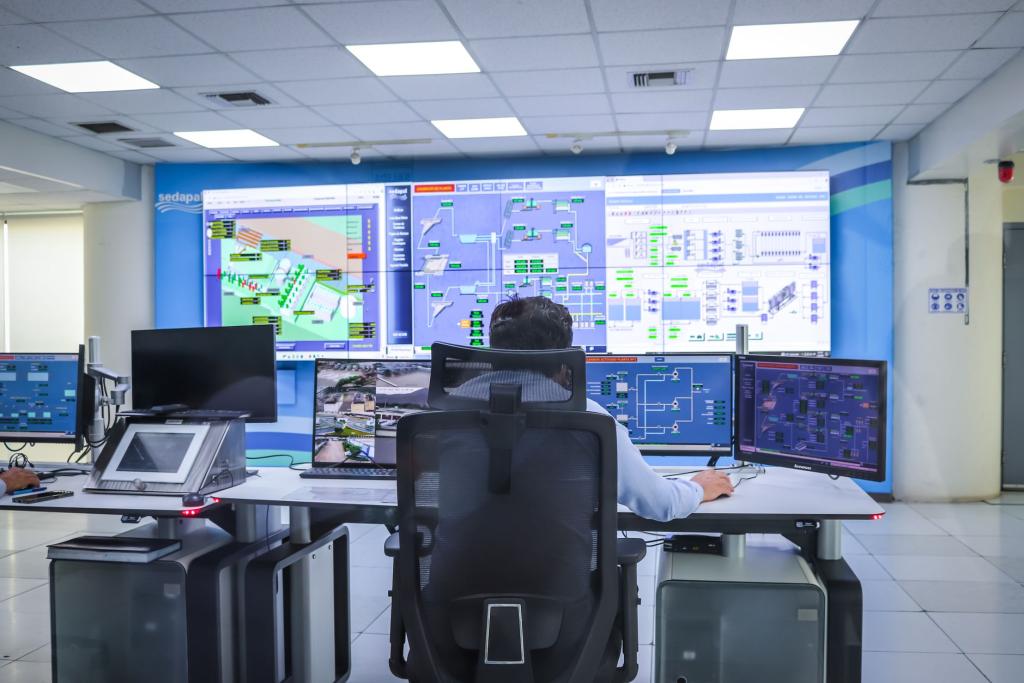
On October 14, 2026, Kyndryl, Toyota Systems, and Toyota Finance announced that agentic AI IT operations are moving into production inside Toyota Finance's enterprise systems. Kyndryl and Toyota Systems will apply the Kyndryl Agentic AI Framework across the automaker's financial services arm, targeting infrastructure design, change management, and impact analysis, according to reporting by Unite.AI.
The deal matters because it is a named customer running agents against real production workloads, not a pilot tucked inside an innovation lab. For Toyota Finance, agentic AI IT operations will run against the company's live environment to enforce customer-specific rules and knowledge, including IT environments, runbooks, and operational schedules, so the agents can surface inconsistencies and potential risks before changes go live.
What the agents will actually do
The first workload in this agentic AI IT operations rollout is IT change management operations, a notoriously brittle part of any large enterprise. According to Unite.AI, the companies are developing a solution that runs AI agents directly on Toyota Finance's operational knowledge, enabling the agents to flag inconsistencies and risks in proposed infrastructure changes and to assist with impact analysis.
The stated payoff, reported by Kyndryl in the announcement, centers on people rather than pure automation. The initiative is expected to strengthen business continuity, improve engineering productivity, standardize quality in review workflows, and reduce decision-making time and engineers' workload. Toyota Finance's IT chief framed the work in human terms, saying that skilled engineers matter most for sustainable growth and that agentic AI should create a virtuous cycle in which people shift toward new challenges and greater value creation.
Toyota Systems, the Toyota Group's IT solutions company, described the initiative as a transformation of its IT operations in support of a sustainable mobility society. Its finance IT head connected the approach to jidoka, the Toyota principle of automation with a human touch, arguing that combining frontline expertise with digital technology produces continuous improvement.
The framework behind the deployment
The technology at the center of this agentic AI IT operations push is the Kyndryl Agentic AI Framework, which Kyndryl describes as an approach to making organizations AI-native by reimagining workflows, scaling AI throughout operations, and integrating agents into an upskilled workforce. The framework is organized around three pillars, speed, scale, and trust, and a four-part engagement method labeled Reimagine, Build, Empower, and Orchestrate.
According to Kyndryl, the framework coordinates self-directed, self-learning agents that work alongside people on complex workflows at scale. It integrates with a customer's existing environment, draws on the Kyndryl Bridge platform where appropriate, and uses graph-based orchestration to balance speed, resilience, and transparency. The result, Kyndryl claims, is explainable and auditable outcomes for agent-driven work.
The governance layer did not arrive with this project. In a February 2026 announcement, Kyndryl introduced a policy-as-code capability that renders organizational rules, regulatory requirements, and operational controls as machine-readable policies governing how agentic AI workflows execute. According to Kyndryl, that capability delivers deterministic execution, audit-by-design transparency, and human supervision of agent tasks through a dashboard. That heritage matters for a financial services deployment, where regulators and internal auditors will demand receipts for every automated decision.
A pattern worth watching
This was not the only named-customer story this week. As Forkast noted in its analysis, three major IT services firms announced named production customers for agentic AI platforms within roughly 48 hours. Yet only one of the three shared performance data alongside its announcement. Kyndryl's collaboration with Toyota Finance came with ambitions and architecture but no hard before-and-after numbers, a point Forkast flagged directly.
That gap is the honest read on where agentic AI IT operations stand today. Enterprises like Toyota Finance are willing to put agents on production change management, which signals real confidence. But the industry still owes the market measured outcomes: fewer failed changes, faster approvals, measurable workload reduction. Until vendors publish those figures, agentic AI IT operations remain proof of momentum rather than proof of ROI.
Kyndryl says it will expand the agentic approach across Toyota Finance's entire IT infrastructure lifecycle, though it gave no timeline. For the broader agent ecosystem, the signal is clear: the era of pilot purgatory is ending, and the next phase of agentic AI IT operations will be won or lost on verified production results.
Comments 0
No comments yet. Be the first to share your thoughts!
Leave a comment
Share your thoughts. Your email will not be published.