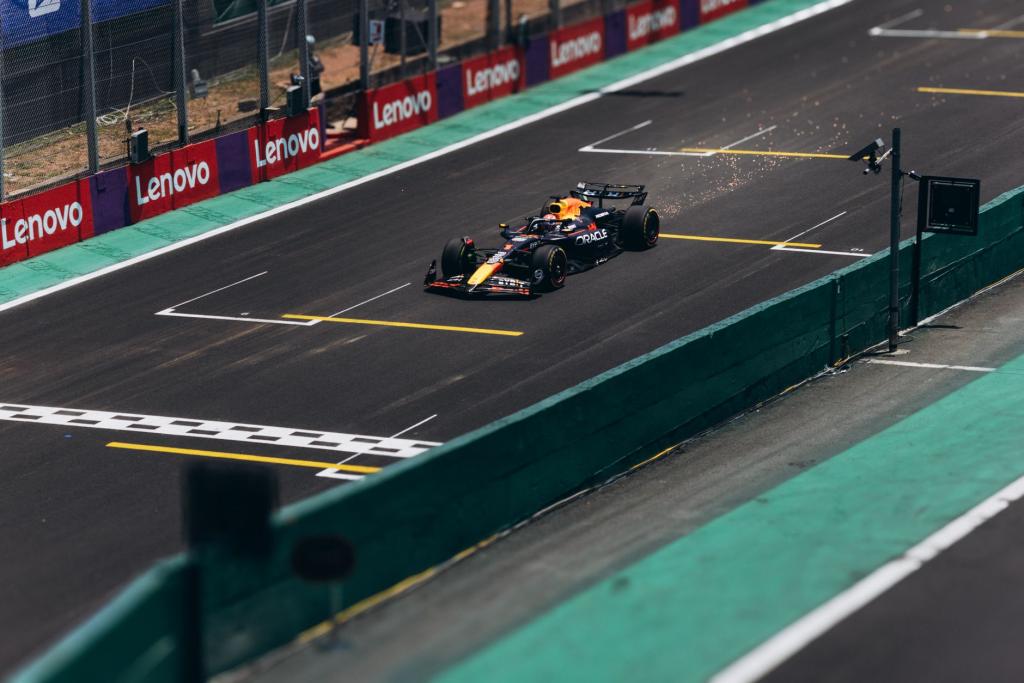
Haas confirmed on Thursday, October 15, 2026, that 21-year-old Brazilian Rafael Camara has signed a multi-year deal to make his Formula 1 debut with the team in 2027. The Ferrari junior leads the 2026 FIA Formula 2 championship on 207 points, seven clear of Red Bull protege Nikola Tsolov with two rounds remaining, and takes the seat vacated by Esteban Ocon. He will partner 21-year-old Briton Oliver Bearman, giving the American squad the youngest confirmed driver pairing by combined age on next season's grid. Camara becomes Brazil's 34th Formula 1 driver and, together with Gabriel Bortoleto at Audi, puts two Brazilians on the grid for the first time since Felipe Massa and Felipe Nasr raced in 2016.
The signing is the end of a months-long search that followed Ocon's departure announcement at the end of September. Haas ran an evaluation program through the summer, putting McLaren junior and reigning F2 champion Leonardo Fornaroli, Toyota reserve Ryo Hirakawa and ex-Alpine driver Jack Doohan through the same process as Camara. The decisive moment came in August at the Autodromo Internacional do Algarve in Portimao, where Camara drove the team's 2025 car in a Testing of Previous Cars outing and set the benchmark the others could not match. "He was the quickest, very simple answer. He was impressive," team principal Ayao Komatsu told reporters, according to Reuters. Komatsu added that he was "really excited to sign such a young, amazing talent like Rafael Camara," in the team's statement.
The Portimao test that sealed the seat
Komatsu said Camara had very little time to learn the car in Portugal but showed Haas far more than raw speed. According to Formula 1, the 21-year-old demonstrated the kind of adaptability the team had been looking for, handling himself well in machinery he had never driven before. The performance stood out against candidates who included the reigning F2 champion, and Komatsu made clear the Ferrari link had nothing to do with the call. He stressed that the selection was based purely on pace, according to Formula 1, calling the speed gap the simplest possible answer to why Camara got the drive.
The decision was not without its honest caveats. Komatsu openly referenced Camara's tricky weekends during his rookie F2 campaign, including a mistake that cost him a victory in Monaco and another costly error in Montreal. Rather than hiding from those moments, the team boss pointed to the speed Camara showed in qualifying on those same difficult weekends as proof of his potential. That kind of candor is unusual in a signing announcement, and it reads as a bet on raw talent over a flawless record — Haas believes the mistakes are teachable while the one-lap pace is not.
Why Haas is betting on youth
Bearman and Camara both came through the Ferrari Driver Academy, the Scuderia's young-driver program, making next year's lineup a full academy double act at the American team. Bearman arrived the same way a year earlier and has outpaced Ocon across much of the current season, a precedent that clearly encouraged Haas to roll the dice again rather than chase an experienced hire. Ocon, a one-time race winner, leaves without a seat for next year and has said he would prefer an F1 reserve role over racing in another series.
The resume behind the promotion is unusually complete for a rookie. Camara won the 2025 Formula 3 championship with Trident in dominant fashion, equaling the highest win percentage in the series' history, after taking the Formula Regional European title the year before. If he holds off Tsolov in the final two F2 rounds in Qatar and Abu Dhabi, he would become the first driver ever to win the Formula Regional, F3 and F2 titles in three consecutive seasons. As The Race reported, his standout qualifying average of 2.54 this year underlines a one-lap strength that translated directly to the Portimao test.
A Brazilian revival on the grid
For Brazilian fans, the timing is the story. Bortoleto's confirmation at Audi had already ended a long wait for a homegrown driver; Camara's arrival means the country's supporters get two compatriots to follow, the first pairing since Massa and Nasr in 2016. The record behind the promotion supports the decision: three Feature race victories, four further podiums and five pole positions in his rookie Formula 2 season, per the official championship site. The dual arrival also fits a sport in expansion mode, with Formula 1's planned return to Africa through a Grand Prix in Rwanda adding a new stop to a calendar that already stretches across five continents, part of Rwanda's push to bring Formula One back to the continent.
Camara's focus now shifts to finishing the job in Formula 2 before he thinks about winter testing. "I'm very happy to be joining TGR Haas F1 Team as a Formula 1 driver," he said. "It's an important step in my career." He thanked team owner Gene Haas and Komatsu for their trust, plus his family and the Ferrari academy for their support through the junior years. Haas, meanwhile, heads into its home race next week — the United States Grand Prix in Austin on October 25 — sitting seventh in the constructors' standings on 30 points, with a 2027 lineup locked in and the youngest pairing on the grid ready to learn on the job.
Comments 0
No comments yet. Be the first to share your thoughts!
Leave a comment
Share your thoughts. Your email will not be published.