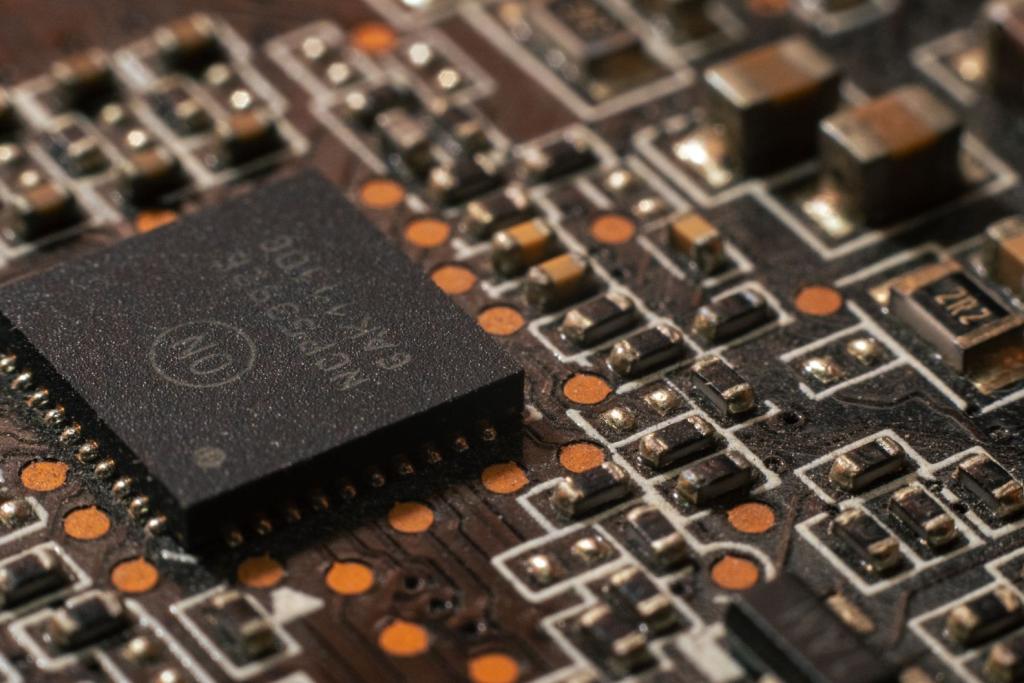
OpenAI is going deeper into the chip business — not by designing chips itself, but by teaching its models to do it. At a Synopsys investor summit in San Francisco in late September 2026, the semiconductor software giant announced a multi-year partnership with OpenAI to build GPT-Synopsys, an AI model trained specifically to run the professional tools engineers use to design computer chips.
The deal pairs OpenAI’s frontier models with Synopsys’ electronic design automation software, the industry-standard toolkit for laying out billions of transistors on silicon. Under the agreement, the two companies will develop the model together, bring it to market jointly and share the revenue it generates, according to the companies’ announcement.
What the model is supposed to do
Today, connecting an AI model to chip-design software mostly means bolting a general-purpose assistant onto engineering tools. GPT-Synopsys is meant to go further: the model will learn to operate Synopsys’ tools the way an expert engineer does — running the software, interpreting the results, tweaking the design and repeating the cycle while human engineers set the goals and sign off on the outcomes, according to technical analysis of the deal.
In practice, the AI agents would chase objectives like power, performance and area optimisation, working through timing and verification checks that currently consume weeks of engineer time. As reported by Reuters, OpenAI co-founder Greg Brockman said the aim was to “shave off weeks, months from the design process and to bring more chips to the world.” Early technology engagements with semiconductor customers are already underway, Synopsys said.
The business math: subscriptions, revenue sharing and a market reaction
The financial structure is unusually direct. OpenAI will pay Synopsys a training subscription fee to learn its tools, and when customers use the finished product, the two companies will split revenue based on how much the model improves a chip design. Synopsys chief executive Sassine Ghazi told Reuters the arrangement was structured so it would be an upside to the business rather than cannibalising it.
Investors liked what they heard. Synopsys shares rose as much as seven percent after the announcement, and Ghazi used the same summit to forecast fifteen percent revenue growth for fiscal 2027 — above analyst estimates of around eleven percent, according to LSEG data cited by Reuters. The market verdict, at least initially, is that AI-assisted chip design is a growth story, not a threat to the software maker’s core business.
Why this matters beyond the chip industry
Every AI feature Gen Z uses — the photo tools, the voice assistants, the apps that suddenly got smarter this year — runs on silicon that took years to design. Chips are the bottleneck of the AI era: demand for compute keeps climbing, and the design cycle for a cutting-edge processor is measured in years, not months. Anything that compresses that timeline ripples outward into faster phones, cheaper laptops and more capable AI services. OpenAI’s push into silicon is part of a broader pattern of AI labs moving into infrastructure, alongside efforts like OpenAI’s expansion onto AWS and the custom-silicon work it has already done with Broadcom. Our AI News desk has been tracking how quickly these labs are moving down the stack.
There is also a timeline worth noting. OpenAI has been building its chip-design footprint for some time, including custom silicon developed with Broadcom. The Synopsys deal turns a general ambition into a concrete product roadmap: a named model, a revenue model and customers already testing it.
The catch: an AI chip designer still gets a human fact-check
For all the ambition, the guardrails are explicit. Ghazi said the model’s work will be double-checked by Synopsys tools that use traditional computing techniques to verify whether a chip will actually work — the industry’s “first-time-right silicon” standard is not being handed to a language model on trust. Synopsys also says customer-specific design data will not be used to train the model, with encryption in transit and at rest plus audit and permission controls.
That is the honest counterpoint to the hype. Chip designs are among the most expensive and secretive assets in technology; a flawed AI suggestion caught late can cost millions. And the engineers whose weeks of work the model is supposed to absorb will rightly ask what their role becomes when the tool learns to do the trade-offs. The partnership’s answer is that humans set objectives and review outcomes — but that is a workflow promise, not a finished product. GPT-Synopsys is a development agreement, not a shipped tool.
Still, the direction of travel is hard to miss. The companies that build the world’s AI models are racing to control the silicon those models run on, and the tools used to design that silicon. This week, they signed a deal to let the models do the designing.
Comments 0
No comments yet. Be the first to share your thoughts!
Leave a comment
Share your thoughts. Your email will not be published.