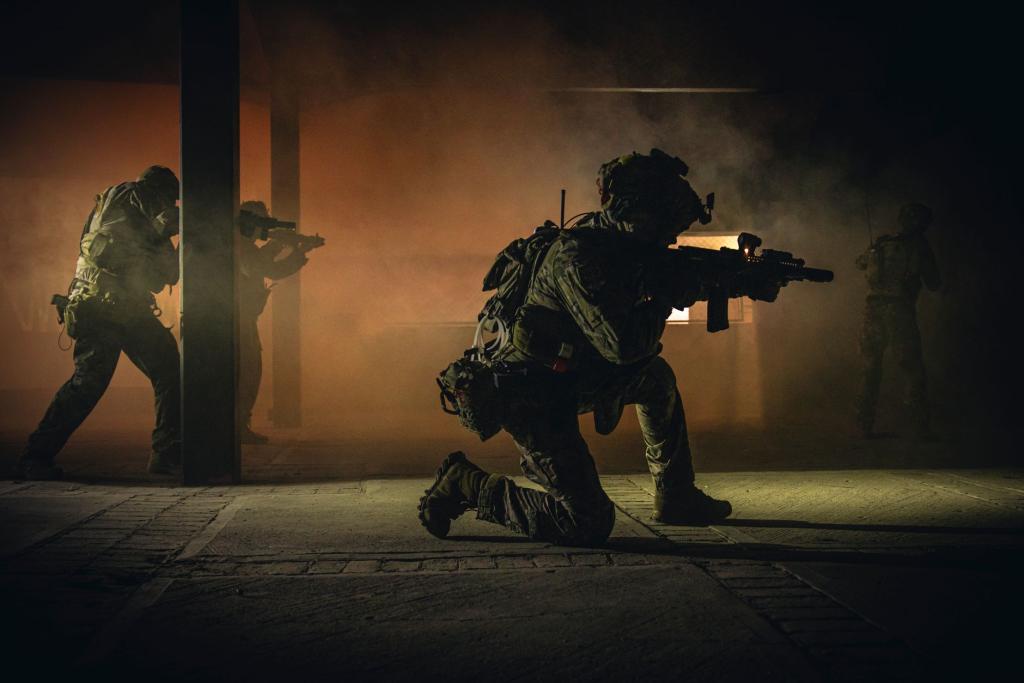
The Gaza ground operation began early Wednesday afternoon, Nov. 18, when Israeli forces moved west of the Yellow Line near Nuseirat and Bureij in central Gaza, according to the BBC. A Reuters report published at 3:05 p.m. Eastern described tanks on Salahudeen Road and displaced families leaving tents and shelters.
What is confirmed
The BBC reported that COGAT, Israel’s military body responsible for civilian matters in the Palestinian territories, announced the incursion and warned residents north of Nuseirat and Bureij to stay away. The IDF later said it began a joint operation with the Shin Bet to dismantle a tunnel west of the line that it said posed an “immediate and direct threat” to troops. Those statements give Israel’s account of the objective; the reporting does not independently establish the tunnel’s location or threat assessment.
Reuters called the movement a “rare ground raid” in an area Israeli forces had left under the October 2025 ceasefire. Residents told Reuters that tanks advanced along Salahudeen Road and crossed the Yellow Line, the ceasefire boundary. The report describes the crossing as the first of its kind since the truce, based on residents’ accounts; the exact route and full extent of the advance remain attributed to those accounts and the reporting outlets.
Casualty reports concern separate attacks on Wednesday, not a verified toll from the Gaza ground operation itself. According to Reuters, Palestinian medics reported one person killed in an Israeli airstrike near the operation and two more killed in separate incidents, one in Deir al-Balah and one in Gaza City. The Israeli military said it was not aware of an incident in Deir al-Balah; for Gaza City, it said it had struck a militant. The figures were reported by medics and have not been independently reconciled with the military’s account.
Accounts also differ on how residents were told to leave. Reuters quoted a resident who said the military ordered people to evacuate; she described gunfire after families tried to remain and said a boy was hit in the leg. The BBC reported a COGAT warning to stay away from the area, while noting the IDF announcement itself described the operation. Reuters did not report medical confirmation of the boy’s injury.
What the parties said
The IDF said its forces acted to remove an immediate threat. In a statement quoted by the BBC, the military said the operation targeted a tunnel west of the Yellow Line. It described the tunnel as posing a direct threat to troops. These are Israel’s stated reasons, not independent findings about the tunnel or compliance with the ceasefire.
Hamas called the advance a breach of the ceasefire. A Wednesday statement carried by the Palestinian Information Center, which published the movement’s position, described the operation as “a dangerous development and a blatant breach” of the agreement. Hamas said the evacuation and displacement of civilians violated international humanitarian law. These are the group’s claims; the Israeli military gave a different account of the operation’s purpose.
How the coverage splits
Reuters, republished by CP24, leads with displaced Palestinians fleeing and calls the action a “rare ground raid.” It refers to Hamas as “Hamas militants” and foregrounds tanks on the main road, a resident’s account and deaths reported by medics. Reuters includes Israel’s response to the Gaza City death and its statement that it was unaware of the Deir al-Balah incident; it does not include BBC Verify’s review of footage or the BBC’s account of COGAT’s separate warning to residents. Reuters and CP24 are not parties to the conflict; CP24 published the Reuters wire.
The BBC headlines the event as a rare Israeli military operation “beyond Yellow Line.” It foregrounds the boundary, COGAT’s evacuation warning and witness accounts, including video it says BBC Verify checked. It calls Hamas a “Palestinian armed group” and reports the group’s ceasefire-violation claim, while also quoting the IDF’s tunnel rationale. The report does not detail the three deaths that Reuters attributes to medics. The BBC is not a party to the fighting.
The Palestinian Information Center headlines with Hamas’s accusation that the incursion was a “flagrant ceasefire violation.” Its account uses “occupation army,” foregrounds forced displacement and quotes Hamas’s allegation that Israel breached international law; it does not provide an Israeli response beyond repeating the operation notice, nor does it independently verify the claim. The Center carries Hamas’s statement; Hamas is a party to the conflict, so this is a belligerent’s account rather than independent confirmation.
The record so far
The independently reported record is an Israeli ground movement west of the Yellow Line, a COGAT warning to residents, tanks near Nuseirat and Bureij, and Palestinians leaving the area. Israel says its forces targeted a tunnel that threatened troops; Hamas says the incursion and displacement breached the ceasefire. Neither side’s account of compliance is independently settled by the reporting reviewed here. Medical sources reported deaths in separate attacks, but the outlet accounts do not establish a single casualty count attributable to the ground operation.
This differs from the desk’s earlier reports on a Gaza university strike and a Khan Younis drone strike: those were separate air attacks, while this Nov. 18 event was a ground operation around Nuseirat and Bureij. The current reports also describe distinct locations and overlapping casualty accounts, so the earlier strike totals do not belong in this operation’s count.
Comments 0
No comments yet. Be the first to share your thoughts!
Leave a comment
Share your thoughts. Your email will not be published.