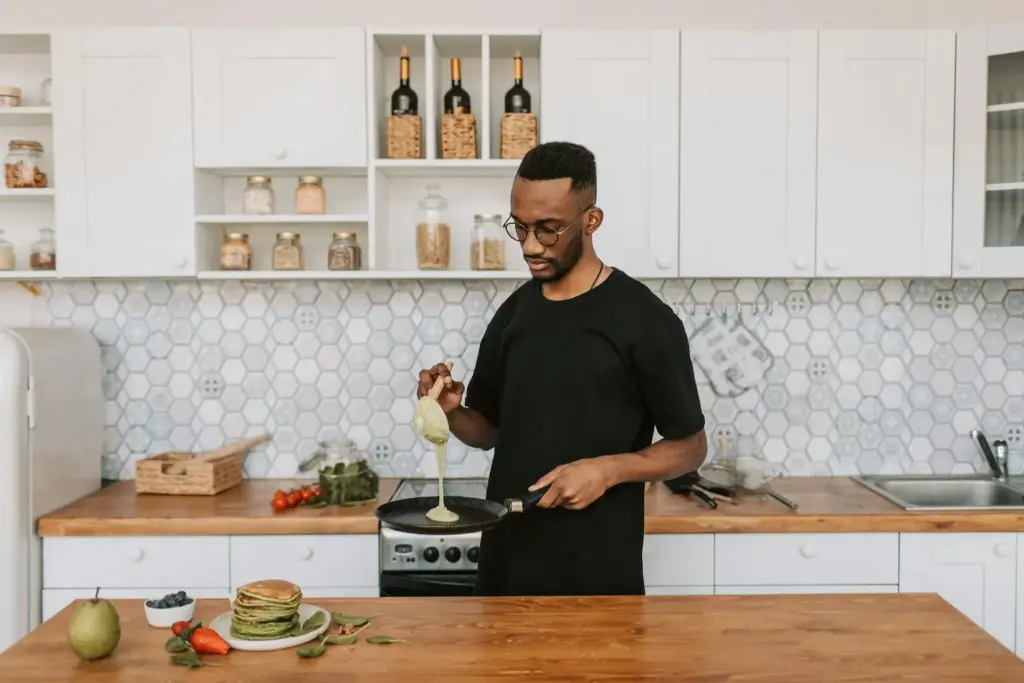
Pancakes become disappointing fast when the batter is mixed like cake, the pan runs too hot or the cook keeps flipping too early. The good version is not complicated. Pancake basics come down to a smooth but not overworked batter, moderate heat and the patience to let the first side fully set before touching the second.
According to King Arthur Baking, its pancake method keeps the batter simple and emphasizes an even griddle plus a controlled flip rather than chasing dramatic height. That is useful because the difference between flat, rubbery pancakes and soft, evenly browned ones often comes from small timing choices rather than from buying different ingredients.
Mix only until the dry pockets disappear
Pancake batter does not need to be perfectly silky. A few small lumps are usually better than overmixing, because too much stirring builds structure and can make pancakes tougher. Once the flour is hydrated and no large dry streaks remain, the batter has usually had enough handling for a tender result.
If the batter seems thick, it should still be pourable rather than stiff. Pancake basics are easier when the cook aims for consistency instead of volume. A dramatic batter does not guarantee good texture, but a balanced batter gives the heat room to do its job.
Control the pan before the first scoop goes down
An uneven pan temperature ruins more pancakes than the recipe itself. If the skillet is too cool, the batter spreads and dries before it browns. If it is too hot, the outside darkens before the center cooks through. Moderate, steady heat gives the batter time to rise gently and cook evenly.
The first pancake is often a test piece for a reason. It shows whether the pan is hot enough, whether the batter needs a stir and whether the portion size is manageable. Pancake basics improve when the cook treats the first round as information, not as proof that the batch has gone wrong.
Flip once, and only after bubbles are not the only signal
People are often told to flip when bubbles appear, but bubbles alone are not enough. The edges should look set and slightly dry, and the spatula should slide underneath without the surface dragging. That combination matters because flipping too early tears the structure and makes it harder for the pancake to finish evenly on the second side.
After the flip, the second side usually needs less time than the first. Pancake basics work better when the cook resists pressing down with the spatula, which only squeezes out air and moisture. The goal is a soft center and even browning, not a flattened disk.
Serve quickly or hold warm without steaming the stack
Pancakes are best when served shortly after they leave the pan, but a short hold is possible if they stay in a warm oven in a single layer before stacking. A tight stack on the counter traps steam and softens the browned surface too quickly.
Toppings matter too. Syrup, butter or fruit can go on immediately, but pancake basics still matter more than decoration. If the batter was handled gently and the heat stayed even, the pancake can hold toppings without collapsing into a gummy middle.
That is why pancake basics are worth learning. Once the batter, heat and flip timing make sense, pancakes stop feeling random and start feeling repeatable.
Resting the batter and holding the pan steady improve consistency
A short batter rest gives the flour time to hydrate and helps bubbles form more evenly once the pancakes hit the pan. That does not mean waiting forever, but it does mean resisting the urge to mix and pour immediately if the batter still looks uneven. A brief rest often improves tenderness without any extra ingredients.
Pan management matters just as much. Once the heat is stable, keep it there. Constant burner changes create pancakes that brown too fast on one batch and too slowly on the next. Pancake basics work best when the cook finds a steady medium heat and repeats the same timing instead of improvising every round.
Comments 0
No comments yet. Be the first to share your thoughts!
Leave a comment
Share your thoughts. Your email will not be published.