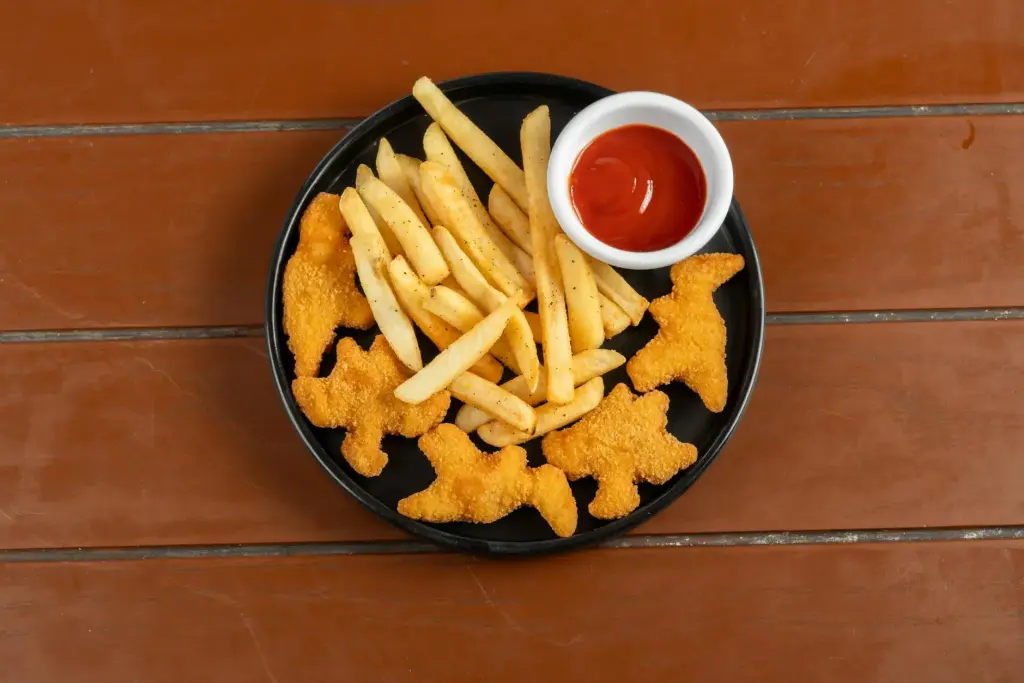
Homemade chicken nuggets should be simple, but they often go wrong in two directions: pale and soggy on the outside, or overcooked and dry in the center. The fix is usually not a more complicated ingredient list. Nugget basics come from even sizing, a coating that can adhere properly and cooking long enough to reach a safe temperature without drying every piece out.
According to FoodSafety.gov, all poultry should reach an internal temperature of 165 degrees Fahrenheit, which is the most important number in any homemade chicken nugget method. That is why homemade nugget basics need to balance crispness and food safety instead of treating them as separate concerns.
Cut the chicken evenly before worrying about the coating
If some pieces are thick and others are tiny, they cannot finish at the same moment. The thin pieces dry out while the larger ones are still cooking. Homemade nugget basics therefore start with uniform pieces that give the cook a chance to brown the outside without sacrificing the center.
This also makes seasoning more consistent. Even pieces catch flour, egg and crumbs more evenly, which means the final batch looks and tastes more deliberate rather than like scraps that happened to be breaded together.
Build the coating so it actually sticks
A standard flour, egg and crumb setup still works because each layer has a job. The flour dries the surface slightly, the egg helps the crumb cling, and the crumb forms the crisp shell. Nugget basics improve when each stage is applied lightly rather than clumped on in thick patches.
The crumb itself can be plain or seasoned, but the biggest improvement usually comes from pressing it on gently and then letting the coated pieces rest briefly before cooking. That short pause helps the outer layer hold together instead of sliding off as soon as it hits heat.
Cook for color, but confirm with temperature
Golden coating is helpful, but it is not proof that the chicken is safe. Homemade nugget basics should still end with a temperature check in the thickest piece. Poultry needs to reach 165F, and that matters just as much for bite-size pieces as it does for larger cuts.
This is especially important because coating can brown quickly in a pan, oven or air fryer. A beautiful outside does not guarantee a finished center. Color helps with timing; temperature confirms safety.
Reheat gently so the second round is still worth eating
Nuggets lose texture when they are trapped in steam or reheated too aggressively. A quick reheat with dry circulating heat helps restore the outer coating better than a blast that softens it. They will never be identical to the first round, but they can still stay crisp enough to enjoy.
Homemade nugget basics are therefore less about novelty and more about control: even chicken pieces, a coating that sticks, a safe finish and a reheating method that respects texture.
That is what turns nuggets from a fallback food into a reliable homemade recipe. The method is simple, but it works best when safety and texture are built together from the start.
Storage and reheating should protect the crisp coating
Homemade nuggets lose quality quickly when they are piled hot into a container or reheated without enough dry heat. Letting them cool briefly before storage helps keep the coating from steaming itself soft. When reheating, an oven or air fryer usually restores texture better than a microwave because the exterior can crisp again while the center warms through.
Food safety still comes first. Any batch that sat out too long or never reached a safe internal temperature the first time should not be rescued by better reheating. The easiest way to keep homemade nuggets good on day two is to cook evenly sized pieces, store them promptly and reheat just long enough to crisp without drying out the chicken.
Comments 0
No comments yet. Be the first to share your thoughts!
Leave a comment
Share your thoughts. Your email will not be published.