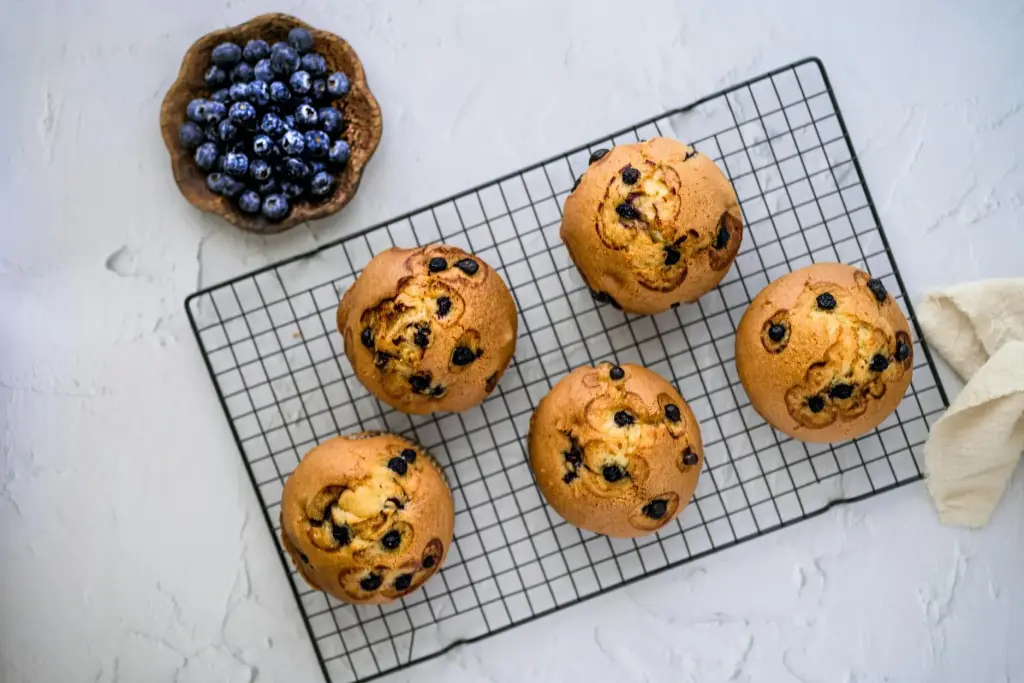
Blueberry muffins only seem foolproof because the ingredient list is familiar. In practice, they go dense when the batter is overworked and streaky when the berries are handled carelessly. Blueberry muffin basics are about protecting structure while making sure the fruit still shows up in every bite.
According to King Arthur Baking, a dependable blueberry muffin uses a tender batter, folds the berries in at the end and bakes just long enough for the tops to set without drying the crumb. That matters because muffins do not have much room for recovery once the flour is mixed and the tray is in the oven. The best batch usually comes from a few restrained decisions made early rather than from trying to rescue texture after the fact.
Mix until combined, not until perfectly smooth
Muffin batter should look cohesive but not overbeaten. A few small lumps are not a flaw. They are often a sign that the flour has been handled less aggressively, which helps the final crumb stay tender. Blueberry muffin basics begin with restraint because too much mixing tightens the structure quickly.
This is also where the fat and dairy balance matters. If the wet ingredients are measured consistently, the batter will hold the berries better and bake more evenly instead of turning gummy in the center. Trying to compensate for a thin batter with extra flour at the last minute usually makes the crumb heavier, not better.
Add berries in a way that protects both fruit and batter
Fresh and frozen berries can both work, but they behave differently. Frozen berries often bleed more color, while fragile fresh berries can burst if the bowl is handled roughly. Blueberry muffin basics improve when the berries are folded in late and gently so the batter keeps its shape.
Even distribution matters as much as gentleness. If the bowl is not folded carefully, one corner of the tray gets all the berries while another bakes almost plain. A better fold creates consistency in flavor and moisture across the whole batch. Lightly dusting berries with flour can also help them stay suspended more evenly in some batters.
Bake until the tops spring back lightly
Muffins need enough time to set their center without staying in the oven until every trace of softness disappears. Blueberry muffin basics work better when doneness is judged by a gently resilient top and a tester that shows crumbs rather than wet batter. Waiting for total dryness is an easy way to lose tenderness.
Portioning the tray evenly helps here too. If one cup is overfilled and another is shallow, the bake becomes uneven no matter how accurate the oven temperature is. Consistent scoops give the whole tray the same chance to rise, brown and finish together.
Cool on purpose so steam does not ruin the crumb
A short rest in the pan is useful, but muffins should move to a rack before trapped steam softens the bottoms and liners. That small transition keeps the outside from getting soggy while the inside finishes settling.
Blueberry muffin basics are simple once the method is clear: gentle mixing, careful berry handling, even scoops and a timely pull from the oven. Those habits do more for texture than any extra topping ever will. They also make the batch easier to repeat instead of leaving the result up to chance.
That is what gives a blueberry muffin its best version of softness. The finished batch should feel deliberate, not lucky, and every step should help preserve that light crumb.
Storage is part of the result too. Blueberry muffins hold up better when they cool fully before being covered, because trapped heat softens the tops and liners. If the batch needs to last longer, freezing once cooled is usually a better texture choice than leaving muffins loosely wrapped on the counter for days.
Comments 0
No comments yet. Be the first to share your thoughts!
Leave a comment
Share your thoughts. Your email will not be published.