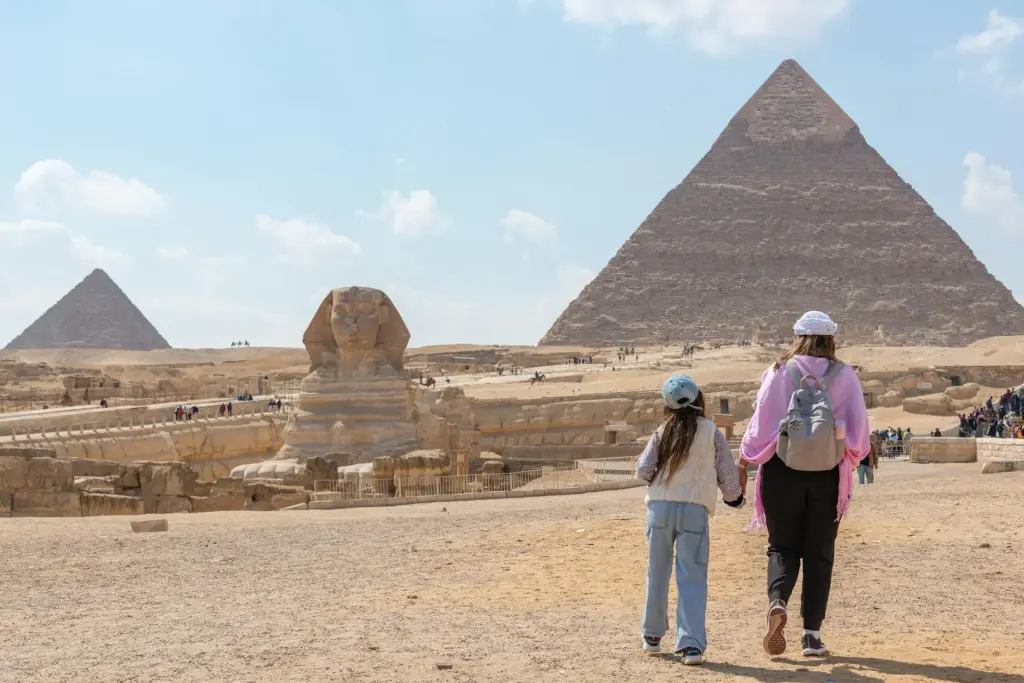
Egypt is one of those destinations that people often imagine as one single trip. In reality, it works more like several trips layered together: Cairo and Giza, Nile archaeology routes, Red Sea resorts, and desert or border-region travel that comes with a much higher planning burden. Good Egypt travel tips therefore start with a simple distinction. Not every famous place belongs in the same itinerary, and not every part of the country carries the same level of risk or transport difficulty.
According to the U.S. State Department's Egypt travel advisory, Egypt is currently a Level 2 destination for U.S. travelers, with specific areas that should be avoided entirely, including the Northern and Middle Sinai Peninsula, the Western Desert unless traveling with a professionally licensed tour company, and Egyptian border areas. The same guidance also notes that drones are illegal to bring into Egypt. Those details matter because the biggest travel mistake in Egypt is assuming the country should be approached as casually as a short city break in Europe.
Sort out visa and entry details before departure
The official Egypt e-Visa Portal says travelers should create an e-visa application at least seven days before departure. The State Department also notes that U.S. citizens can obtain 30-day tourist visas on arrival for a fee paid in U.S. dollars cash. In practice, that means Egypt travel tips should begin with a document check: passport validity, visa route, cash planning and copies of key travel records.
Entry basics sound routine, but they become more important in destinations where onward travel, airport formalities and local transport can already be tiring after a long flight. The less administrative friction you carry into arrival, the more energy you keep for the parts of the trip that actually require real-time decisions.
Build the route around regions, not around a giant wish list
Egypt's official tourism platform, Experience Egypt, frames the country through major travel zones: the Nile, the Red Sea, the Mediterranean, and deserts and oases. That is a more realistic planning model than trying to cram every famous image into one rushed itinerary. Egypt travel tips become much clearer when the route is organized by region rather than by social-media bucket list.
A first-time traveler usually gets the cleanest result by choosing one historical core and one secondary experience. That might mean Cairo and Giza with a Nile extension, or Cairo with a Red Sea finish. Trying to force Cairo museums, Giza, Luxor, Aswan, desert routes and beach time into one compressed plan often turns a remarkable destination into a logistics problem.
Transport and safety choices shape the trip
The State Department guidance is unusually direct about transportation. It warns that public buses, microbuses and trains are not considered safe for U.S. travelers and that driving in Egypt can be extremely dangerous. That does not mean independent travel is impossible. It means visitors should be realistic about how much friction local movement can involve, especially outside the main tourist corridors.
These Egypt travel tips are therefore less about hidden hacks and more about route discipline. Use reputable transfer arrangements, stay cautious in crowds and tourist areas, avoid demonstrations, and remember that heat, distance and traffic all make ambitious day plans harder than they look online. It also helps to keep expectations practical around health and infrastructure. The State Department notes that emergency and intensive care can be limited, especially outside major areas, which is another reason not to overextend the itinerary.
Why Egypt is best when planned conservatively
Egypt rewards travelers who leave room for the country itself. It is a place where the scale of archaeological sites, the density of Cairo and the geography of the Nile all work better when the schedule is not overloaded. Conservative planning is not boring planning. It is what allows the trip to stay enjoyable once heat, security screening, traffic and long transfer times start to compress the day.
The most useful Egypt travel tips are therefore basic on purpose: handle the visa early, know which regions belong in the same trip, stay inside well-understood routes unless you have licensed support, and treat transport and security decisions as part of the itinerary design. Egypt is extraordinary. It just asks for more structure than a lot of first-time visitors expect.
Comments 0
No comments yet. Be the first to share your thoughts!
Leave a comment
Share your thoughts. Your email will not be published.