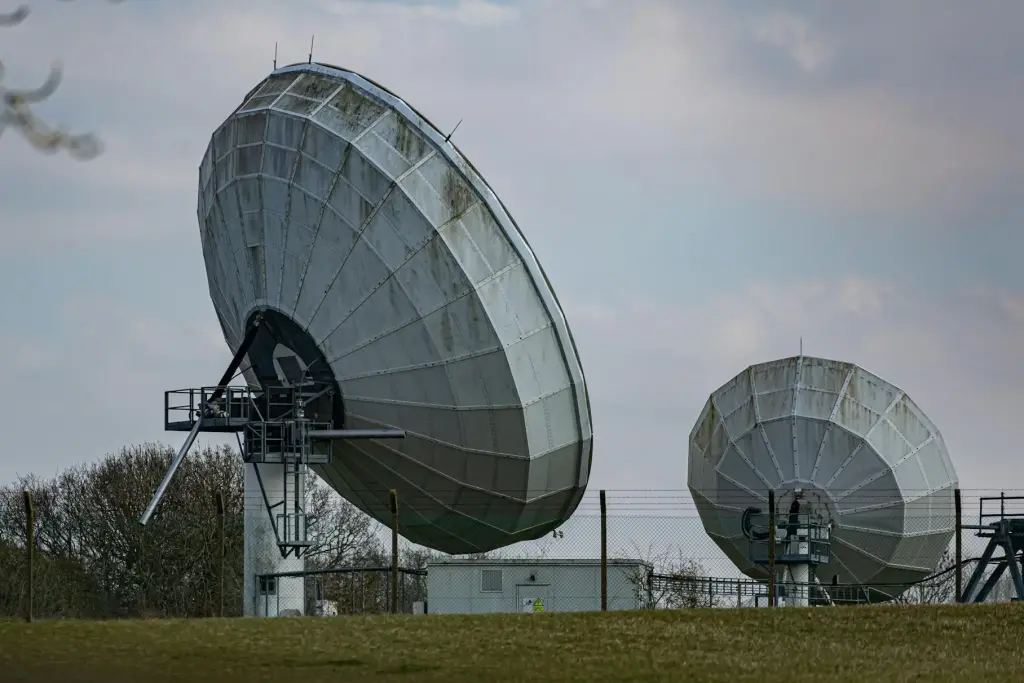
Europe's ambitious Proba-3 satellite mission is back in the spotlight after a tense month of silence. The European Space Agency (ESA) announced on March 19, 2026, that its groundbreaking Proba-3 satellite has successfully reestablished contact with ground controllers after being silent for approximately one month. This revolutionary mission, designed to create artificial solar eclipses in space, represents a significant technological achievement in spacecraft formation flying and solar observation. The unexpected communication blackout had space enthusiasts around the world holding their breath, wondering what had happened to this pioneering spacecraft.
The Proba-3 satellite mission consists of two satellites working in tandem: the Coronagraph and the Occulter. These spacecraft work together to block the Sun's bright disk, enabling unprecedented observations of the solar corona, the outermost layer of the Sun's atmosphere. According to ESA, this innovative approach allows scientists to study solar phenomena without the limitations of natural eclipses, which are rare and short-lived. The mission was launched from India in December 2024 and has been operational since July 2025, providing valuable data about our closest star.
Mission Manager Expresses Relief
According to Space.com, Proba-3 Mission Manager Damien Galano said in an ESA statement, "Hearing back from the Coronagraph is amazing news, and a great relief!" The communication loss had sparked concerns among the mission team, as prolonged silence from a spacecraft often indicates serious technical problems. However, the successful reconnection demonstrates the resilience of the Proba-3 satellite systems and the dedication of the ground control teams working around the clock to restore contact. The team at ESA's European Space Security and Education Centre in Belgium managed to reestablish communications after weeks of intensive troubleshooting.
The Proba-3 satellite mission is notable for its innovative approach to solar observation. Unlike traditional eclipse-based observations that last only a few minutes, Proba-3's formation flying enables up to five hours of continuous solar corona imaging during each 20-hour orbit. This extended observation time provides researchers with unprecedented data for studying solar physics and space weather phenomena that affect Earth's technological infrastructure. The ASPIICS coronagraph and DARA radiometer onboard the Proba-3 satellite help measure solar irradiance and study the solar corona in remarkable detail.
Advanced Formation Flying Technology
The technology behind the Proba-3 satellite represents a major advancement in spacecraft operations. The two satellites must maintain precise formation flying, with the Occulter positioned to block the Sun's light while the Coronagraph captures images of the solar corona. This requires incredibly precise control and metrology systems that were previously demonstrated only in theory. ESA engineers have worked for years to develop the algorithms and control systems necessary for this level of precision, and the Proba-3 mission proves their hard work has paid off. The precision required is akin to flying two aircraft side by side while maintaining a distance of just a few centimeters over hundreds of kilometers.
According to ESA, the Proba-3 satellite aims to demonstrate technologies that will be crucial for future space-based solar research missions. The mission serves as a precursor for more ambitious solar observation projects and showcases European leadership in space engineering and scientific research. The success of this Proba-3 mission could pave the way for new generations of spacecraft designed to study the Sun and other celestial bodies with unprecedented precision. This could include missions to study other stars and potentially even exoplanets in distant solar systems.
The Proba-3 satellite mission also contributes to our understanding of space weather, which can disrupt satellite operations, power grids, and communication systems on Earth. By studying the solar corona more closely, scientists hope to improve predictions of solar flares and coronal mass ejections that could impact our planet's technological infrastructure. This research is increasingly important as our society becomes more dependent on space-based technology and vulnerable to solar storms. The economic impact of severe space weather events could reach billions of dollars in damaged infrastructure and lost productivity.
The reconnection of the Proba-3 satellite marks a significant milestone not just for the mission itself, but for the broader field of space-based solar observation. As humanity becomes increasingly dependent on space technology and vulnerable to space weather effects, missions like Proba-3 provide crucial data for protecting our technological infrastructure and advancing our understanding of our host star. The European Space Agency continues to lead the way in innovative space missions that push the boundaries of what is possible in solar science. This successful recovery gives engineers confidence in the long-term viability of formation flying missions.
For more details about ESA missions and space exploration, visit ESA. The successful recovery of this mission demonstrates the resilience of modern spacecraft and the dedication of the teams that operate them, offering hope for future space exploration endeavors. The Proba-3 mission stands as a testament to international collaboration in space science.
Comments 0
No comments yet. Be the first to share your thoughts!
Leave a comment
Share your thoughts. Your email will not be published.