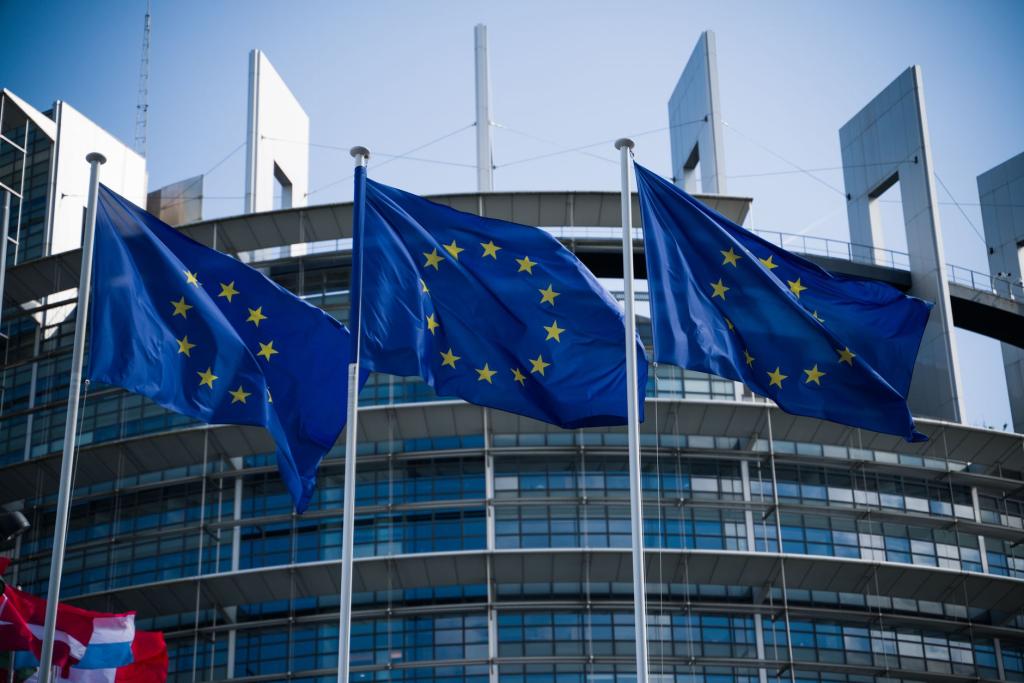
What the EU just proposed
On September 16, 2026, European Commission President Ursula von der Leyen used her annual State of the Union address in Strasbourg to announce the EU Kids Act, a new child safety plan for the bloc. Under it, children under 13 would be barred from social media across all 27 EU member states. "No social media under the age of 13. No personal account under the age of 15," she told the European Parliament. The next day, she and EU tech chief Henna Virkkunen formally presented the EU Kids Act proposal, which now heads to the Parliament and the Council for negotiation. It is not law yet.
The EU Kids Act takes a three-tier approach. Under-13s get no social media at all, although child-oriented video platforms remain available through parental accounts. Kids aged 13 and 14 could use "mini accounts" only, created and supervised by a parent or guardian, with limited features and a strict one-hour daily limit. From age 15 to 17, teens may hold independent accounts, but platforms must meet a "safe design" obligation for them.
The EU Kids Act flips who carries the burden of proof. Instead of regulators proving harm after the fact, platforms will have to show that their services are safe for minors by design. For young users, the proposal would ban infinite scroll, reward mechanics such as streaks, and push notifications during sleeping hours. Profiles of minors would be private by default, and strangers could not contact them out of the blue.
AI chatbots are in the crosshairs too
According to Reuters, the EU Kids Act also lays obligations on video-sharing services, online games, and AI chatbots that serve children under 18. AI companion services would be switched off by default for minors, and barred from designs that push kids toward emotional dependency on the bot. Companies would have to verify users' ages, partly through a new EU age-verification app, and violations could draw fines of up to 6 percent of a company's global annual revenue, as reported by the Financial Times. The proposal adds Europe to a growing wave of AI regulation, following California's proposal for an AI kill switch.
Von der Leyen framed the move as Europe taking the rules back from Big Tech. "It is we who decide our rules, not big tech," she said. Before laying out the plan, she paid tribute to Olea, a 14-year-old Belgian girl who died by suicide about a month earlier after being bullied. Quoting the girl's mother, she said: "I am convinced that without these omnipresent networks, my daughter would still be here."
The EU Kids Act is not the first attempt at an age ban. Australia became the first country in the world to ban social media for under-16s in December 2025, and more than 20 countries have since taken some form of action. France, Denmark, and Greece had each passed their own national restrictions and pushed the Commission to follow. The UK is planning its own under-16 ban, with default restrictions for 16 and 17 year olds from 2027. Privacy remains the flashpoint in every one of these fights, as shown by Signal's move to let users sign up without a phone number.
For 15- to 17-year-olds, the EU Kids Act goes after the recommendation machinery itself. Platforms would have to show they are not using addictive features, steering teens toward ever more extreme content, or allowing AI-generated sexualized images of minors. Von der Leyen said children are "increasingly being flooded with content designed to keep them constantly scrolling," and the law would block engagement-driven recommendation "rabbit holes" for younger users.
The EU Kids Act is not the end of the Commission's digital plans. A separate Digital Fairness Act is due this autumn, aimed at addictive design for adult users as well. "What we are witnessing is a great capture of our children. A capture of their attention, their focus, their minds," von der Leyen said, adding that smartphones have taken childhood away from kids. The proposal still faces a long legislative road: both the European Parliament and the Council of the EU can amend the text before it becomes binding law, and several member states have their own views on age verification and how strict the tiers should be.
Children's rights and parents' groups welcomed the EU Kids Act. But lawyers caution that enforcement would run through existing frameworks, the Digital Services Act, the AI Act, and GDPR, rather than a new regulator. Legal experts told Pinsent Masons that debates over age verification, privacy, and freedom of expression are likely to prove contentious, and negotiations could take months or even years. For more details, see Reuters' coverage of the proposal and Pinsent Masons' legal analysis.
Comments 0
No comments yet. Be the first to share your thoughts!
Leave a comment
Share your thoughts. Your email will not be published.