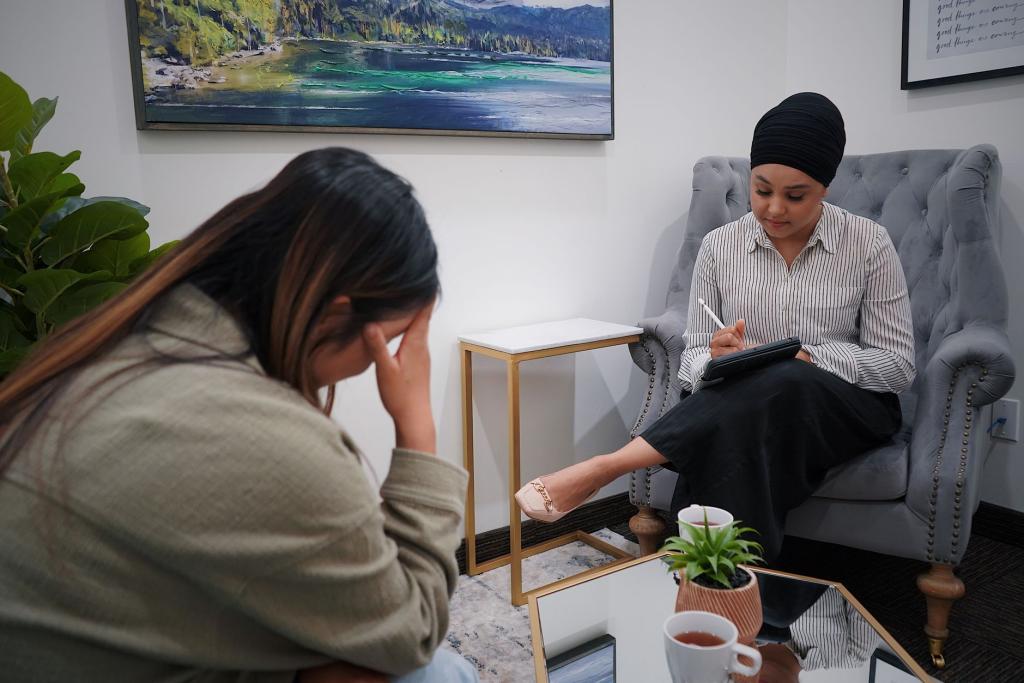
Daily Anxiety in Young Adults is no longer a rare experience. According to a new study from George Mason University, nearly one in five Americans aged eighteen to twenty-five said they felt anxious every day in 2024, up from about fifteen percent four years earlier. The research, published in the American Journal of Public Health, draws on national survey responses from close to eleven thousand people, and it tracks three measures at once: how often anxiety shows up, whether a clinician has named it, and whether medication is being used. That three-way view is what makes the findings hard to dismiss, because the rise appears in daily experience and in formal care, not in one measure alone. You can read the university summary here.
What the numbers show over four years
The timeline runs from 2020 through the final year studied, using responses to the National Health Interview Survey. Over that span, reported diagnoses climbed from 17.9 percent to 23.4 percent, while prescription anxiety medication use rose from 9.8 percent to 13.3 percent. Those shifts mean the odds of a diagnosis and of medication use each grew by roughly a third, according to the research team. The pattern began before the recent surge in attention to mental health, yet the researchers say the later period still deserves close watching, because young adulthood is when many mental health conditions first emerge. Reporting on the study notes that the team looked at overlapping identities together, rather than treating each characteristic in isolation.
"Rather than assuming that all young adults experience anxiety in the same way, these findings underscore the importance of considering the multiple social identities and contexts that shape experiences with anxiety," said Melissa Villodas, an assistant professor in social work and the study's lead researcher.
That framing matters for readers, because daily worry does not stay neatly in one part of life. It can follow a person into lectures, shifts, job applications and relationships, and it can make ordinary decisions feel heavier than they should. When worry becomes a daily companion rather than an occasional visitor, it is worth paying attention to, even if no single day feels dramatic on its own. Daily Anxiety in Young Adults is therefore best understood as a pattern to notice early, not a label to fear.
Averages hide wide gaps
Women consistently reported higher rates than men. That year, 32.1 percent of women said they had received a diagnosis, compared with 14.7 percent of men. About a quarter of women also reported daily worry, and a fifth reported taking prescription medication for anxiety. Those differences are not small, and they suggest that services built around an average young adult may miss the people who most need them.
The gap was wider still by sexual orientation. That year, 44.6 percent of lesbian, gay and bisexual respondents reported a diagnosis, against 18.5 percent of straight respondents. Medication use in the first group doubled across the study period, moving from 12.9 percent to 26 percent, while the second group moved from 9.3 percent to 10.4 percent. Daily Anxiety in Young Adults therefore looks less like a single national trend and more like several overlapping stories, shaped by identity, recognition and access.
Race and ethnicity complicate the picture further. That year, 31.3 percent of non-Hispanic White respondents reported a diagnosis, compared with 12.7 percent of non-Hispanic Black respondents. Yet reported intensity did not differ significantly between Black and White respondents across the period, a mismatch the researchers say may reflect differences in recognition, stigma and access to care. Hispanic respondents who were also LGB had markedly higher odds of medication use than their straight Hispanic peers, with an odds ratio of 4.7 in the findings. Coverage of the results highlights the same warning: fewer diagnoses do not necessarily mean milder symptoms.
What the study cannot prove
The study cannot show what caused the rise. Its survey design is observational, responses are self-reported, and the period includes the pandemic and its aftermath, so no single cause can be isolated from the data. Crucially, average intensity did not rise significantly overall even as daily frequency did, which means people are feeling anxious more often without necessarily feeling it more intensely. That distinction matters for services: more frequent worry may call for early support, coping skills and easier first contact with care, rather than assuming every case needs the same treatment.
For readers, the practical takeaway is to treat persistent daily worry as worth attention, to ask what help is actually reachable locally, and to notice whether support is designed for the groups least likely to receive a formal diagnosis. Support need not be clinical alone, and everyday habits around connection and rest can form part of a wider picture. Recent coverage has examined how in-person friendships support students, how short walks can lift mood at work, and why some young adults now prefer phone-free socials. None of those habits replaces care when it is needed, but they show how daily life and wellbeing are connected.
What should change next is less about a single programme and more about sharper recognition. Clinicians, campuses and employers need to look beyond averages, ask about frequency as well as severity, and make first steps toward help simpler to take. If daily worry is becoming common, the response should be common too: visible, varied and easy to reach, so that a young adult does not have to wait for a crisis before being taken seriously.
Comments 0
No comments yet. Be the first to share your thoughts!
Leave a comment
Share your thoughts. Your email will not be published.