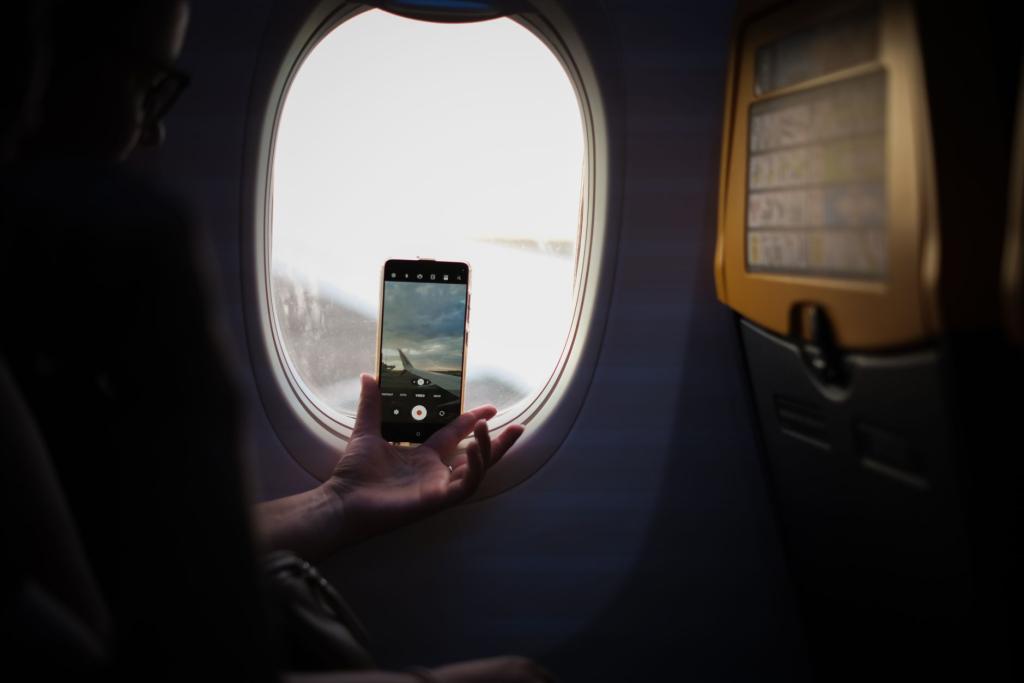
British Airways has updated its General Conditions of Carriage to ban passengers from using Meta AI smart glasses to covertly film staff or fellow passengers at the airport and on board, according to reporting from Paddle Your Own Kanoo last week. The change extends rules the airline introduced earlier this year barring passengers from photographing or recording cabin crew without express consent, and from livestreaming anyone without permission. It is the strictest airline response yet to wearable cameras, and it is also overreach. The Meta glasses ban punishes ordinary passengers for the behavior of a few bad actors while doing almost nothing about the actual problem.
The details show how far the airline is willing to go. Under the Meta glasses ban, filming crew or other colleagues without consent falls under the refusal-of-carriage clause, Aerohaber reported, quoting the airline's language directly: "This includes filming, live streaming or taking photographs of any BA crew or other colleagues without their consent." Recording employees without permission is also listed as unacceptable onboard behavior, and the airline says it can intervene and, upon landing, remove a passenger and refuse transportation on the remaining sectors of the ticket. Aviation A2Z reported that offenders can also be reported to police. A passenger who films a tense interaction could, in theory, lose the rest of the journey home.
The punishment doesn't fit the problem
The trouble with this Meta glasses ban is that it targets the hardware instead of the conduct. A phone held at waist height records far more discreetly than a pair of glasses with a glowing white LED that signals when the camera is on. Meta glasses are arguably the worst covert cameras on the market, not the best. Anyone serious about secret filming has carried a better tool in their pocket for over a decade. If the goal is stopping sneaky recording, banning glasses while every passenger holds a high-resolution camera misses the point entirely.
Then there is the scale of the penalty. Cancelling someone's remaining flights is the nuclear option in airline discipline, the kind of response reserved for drunks and people who threaten crew. Applying it to someone who recorded a video reframes a privacy dispute as a safety-level offense. And note the asymmetry. Cabin crew and other BA customer-facing workers are already banned from using smart glasses themselves, according to Paddle Your Own Kanoo, which is sensible. But the new Meta glasses ban hands those same crew members an effective veto over passengers trying to hold them accountable.
Filming has also protected passengers
That veto matters because cameras on planes have cut both ways. Passengers and travel vloggers have used footage to document lost luggage, missed connections, and mistreatment. Paddle Your Own Kanoo noted that a travel vlogger was recently refused service by staff at another airline after she declined to stop using her Meta glasses, which shows how quickly this Meta glasses ban can turn a misunderstanding into a confrontation. When only one side of an interaction is allowed to record, only one side's version of events survives. The travel industry keeps learning this lesson the hard way.
None of this means secretly filming crew is good behavior. It is not. Sneaking footage of a flight attendant going about their job is creepy, and the earlier rule against filming staff without consent was reasonable on its own terms. But there is a wide gap between "don't point your camera at people without asking" and "we will strand you at your connecting airport if you do." The Meta glasses ban blurs that line, and it does so over a device whose recording light makes it more conspicuous than the phone in everyone's pocket.
Live and Let's Fly, which has followed the story closely, concluded that British Airways should apply the policy with enough judgment to tell an intrusive content creator apart from a passenger documenting a legitimate problem. That is the most the airline's defenders can hope for from the Meta glasses ban: a rule so broad that it only works if staff ignore most of it. A policy that depends on selective enforcement is a policy waiting to be abused, and passengers will feel that uncertainty long before they feel protected by it.
The United Kingdom treats aircraft as private space rather than public space, Paddle Your Own Kanoo noted, since boarding requires a ticket. That means British Airways is within its rights to write these rules. Being within your rights is not the same as being right. The Meta glasses ban takes a genuine privacy concern and answers it with the heaviest hammer in the drawer, aimed at the least stealthy camera on the plane.
Comments 0
No comments yet. Be the first to share your thoughts!
Leave a comment
Share your thoughts. Your email will not be published.