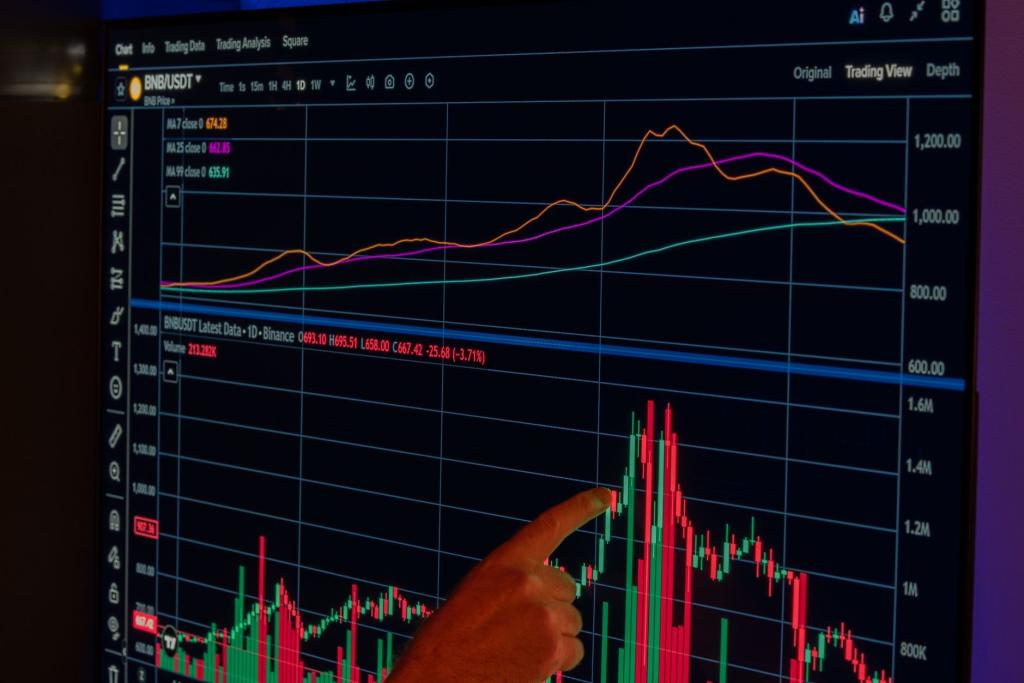
BlockRun MCP shipped version 0.56.3 on November 27, with fresh code activity the following day, giving AI agents a way to buy live data one call at a time. The open-source MCP server from BlockRun Labs connects agents to market prices, crypto data, web research and posts on X, and settles each call in USDC through the x402 micropayment protocol instead of asking for an API key or a monthly subscription. The release is tracked in detail on Sato Hub's BlockRun MCP listing, which records the November 27 release and the code activity that followed.
For agents that need current information to do useful work, the pitch is simple: pay for exactly what is used, and nothing else. That model fits how agents actually operate. A research agent that runs for ten minutes should not need a seat licence, and a trading agent should not need a corporate card. BlockRun MCP prices the data itself, call by call.
What BlockRun MCP does
BlockRun MCP is a Model Context Protocol server, which means it plugs into agent tools that already speak MCP, such as Claude Code. Once connected, an agent can ask for live market data, crypto prices, web search results and posts from X through the same interface it uses for its other tools. The server is published under the MIT licence, and its repository has drawn 391 stars on GitHub, according to Sato Hub.
The project runs on two blockchains, Base and Solana, and deploys as a standard npm package. Installation is a single package command, and the server registers itself as an MCP server in the agent's configuration. Sato Hub reproduced the documented install in an isolated container, which means the setup path works as written rather than existing only in a readme.
The latest release, version 0.56.3, tightened how the server reports spending. According to Sato Hub's release notes, chat costs are now final only when the response proves a settlement, so a wallet no longer reports every paid call as a final cost before the payment is confirmed. It is a small fix, but it matters for agents that track their own budgets, since an estimated cost that looks final can distort every spending decision that follows it.
Pay per call, no subscriptions
The pricing is deliberately granular. Market queries start at a tenth of a cent each. Web searches through Exa cost a cent per query. Image generation starts at a cent and a half, and video generation is priced by the second. At those rates, five dollars in USDC buys roughly five thousand market queries or five hundred searches, according to Sato Hub's pricing summary.
Payment runs over x402, the open HTTP 402 payment protocol, which lets a server ask for payment in stablecoins as part of an ordinary web request. The protocol now sits with the x402 Foundation, and a recently merged specification extends it to bitcoin over Lightning. For agents, the appeal is that there is no account to create and no key to manage: the payment travels with the request itself.
That absence of API keys is the sharpest break from how developer tools usually work. BlockRun MCP settles each call on-chain, so an agent needs a wallet and a small USDC balance rather than a credential issued by a vendor. The trade-off is that the agent, or its operator, has to manage funds and spending limits directly, which is a different kind of operational work than rotating an API key.
Part of a wider agent-payments family
BlockRun MCP does not stand alone. It belongs to a product family from BlockRun Labs built around the same idea: agents should be able to pay for what they use without subscriptions. The BlockRun gateway routes agents to more than 55 large language models, including GPT, Claude, Gemini and Grok, through a single OpenAI-compatible endpoint, billed per request in USDC. Franklin, another member of the family, is an autonomous agent with its own wallet that spends USDC to get real work done. ClawRouter, a local model router, sends each request to the cheapest capable model across 78 options and settles in USDC as well.
The company drew outside backing in June 2026, when it announced an investment from the Base Ecosystem Fund run by Coinbase Ventures. BlockRun describes itself as the largest AI-agent payment company by transaction volume, a self-reported claim that no independent source has verified. What can be checked is the shipping cadence: the MCP server's latest release landed on November 27, with code activity continuing the next day, and Sato Hub has recorded 91 successful daily checks of the gateway since late August.
An independent check: strong on openness, honest about limits
Sato Hub gives BlockRun MCP a Sato Score of 91 out of 100, one of the highest scores in its index of onchain agent projects. The score measures how open, active and verifiable a project is, and Sato Hub is explicit that it is not a safety, quality or returns grade. A high score means the project is easy to inspect and is shipping, not that it is safe to trust with funds.
The same listing is candid about what has not been verified. Its verification status is listed as unverified, meaning no independent review has confirmed the project's claims. A Sato Check reading of version 0.56.3, taken on November 28, found that the server reads private-key material and signs locally, which is what a wallet does, but the check had not yet been run with planted test keys, so the key-handling claim remains unproven. The listing also notes that it could not determine whether the server moves funds on its own, and that its own documentation says it carries out transactions.
Those caveats are the right frame for the release. An MCP server that holds a key and spends money deserves scrutiny before it is wired into a production agent, and the public record here is transparent about where that scrutiny has and has not happened. The open-source licence and the reproduced install make that scrutiny possible; they do not replace it.
Why per-call pricing matters for agents
The bigger story behind BlockRun MCP is the shape of the agent economy itself. Agents are short-lived, numerous and hard to bill through the subscription models built for human teams. A gateway that governs which models and tools an agent may touch, like the Azure AI Gateway that went generally available this week, handles the policy side of that problem. Per-call payments handle the commercial side: each request carries its own price, and the agent's budget is enforced by the balance in its wallet rather than by a monthly invoice.
That pairing is starting to appear across the ecosystem. A multi-agent swarm that trains on a tiny model still needs live data to act on, and a coding agent that edits contracts in a browser still needs to know what those contracts are worth. Metered data access slots into both patterns without adding a procurement step.
BlockRun MCP is still early, and the independent verification has not caught up with the shipping pace. But the release shows a direction of travel: agent infrastructure is moving from demos toward metered, inspectable services, where an agent pays a fraction of a cent for a fact and the receipt is on the chain. For teams running agents in production, that is a model worth watching, and worth verifying before trusting.
Comments 0
No comments yet. Be the first to share your thoughts!
Leave a comment
Share your thoughts. Your email will not be published.