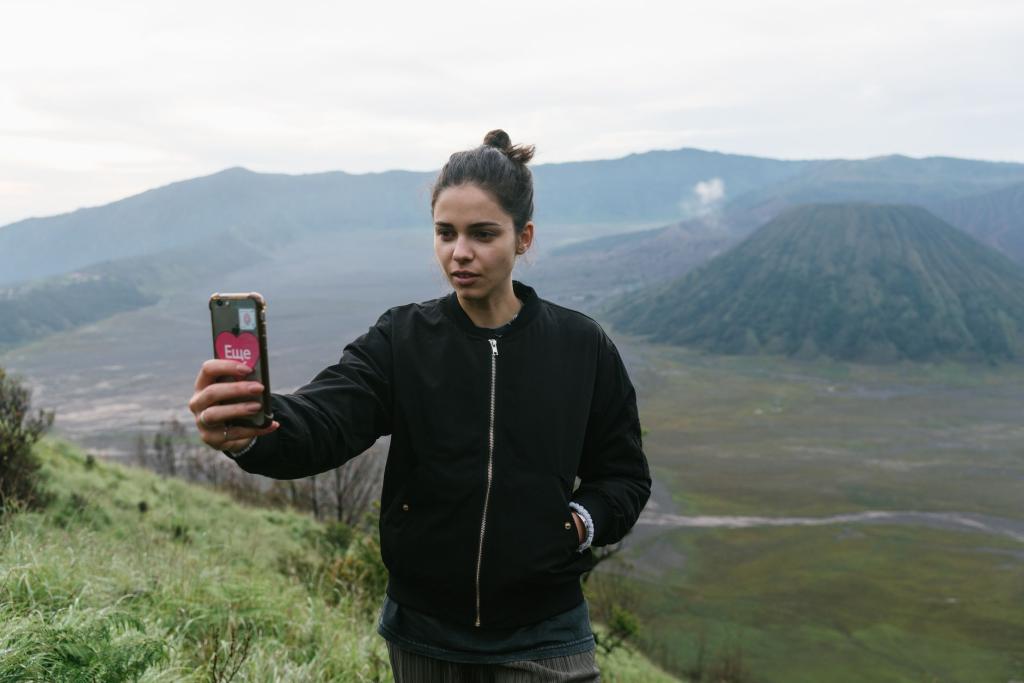
Bindi Raye had the dream tradie feed. Posting as @bindiidotraye_, she played a twenty-something fly-in fly-out (FIFO) mining worker in Western Australia's north: mess-hall food reviews, game-day posts backing the West Coast Eagles, beach days at Perth's Cottesloe, and road trips from Gunshot Creek in Far North Queensland to Galvans Gorge in the Kimberley. To more than eighty thousand followers, it was peak lifestyle content. There was just one problem: she never existed. An Australian Broadcasting Corporation investigation found her face, her voice, and her entire persona were a generative-AI fabrication, and her Instagram feed was never labeled as AI-made, according to Zotpaper's reporting on the investigation.
The story matters because this was not some glitchy deepfake that fell apart after ten seconds. Bindi Raye was a working business: a fictional woman, built entirely by software, pulling a real audience and converting it into real money. The whole operation is a case study in what some creators now call the AI slop economy — synthetic content engineered for engagement, layered with thirst-trap economics. If you have ever followed an account, double-tapped a post, or paid for a subscription without questioning who was on the other end, this is the one that should make you pause.
A free feed that funnels to a paywall
The Instagram account was the top of the funnel. It served up relatable, low-stakes FIFO content — the kind of thing that feels authentic because it is boring in the right way. But the feed quietly pushed keen followers toward a paywalled Bindi Raye profile on Fanvue, a subscription platform, where a small AI label does appear and AI is mentioned in the description. There, subscribers could pay up to one hundred and fifteen dollars for individual pornographic videos, plus a monthly subscription of just over nine dollars, as reported by Good Bad Super Ugly.
Fanvue's head of trust and safety, Rob Haywood, confirmed to the ABC that Bindi Raye was an AI creator and said about three-quarters of the platform's creators use at least one AI tool. He added that every account — including ones built around fully AI personas — is linked internally to a verified real person. That is the counterpoint worth sitting with: Fanvue's position is that a flesh-and-blood human is accountable for every profile, and AI-generated personas are commonplace on the platform rather than an anomaly. The catch is that the identity of the person behind the Bindi Raye accounts is unknown, and the ABC's messages asking for comment went unanswered.
The funnel itself is the information worth clocking. A free, unlabeled Instagram persona builds parasocial trust with lifestyle content, then converts a slice of the audience into paying subscribers on a separate platform where the AI disclosure is technically present but easy to miss. Her followers thought they were supporting a real FIFO worker; they were funding a render farm.
The tells were hiding in plain sight
In retrospect, the glitches were everywhere. Background text in her posts was misshapen gibberish — the classic AI artifact. Her face shifted subtly from post to post. Her high-vis jacket changed between photos, and at least once it bore the logo of a real mining company. That company told the ABC it had never hired a Bindi Raye or anyone who looked like the woman in the posts, according to Zotpaper's coverage.
An independent expert at the University of Queensland's Cyber Forensics Lab examined the content and found it almost entirely AI-generated: lip sync that did not match the audio, frame inconsistencies, and shadows that behaved wrong. Misshapen words, morphing faces, continuity errors — these are the fingerprints of generative video and image models, and they are worth memorizing, because the models are only getting better at hiding them.
Here is a quick spot-the-fake checklist for the next suspicious account: zoom into background text and signs — gibberish is a red flag. Compare the person's face across posts for subtle changes in features or ears. Watch for wardrobe that morphs between shots in the same supposed day. Check whether the account labels AI content anywhere, and reverse-image-search profile photos. And ask the money question: does the free account push you toward a paywall where the persona's "realness" is the product?
What the platforms are doing about it
Instagram acted after the investigation. The ABC reported that Meta began removing Bindi Raye's account for violating its deceptive identity policies. Meta's line: AI-generated content is not against the rules, but misleading people about who is behind an account is, and realistic AI-generated content has to be clearly labeled, according to NewsLocker's write-up of the investigation. A Meta spokesperson acknowledged that no detection method is foolproof and that bad actors keep trying to evade enforcement.
The enforcement push is bigger than one account. Instagram has been tightening disclosure rules for AI-generated personas, including a profile-level label for accounts featuring synthetic characters, with reduced algorithmic reach for accounts that refuse to disclose. The direction is clear: AI influencers can exist on the platform, but passing as human is the violation. Whether enforcement can keep up with generation quality is the open question — and right now, the generators are winning.
After the exposure, the Bindi Raye account posted a series of photos captioned "One thing I've learned this week: don't believe everything you hear." The comments split exactly how you would expect: some followers realized they had been fooled and demanded to see her real face, while plenty of others kept praising her looks. That split is the whole story in miniature — some people update their beliefs, and some people just keep scrolling.
Why this one hits different
AI influencers are not new, and neither is using a synthetic persona to sell adult content. What makes the Bindi Raye case land is the setting. FIFO work is a genuinely admired, genuinely grueling Australian subculture — long rosters, remote camps, real danger. She cosplayed a working-class identity her audience respected, and the audience paid for intimacy with someone who had never swung a tool or eaten a mess-hall dinner. That is a different flavor of deception than a generic glam model; it borrowed credibility from a real community.
It also shows how the economics of AI slop have matured. The old model was spammy clickbait sites churning out junk for ad cents. The new model is a synthetic persona with a niche identity, a parasocial bond, and a paywalled conversion path — real revenue from an unreal person. As generation tools get cheaper and better, expect more of these: personas calibrated to specific subcultures, each one funneling trust into a subscription.
The fix starts with you, honestly. Treat every influencer account like a claim that needs evidence, especially the ones asking for money. Look for the AI label. Check the background text. And remember the rule Bindi Raye herself posted after getting caught: don't believe everything you hear. The latest twists in this corner of the web keep landing in internet-famous culture — and if viral personality content like Alix Earle's book confession proved anything, it is that a strong persona can travel faster than the truth behind it.
Comments 0
No comments yet. Be the first to share your thoughts!
Leave a comment
Share your thoughts. Your email will not be published.