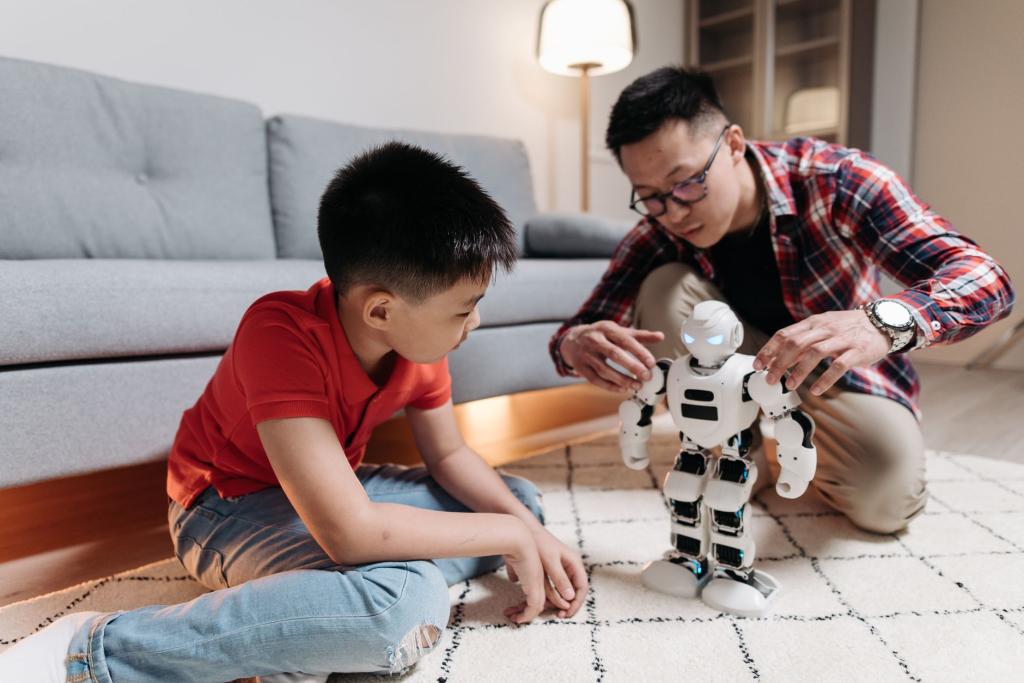
Humanoid robot maker Astribot has closed RMB 1 billion in new financing — roughly $149.4 million — at a valuation of RMB 15 billion, according to TechStartups, which reported the announcement on October 13, 2026. The Shenzhen-based company, the maker of the Astribot humanoid robots also known as Stardust Intelligence, did not disclose the specific stage of the round.
The investment was led by Shenzhen Investment Holdings-linked capital, with participation from Hongtai Fund, Ninghai Xingtaihe Fund, Shanheng Capital, and returning investor Xianmu. The raise is Astribot's fourth financing in six months, following a Series B of more than RMB 1 billion roughly three months earlier — a fundraising pace that says as much about the embodied AI land grab as it does about the company itself.
Founded in 2022, Astribot is a technology company built around artificial intelligence and embodied intelligence, and its new capital is aimed squarely at scaling Astribot humanoid robots from impressive demonstrations into deployed machines.
Cable-driven actuation and the Lumo stack
Astribot builds its humanoids around cable-driven actuation, an alternative to conventional rigid joint mechanisms. The design transmits force through cables to support more compliant movement, which could improve how Astribot humanoid robots interact with people and handle delicate objects — a meaningful difference for machines meant to work alongside humans rather than behind cages.
The mechanical architecture is paired with the company's Lumo embodied AI models and its own Astribot operating system. Rather than treating intelligence as a separate component bolted onto existing hardware, the company develops the robot, the software, and the learning system together, so that perception, control, and learning improve as one system.
Training that system leans on imitation learning: Astribot humanoid robots learn by absorbing human movement data, which is processed through large models and fine-tuned into behavior. It is a data-hungry approach, and the GPU hours required for the pipeline scale with every iteration, according to analysis published by AInvest.
The company's S-series and T-series platforms are being positioned for commercial services, research, and education, with household applications as a longer-term goal. Astribot showcased its T1 humanoid to a North American audience for the first time at IROS 2026 in Pittsburgh, which ran from September 27 to October 1, according to Robotics and Automation News.
Orders in hand, factories ramping
Astribot says it has secured orders involving thousands of robots and has established manufacturing capacity measured in the tens of thousands of units. Those figures deserve a careful read: capacity is not the same as actual output, and purchase orders do not automatically become completed deliveries. As TechStartups noted in its coverage, investors will ultimately need evidence of shipment volumes, reliability, customer retention, production costs, and operating margins before the story is proven.
Still, the order book signals something real about where the market stands. Humanoid robots are crossing from research curiosities into procurement budgets — commercial services firms and research institutions are buying Astribot humanoid robots, not just watching demonstration videos. That transition from spectacle to purchase order is the inflection the entire embodied AI sector has been waiting for.
The capital-moat race in embodied AI
Astribot's raise is part of a far broader funding surge. TMTPost reported that 46 billion yuan flowed into China's embodied intelligence sector in the first half of 2026 alone, with 49 companies completing two or more funding rounds within six months. About 70 percent of that capital went to the top 20 companies, and the five largest recipients swallowed roughly 37 percent of all funding in the sector.
That pace of fundraising is extraordinary for hardware. One finance-focused venture partner told TMTPost that the speed reflects capital moats being built: top-tier firms are using money to buy time outright, cutting off the possibility for mid-tier competitors to catch up during technology gaps. When Astribot humanoid robots reach factory floors at scale, the lead will have been purchased as much as engineered.
The deeper constraint may not be money at all. Analysts have argued that the real bottleneck for Chinese embodied AI companies has shifted from capital availability to compute access — training the imitation-learning models that make the robots work requires GPU clusters that are increasingly difficult to secure, according to analysis published by AInvest. A company can raise a billion yuan in a quarter; it cannot conjure training compute out of thin air.
What it means for the agent economy
For the AI agent ecosystem, Astribot's trajectory is the physical side of a trend already visible in software. Agents are steadily gaining the ability to act in the world: DigitalOcean's Bright Data deal gives AI agents native access to the live web, while startups like RevRag are putting AI relationship managers into banking workflows. Astribot is betting that the next step for embodied agents is a body of their own.
Whether that bet pays depends on the unglamorous work of reliability engineering and real-world data collection. Money can buy factories and engineers. It cannot buy the thousands of hours of physical experience that turn a demonstration robot into a coworker. The next twelve months — shipments, customer retention, and failure rates for Astribot humanoid robots in the field — will say more than any funding announcement.
Comments 0
No comments yet. Be the first to share your thoughts!
Leave a comment
Share your thoughts. Your email will not be published.