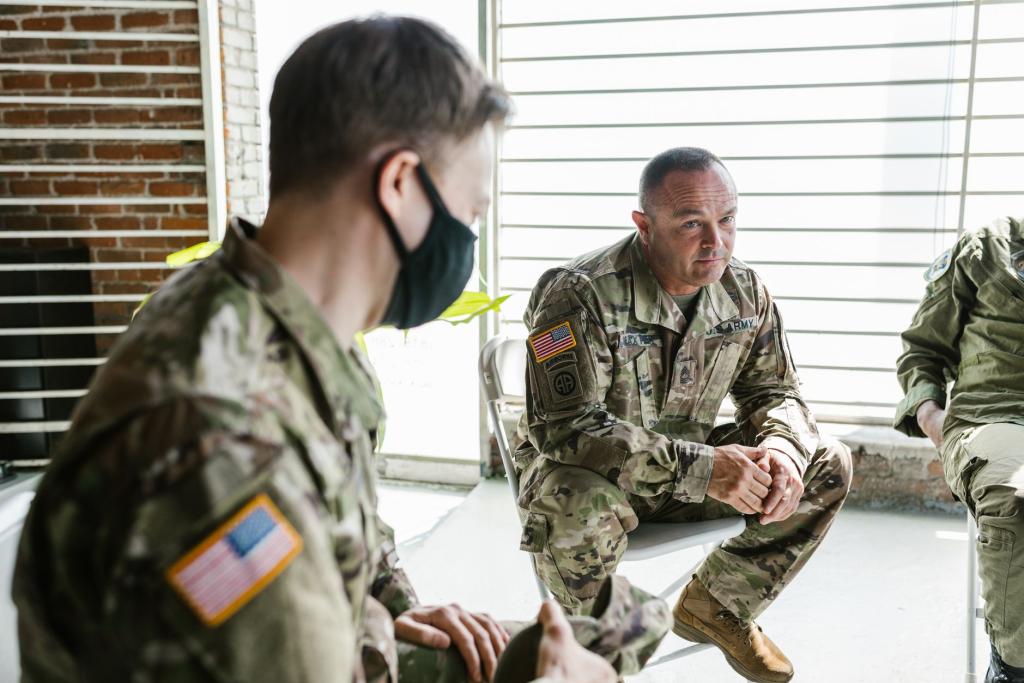
Army Testosterone Screening just produced the kind of number that turns a wellness hunch into a policy question. About one in four active-duty Army men would test below a common clinical threshold for low testosterone on a morning screening, according to new research published this week in JAMA. The findings land at a moment when military health officials are weighing annual testosterone checks for service members past thirty, a shift that could pull roughly a hundred thousand soldiers into follow-up testing.
The research team analyzed morning blood samples from nearly five hundred men across five Army installations, collected between August 2024 and January of this year as part of a broader military health-and-nutrition survey. The work was led by scientists at the Pennington Biomedical Research Center in Louisiana, working with Army researchers who study how service life affects the body. Rather than diagnosing anyone, the study asked a simpler question: if you screened the whole force tomorrow, how many men would flag low?
The bar you use decides the count
The answer depends on where you draw the line. Against the higher of two commonly used cutoffs — 300 nanograms per deciliter — about a quarter of the Army's men would test below it, translating to roughly a hundred thousand service members across the force. Against a stricter lower bar, under fifteen percent would fall short, a group of close to fifty-eight thousand men. The two-threshold approach shows how much screening outcomes hinge on a definition that medicine has never fully settled.
Age moved the needle in a way younger soldiers should probably know about. Among men under thirty, about a fifth fell below the higher cutoff; among those thirty and older, the share climbed to about a third. Under the stricter bar the gap narrowed but never closed, with roughly one in nine of the younger group falling short against about one in five of the older group. Body weight mattered too: low readings turned up more often in men carrying a higher body mass index, a pattern civilian doctors see in ordinary clinics every day.
Why the military wants everyone checked
According to Medical Xpress, a Department of War memorandum calls for annual testosterone screening of active-duty and reserve personnel ages 30 and older. If that policy sticks, the new numbers tell commanders roughly how many follow-up visits to expect. "Understanding the prevalence of low testosterone measurements in military personnel is important as screening practices evolve," said Claire Berryman, the study's corresponding author at Purdue University. Her team noted the findings help quantify how many service members may need repeat testing and a clinical workup after a first low reading.
The research is also a snapshot of a long partnership between civilian science and the armed forces. The work "supports the health, performance and readiness of service members," said Jennifer Rood, a senior vice chancellor at the research center, in a statement about the collaboration. That framing matters because the debate here is not really about a hormone — it is about readiness, and whether a cheap blood test can spot problems before they affect a unit.
A low number is not a diagnosis
The authors stress that a low screening result is not the same as having a clinical condition. Testosterone naturally shifts with age, time of day, weight, illness and physical stress, and medical guidelines call for repeat morning tests plus a symptom review before anyone receives treatment. A single draw can mislead near the cutoff, and different laboratory methods can classify the same sample differently. Army Testosterone Screening at this scale will surface a large number of borderline results, and the researchers say those deserve careful follow-up rather than quick prescriptions.
That caution is the point civilian readers should carry home. Testosterone testing is booming in wellness clinics and online ads aimed at young men, often on far thinner evidence than a survey of this size. The Army data show that context — sleep, stress, weight, timing of the test — can swing a result across the line, which means a number without a workup is mostly noise. Anyone tempted by a home test kit after a rough week should hear that first.
For soldiers, the practical takeaway is straightforward: if annual checks become routine, knowing your baseline before a single low reading starts a conversation with a medic is smart. The broader lesson reaches past the barracks, since the hormone conversation is already moving into civilian care — GenZ NewZ reported on it when the FDA reviewed testosterone therapy for women earlier this fall. And the military study fits a wider shift toward screening-led care, the same logic behind new tools like the presbyopia eye drops now reaching patients. Army Testosterone Screening could become the largest real-world test of whether mass hormone screening helps people or mostly worries them.
Comments 0
No comments yet. Be the first to share your thoughts!
Leave a comment
Share your thoughts. Your email will not be published.