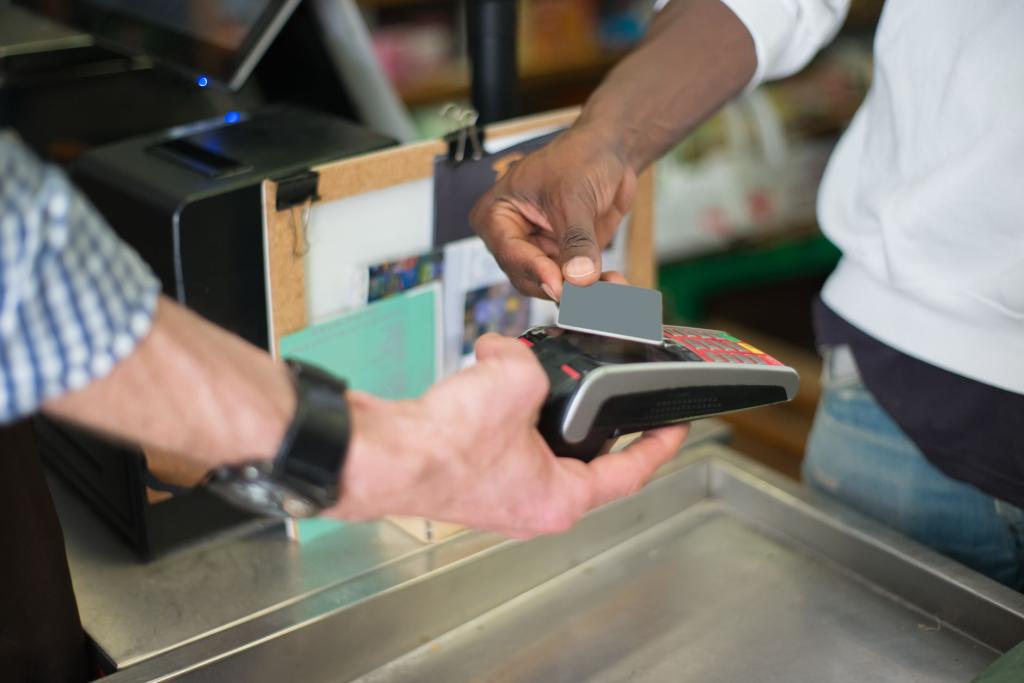
Apple Pay has finally launched in India, ending a wait that stretched the better part of a decade. Apple rolled out its payments service this week with Axis Bank as the launch banking partner, letting eligible customers add their Axis Bank-issued Visa and Mastercard credit cards to the Wallet app and pay with a tap of an iPhone or Apple Watch. The launch, reported by TechCrunch and confirmed in Indian business coverage this week, makes India one of the last major markets to get Apple Pay, and it lands in a payments landscape that looks nothing like the card-heavy economies where Apple Pay first took off. The big question is not whether Apple Pay works in India. It is whether India, a country that pays by scanning UPI QR codes, has any use for it.
Here is what the launch actually includes. At launch, eligible Axis Bank customers can add their credit cards to Apple Wallet and use Apple Pay for online purchases as well as contactless payments at supported terminals, according to people familiar with the rollout. Apple Pay uses tokenized card credentials rather than storing the actual card number on the device, and transactions can be authenticated with Face ID, Touch ID or a passcode, which means no PINs or OTPs at checkout. Jennifer Bailey, Apple's vice president of Apple Pay and Apple Wallet, told the Hindustan Times that the pieces finally came together: the regulatory framework, the payments infrastructure, and partners who could deliver the experience. A particularly important development, she said, was the Reserve Bank of India's move to support biometric authentication for card payments, which is what lets customers authenticate with Face ID or Touch ID in the first place.
Why Apple Pay India starts with just one bank
The single-bank launch is the most telling detail of the whole story. Axis Bank is India's fourth-largest credit card issuer, behind HDFC Bank, ICICI Bank and SBI Card, with over 16 million active credit cards, and it won the launch partnership after negotiations with the bigger banks stalled over commercial terms. According to TechCrunch's reporting, HDFC Bank, ICICI Bank and SBI Card are not supporting Apple Pay at launch as those talks continue. That matters because it means acceptance will be uneven at first: an Apple Pay transaction could work at a terminal operated by one payments provider and fail at another whose acquiring bank has not enabled the service. For early users, the experience may be closer to a promising beta than a finished product, and Apple will need the bigger banks on board before Apple Pay feels universal.
Then there is the UPI problem, or more precisely the UPI reality. India's digital payments boom was built on UPI, the state-backed system that moves money directly between bank accounts, and it processed 24.51 billion transactions worth Rs 29.82 trillion in August 2026 alone, according to NPCI data. Scanning a QR code to pay for everything from groceries to a cup of tea is the default behavior for hundreds of millions of Indians, and Apple Pay's card-only launch does not touch that use case at all. There is no UPI support in the initial rollout, which leaves Google Pay and PhonePe handling the payments most Indians actually make every day. UPI is even evolving beyond QR codes: NPCI recently introduced tap-and-pay functionality for UPI, letting compatible smartphones make contactless NFC payments. So Apple Pay's biggest challenge is not making tap-to-pay easier. It is fitting into payment behavior India has already adopted.
Who Apple Pay India is actually for
None of that means the launch is pointless. Apple Pay could appeal strongly to India's growing base of iPhone users, who skew affluent and are far more likely to hold premium credit cards. Those are exactly the customers banks compete hardest to keep, which could make the service difficult for holdout banks to ignore despite UPI's dominance. Apple accounted for 28 percent of India's smartphone market by value in 2025, up from 23 percent a year earlier, according to Counterpoint Research, and the transaction fees Apple collects would give it another way to monetize that growing installed base. In a statement quoted in launch coverage, Axis Bank MD and CEO Amitabh Chaudhry called it a significant inflection point in payments, where technology, intelligent security and changing customer expectations are reshaping how people transact.
The longer game is clearer when you look at Apple's broader India push: expanding iPhone sales, local manufacturing and a growing retail footprint. Apple Pay is another thread in that weave, a service that makes the iPhone more useful for the customers Apple most wants to keep. Whether it expands beyond cards, whether the bigger banks sign on, and whether Apple ever figures out a UPI story will determine if this becomes a real pillar of Indian payments or a premium niche. For now, if you are an Axis Bank credit card holder with an iPhone, you can open Wallet, tap the plus button and join the experiment. After nearly twelve years of rumors, Apple Pay in India is finally real, and the most interesting part is not the launch itself. It is finding out what India does with it.
Comments 0
No comments yet. Be the first to share your thoughts!
Leave a comment
Share your thoughts. Your email will not be published.