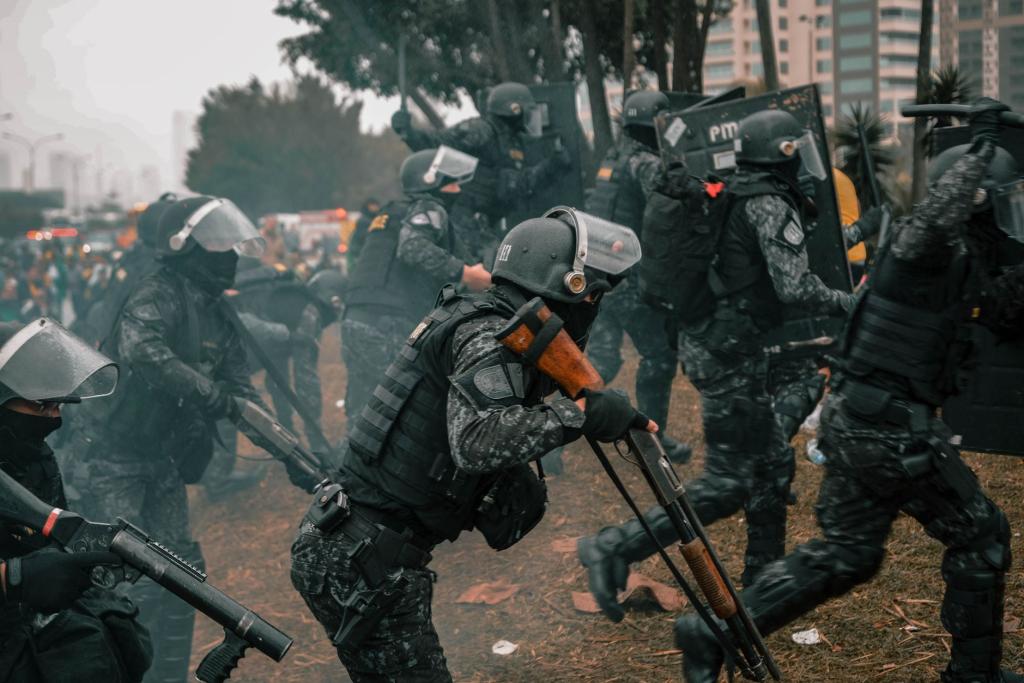
The Albania student protests have turned into the biggest street test of Prime Minister Edi Rama's government in years, and they just hit a third straight day. Thousands of students skipped class on Thursday, marched on the Education Ministry in Tirana and threw rocks at a police line, while riot officers answered with tear gas and water cannon.
This is not a one-off flare-up. It follows a wild Wednesday, when the Education Ministry itself caught fire and the country woke up to burned banks, smashed storefronts and a long list of injuries.
Three Days That Escalated Fast
According to the Guardian, tens of thousands of students took to the streets of the Albanian capital on Wednesday over rising education costs and corruption. Protesters set fire to the Education Ministry building and two banks, including a Raiffeisen Bank branch near the ministry, and hurled stones at police. Officers fired back with water cannon and tear gas.
The Associated Press reported that the riots lasted more than eight hours and damaged at least four government ministry buildings. By Thursday, the Albanian Health Ministry said eighty-nine people were injured in Wednesday's violence, including sixty-one police officers. Albanian police said the unrest led to sixteen more arrests overnight, according to Al Jazeera's reporting.
On Thursday the pattern repeated. According to the Albanian Telegraphic Agency, university and high school students marched from different directions toward Skanderbeg Square before gathering again near the Education Ministry. Stones and paving slabs flew, police used high-pressure water, and detentions began again.
Why Students Are So Angry
Organizers say the core grievances are painfully familiar to anyone who has ever opened a tuition bill: higher education costs, thin financial support, poor conditions at universities and few good jobs waiting after graduation. Students at campuses in Elbasan and Shkoder reportedly joined in on Wednesday too.
Afrim Krasniqi, a researcher at the Institute for Political Studies in Tirana, told Al Jazeera that students protested peacefully for nearly three months, "yet their demands were largely ignored, while the government often responded with discrediting campaigns rather than genuine dialogue." Journalist Arlis Alikaj called the scenes "the boiling point of months of suppressed grievances."
One student who gave only her first name, Lora, told the Guardian's reporters: "This is a revolution. We are tired of peaceful protests. We will not stop until Rama resigns."
The Kushner Resort Backstory
The anger did not start with tuition alone. The wider movement began months ago over plans for a luxury resort along Albania's largely unspoiled southern coast, a project linked to Jared Kushner, the son-in-law of U.S. President Donald Trump. The AP says the movement is nicknamed the flamingo movement, because protesters carry signs showing the pink birds that live in their thousands in a nature reserve on the island where the development is planned.
Rama won a fourth term last May, but he has since faced public anger over corruption allegations involving senior officials. Protesters also reject the opposition as an alternative, which makes this a fight led by young people rather than by a rival party.
Rama Refuses to Budge
Rama, who has been prime minister since two thousand thirteen, told Reuters on Thursday: "As for calls for my resignation, governments change through democratic elections. Last year, we had elections, not a revolution."
The government has condemned the violence. Deputy Prime Minister Albana Koçiu wrote on Facebook that protesting is a legitimate right, but it "cannot be used as an excuse for violence, city destruction or ugly fighting in the middle of the road." President Bajram Begaj also urged calm and said the constitution and the law must be the boundaries for everyone.
The European Union, which Albania hopes to join, voiced concern about what its delegation called a violent escalation. It also noted allegations of excessive police violence against protesters and journalists and called for a prompt investigation.
Is This 2018 All Over Again?
Albania has seen this movie before. In December two thousand eighteen, student protests over education costs forced Rama to dismiss eight ministers and promise a package of reforms called the Pact for the University. Some of the students' demands were never met, according to Al Jazeera.
Sokol Lleshi, a political science lecturer at the University of New York Tirana, doubts the current wave will repeat that result. He told Al Jazeera that real change is more likely to come from a broader coalition than from students alone, and that elite defections from the ruling class could help channel the anger into policy change.
The Tirana unrest also lands in the middle of a larger European student wave. In France, high schoolers have spent weeks blockading schools and demanding more teachers and better buildings. Different countries, same message from a generation tired of being told to wait.
For now, the Albania student protests show no sign of cooling down, with students in several cities boycotting classes and the government refusing to give ground. Watch for whether Rama offers concessions on university costs, whether the arrests spark a backlash of their own, and whether the EU's call for an investigation turns into real pressure. More on this kind of story lives in the youth activism coverage and the politics section.
Comments 0
No comments yet. Be the first to share your thoughts!
Leave a comment
Share your thoughts. Your email will not be published.