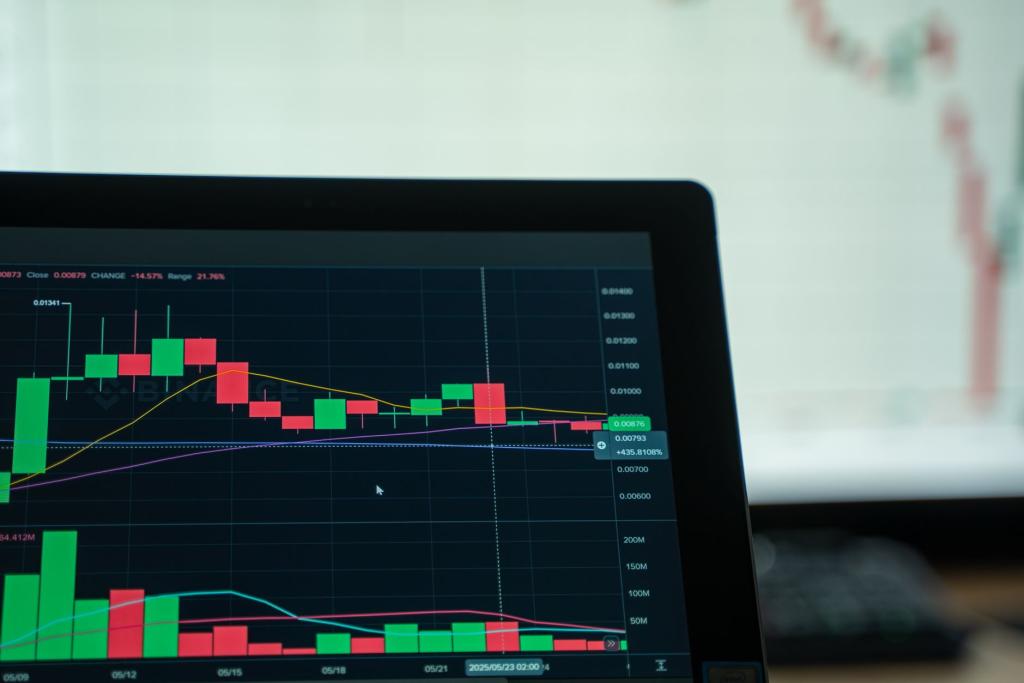
Wall Street was closed, but crypto markets do not sleep, and that is where the weekend's worst damage landed. AI chip stock liquidations flashed across crypto derivatives desks early Sunday as perpetual contracts tracking semiconductor stocks and funds fell sharply, wiping out roughly $51.6 million in the space of ten minutes, according to CoinGlass data relayed by Odaily. The slide struck in a ten-minute window starting at 05:22 UTC, when most equity traders were offline, and the losses fell almost entirely on bullish bets. For traders riding the AI hardware boom into the weekend, the timing added insult to injury: the crash arrived one day before the thirty-ninth anniversary of Black Monday.
Ten minutes, five tickers
The biggest casualty was a product that already carries leverage before any trader adds more: the triple-leveraged Direxion Daily Semiconductor Bull fund, known as SOXL, whose perpetual contracts saw about $12.73 million liquidated. SanDisk contracts followed with roughly $10.85 million in losses, while SK Hynix perps across two tickers shed about $10.72 million. The inverse semiconductor fund SOXS lost around $9.07 million and Micron contracts dropped roughly $4.40 million, Crypto Briefing reported, also citing CoinGlass figures. The broader crypto market was already under pressure, with nearly $352 million in total liquidations over 24 hours, CoinGlass said.
Long positions absorbed roughly $38.1 million of the AI chip stock liquidations, close to three-quarters of the total, while short sellers lost about $13.5 million. Stocktwits reported that more than four thousand traders were liquidated across the chip-linked contracts and that Binance handled more than half of the losses on each one. Tread.fi chief executive DYJ told the outlet that the selling appeared on Binance first before a second wave swept Hyperliquid, though that sequence remains an analyst's reading rather than a confirmed cause. No single catalyst for the sudden drop was named in immediate reports, and the contracts partly recovered after the wipeout.
Bitcoin sits near its danger zone
Bitcoin hovered near $80,862, the line CoinGlass flagged as the long liquidation-risk level, with about $46.39 million in long positions clustered near it, Blockonomi reported. Ether traded just above its own trigger, tied to roughly $25.98 million in longs. The calendar added to the unease: Monday marks the thirty-ninth anniversary of Black Monday, the day when the Dow Jones lost 22.6 percent in a single session in 1987, according to Federal Reserve records cited by Blockonomi. The outlet cautioned that the anniversary is a calendar marker, not evidence that the current setup mirrors the original crash, which played out before bitcoin existed.
Why this kind of leverage stings
Perpetual futures work differently from ordinary stock trades: they carry no expiry date, they track the price of the underlying shares, and they trade around the clock on venues such as Binance and OKX. That setup lets traders keep betting while Wall Street is dark, but a thin Sunday morning order book can turn a dip into a liquidation cascade, with exchanges automatically closing out positions that run out of margin. The weekend's AI chip stock liquidations showed that mechanism running at full speed.
The wipeout also folded one layer of leverage inside another. SOXL already targets triple the daily move of a chip-stock index, so a trader buying its perpetuals on margin is borrowing on top of a product that itself magnifies every swing. When prices slipped, the forced selling fed on itself, with falling prices triggering fresh liquidations and each liquidation pushing prices lower. Funding rates, the payments exchanged between long and short holders, stayed mostly between 0.005 and 0.01 percent through the day, Analytics Insight reported, which suggested no broad shift toward bearish positioning despite the spike in AI chip stock liquidations.
Whether the weekend's damage stays contained will become clear when regular equity trading resumes on Monday. The chip-stock perpetuals will keep trading through the night regardless, and the liquidation clusters sitting near bitcoin's and ether's prices can shift as quickly as the positions behind them. For now, the AI chip stock liquidations stand as a reminder that weekend crypto derivatives can move violently on thin volume, long before traditional markets get a chance to react, and the next round of AI chip stock liquidations may arrive just as quietly.
Sources: Stocktwits and Blockonomi.
Comments 0
No comments yet. Be the first to share your thoughts!
Leave a comment
Share your thoughts. Your email will not be published.