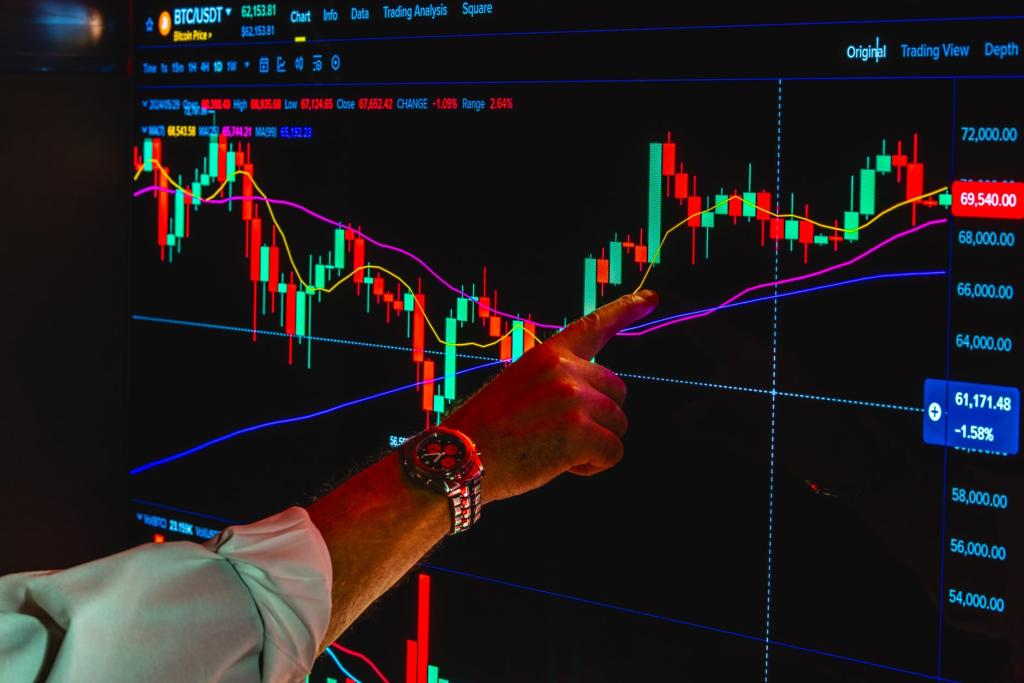
One year ago, the crypto market lived through its worst day ever. Days after bitcoin set a record high above one hundred twenty-six thousand dollars, the price fell from about one hundred twenty-two thousand dollars to under one hundred five thousand in a single session, and more than nineteen billion dollars in leveraged positions were wiped out, according to CoinDesk Research. It was the largest liquidation event in the industry's history. Now, new data published to mark the anniversary show that crypto liquidity has rebuilt for bitcoin and ether — while almost everything else in the market is still losing it.
To understand why that day was so violent, think of an order book like a cushion. Every buy and sell order resting near the current price is a layer of padding that absorbs trades. On the morning of the crash, that cushion was dangerously thin: it was a Friday evening in the United States, when fewer traders are active, and then President Donald Trump announced one hundred percent tariffs on Chinese imports. Prices started falling. That triggered stop-losses and then forced liquidations — exchanges automatically selling off the positions of traders who had borrowed money to bet with. Each forced sale pushed the price lower, which triggered the next wave of forced sales, which pushed it lower again. Thin books plus heavy leverage turned a shock into a cascade. That is the danger when crypto liquidity is thin and leverage is heavy, and it is the single most useful lesson for anyone who trades with borrowed money today.
Bitcoin and ether books are deeper than before the crash
The new research compares order-book depth across major centralized exchanges on four dates: the start of 2025, the crash itself, the start of 2026, and this week. The headline finding is that bitcoin's book now holds about eleven point seven million dollars in orders within one percent of the price — roughly three-quarters deeper than on crash day, up from about nine million dollars at the start of this year and about six point nine million at the start of 2025, as reported by CryptoGazette. That deeper crypto liquidity is real capital, not a price illusion: bitcoin trades about one-third below its October 2025 record, so a bigger dollar book means market makers have genuinely committed more money.
Ether's recovery is arguably stronger. Depth within half a percent of the price has more than doubled since crash day to about four point two million dollars, and at one percent it has risen by about three-quarters to roughly five point three million dollars, above both January readings, according to CoinDesk Research. "The majors' deepening is real capital, not a price effect," said researcher Saksham Diwan. The rebuilt crypto liquidity got an early stress test this week: as the market sold off, bitcoin's one-percent depth fell about twelve percent in a single day, while ether's tightest band thinned slightly. A wobble, in other words — not a repeat of the 2025 evaporation.
Altcoins and spot trading are going the other way
For smaller tokens, the picture is reversed. In CoinDesk Research's altcoin basket, dollar depth was highest at the start of 2025 and has fallen on every reading since: depth five percent from the price is down about a third to around two million dollars, and crypto liquidity at one percent is down about a sixth. Measured in tokens rather than dollars, the altcoin books look healthier — but analysts say that is mostly because falling prices mask a steady erosion of committed capital. Market makers are concentrating their money where the trading is deepest, and that means bitcoin and ether.
Spot trading volume has not recovered either. Weekly volume on centralized exchanges averaged about two hundred seventy-nine billion dollars over the four weeks to late September, nearly two-thirds below the eight hundred one billion dollars traded in the crash week, according to CoinDesk Research. Activity bottomed out in August at roughly one hundred thirty-five billion dollars a week and has roughly doubled since, but the market that has emerged from the wreckage is a quieter one: stronger crypto liquidity in the majors, contracting participation everywhere else.
Crypto liquidity vanished in hours on crash day; here is the divergence one year later. Days before the crash: bitcoin above one hundred twenty-six thousand dollars. Crash morning: a tariff shock lands in thin Friday-evening trade, and forced liquidations cascade into a nineteen-billion-dollar wipeout, the same mechanics behind this week's $608 million flash crash. One year later: bitcoin and ether books are deeper in dollar terms than before the crash, while altcoin depth keeps sliding and spot turnover sits far below crash-week levels. Joshua de Vos, research lead at CoinDesk, put it plainly: capital has rotated into the majors, and he expects the divergence to persist into next year.
What it means for young investors
For Gen Z investors, the takeaway is practical, not theoretical. Deeper books mean your market orders on bitcoin and ether move the price less — you get fairer fills. But depth is concentrated near the price, where market makers quote most actively; further out, bitcoin's five-percent depth is roughly where it was in early 2025. And no amount of rebuilt crypto liquidity removes the real risk: leverage. Deeper books absorb ordinary trading, but they cannot stop a crowded leveraged position from detonating when prices fall fast.
That is the part that has not changed since October 2025. If you trade spot, the crypto liquidity picture is better than it was a year ago, especially in the majors. If you trade with leverage, you are still standing in the same machinery that produced the largest liquidation in crypto history. Altcoins carry an extra warning: thinner dollar depth means a large sell order moves the price more today than it did two years ago, raising the cost of getting in and out of exactly the tokens that tend to attract young buyers. Read more in GenZ NewZ's crypto coverage and see how younger buyers are approaching the market in our report on crypto's rise in buying plans.
Comments 0
No comments yet. Be the first to share your thoughts!
Leave a comment
Share your thoughts. Your email will not be published.