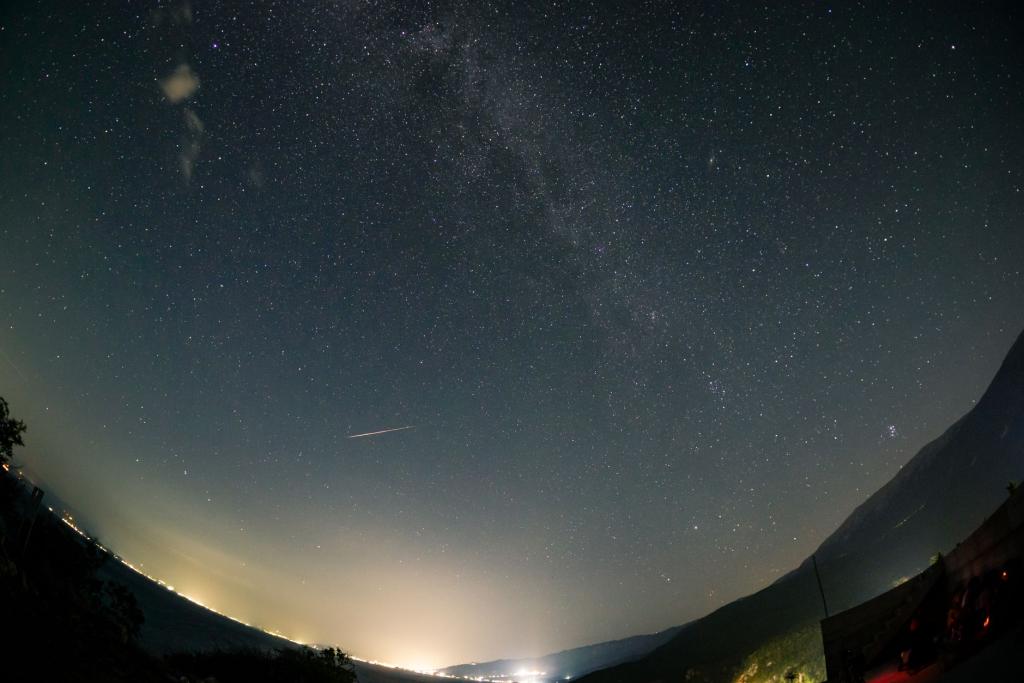
Most meteor showers run on an annual schedule you can set a calendar by. The Carinids ignore it. Between October 12 and 16, a worldwide network of low-light video cameras picked up a sudden Carinid meteor outburst from this obscure southern shower, and some of the meteors were bright enough to catch with the naked eye. According to a report from the SETI Institute, the outburst was still in progress when the notice was filed, the peak came on the 15th, and cameras logged a rate of roughly ten meteors an hour the next day. The notice went out as Electronic Telegram No. 5758, issued through the Central Bureau for Astronomical Telegrams. For a shower that stays silent most years, that counts as a loud return.
The flare was caught by CAMS, the Cameras for Allsky Meteor Surveillance network, a NASA-sponsored system of low-light video cameras that maps meteor showers night after night. The stations that recorded this Carinid meteor outburst sit in South Africa, New Zealand, Namibia, Australia and Chile, which is no accident: with the radiant parked near the south celestial pole, the southern hemisphere had the only real view. Each camera measures a meteor's path, height and slowdown as it burns through the atmosphere, building the orbital record that lets scientists trace a streak of light back to its source.
The Carinids are dust shed by a Jupiter-family comet, but unlike the Perseids or the Geminids they spend most years invisible. The shower was first described in 2018 by SETI Institute scientist Peter Jenniskens, working from southern-hemisphere camera data. A study in the International Meteor Organization's journal found that the Global Meteor Network counted 171 of its meteors in mid-October last year, after catching only a handful across the two years before that. The pattern is episodic: the Carinid meteor outburst flares, goes quiet, then flares again.
The flares follow a rhythm of about six years. Activity surged in 2014 and again across 2019 and 2020, and researchers say this month's Carinid meteor outburst keeps that timing. The likely reason involves Jupiter: the dust appears trapped in a resonant filament, a stream of meteoroids in a two-to-one resonance with the giant planet's orbit, which brings the grains back around on that schedule.
Why the southern sky gets the show
The meteors appear to stream from a point deep in the southern sky, at a declination of minus 55.4 degrees, not far from the south celestial pole. That geometry decided who witnessed the event: from northern latitudes the radiant stays low or below the horizon, so most of the action never climbs into view. Southern-hemisphere skywatchers hold the tickets here, and the camera record backs that up.
The meteors are on the quick side, striking the atmosphere at about 31.5 kilometres a second, which means brief, bright streaks. The slow, lingering fireballs are the Taurids' signature instead. Viewing advice is the standard kind: find the darkest spot available, let your eyes adjust to the dark, and scan a wide stretch of sky instead of staring at a single point.
What else October's sky has lined up
This Carinid meteor outburst is only the warm-up. The Orionids, debris from Halley's Comet, reach their peak on the nights of October 21 and 22, and NASA's skywatching guidance names this stretch as the window to watch, with as many as twenty meteors an hour possible under ideal conditions, according to Scientific American. The month's earlier Draconid shower peaked around October 8, so this Carinid meteor outburst arrives while October is already stacking displays back to back. After the Orionids, the Taurids take over: the so-called Halloween fireballs overlap through late October and November, dealing out a few slow, bright meteors an hour at best.
The timing is what makes this week unusual: a sleeper shower waking up out of schedule, days ahead of October's most dependable display. The cameras keep recording every night, and if this Carinid meteor outburst keeps firing, the networks will catch it. Anyone with a dark sky and some patience can watch the rest unfold overhead.
Comments 0
No comments yet. Be the first to share your thoughts!
Leave a comment
Share your thoughts. Your email will not be published.