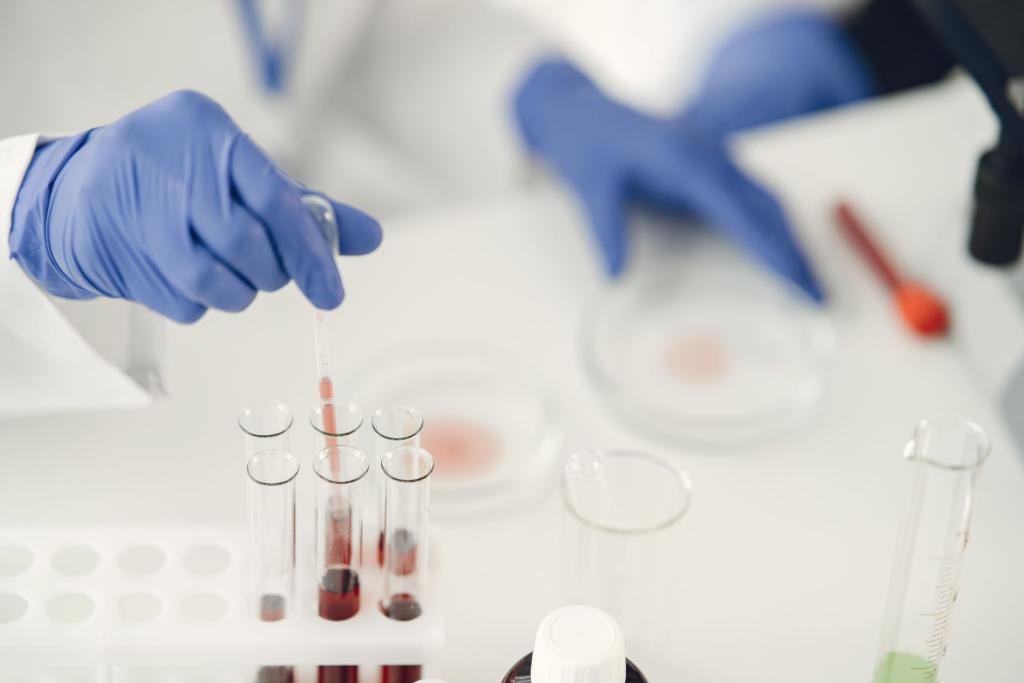
Imagine a routine blood draw in your twenties or thirties that could tell you whether you carry a hidden risk of lung cancer — a full decade before any scan or symptom would. That future just moved closer. Researchers at the University of Hawaiʻi have discovered 31 tiny genetic markers in blood that signal lung cancer risk up to a decade before diagnosis, according to the university's announcement, reported by the University of Hawaiʻi in late September 2026.
Lung cancer remains one of the deadliest cancers precisely because it is usually found late. By the time most people notice symptoms, the disease has already spread, and survival drops sharply. Current screening relies on low-dose CT scans offered mainly to older heavy smokers — a strategy that misses most people who will develop the disease, including former smokers and people exposed decades ago. A blood test that flags risk years earlier could change who gets watched and who gets screened.
How the lung cancer blood test works
The study focused on a class of molecules called small noncoding RNAs — short fragments of genetic material that circulate in blood inside tiny packages known as exosomes. Working with blood samples collected years before anyone fell ill, the Hawaiʻi team identified the marker signature: fifteen microRNAs, eight PIWI-interacting RNAs, seven tRNA-derived fragments, and one tRNA half. Together, they form a molecular fingerprint of future disease.
The numbers behind the signature are striking. A computer model trained on the markers reached 95 percent overall accuracy in held-out testing. Sensitivity ran to 93 percent with perfect specificity in the test set — and an accuracy rating that beat nearly every comparable research model, according to the university's medical school. The signal stayed strong even after the researchers adjusted for age, sex, ethnicity, and smoking history, suggesting the blood markers capture risk information that doctors' usual risk factors simply miss.
Perhaps most surprising was how early the signal appeared. The association remained detectable from five years out to ten years before clinical diagnosis, the researchers reported — long before a tumor would be visible on a scan. The study drew on the Multiethnic Cohort, a long-running Hawaiʻi-based health study that includes Native Hawaiian, European American, and Japanese American participants, and the research team says it is now pursuing patent protection for the marker panel.
Why early detection matters — and what's still missing
To understand the advance, compare it with how doctors currently estimate risk. Traditional risk models that combine factors like age and smoking history achieve accuracy ratings of roughly 0.73 to 0.80 — useful, but far from the 0.97 the new blood-based model reached. In the study's analysis, the RNA-derived risk score carried odds of about 13 to 1 for later lung cancer, versus roughly 3 to 1 for heavy smoking alone — and once the blood score entered the model, none of the conventional predictors, including smoking itself, remained statistically significant. "A central question in this study was whether a molecular signal of future lung cancer could already be present in blood many years before diagnosis," said Zhuokun Feng, the study's first author.
Senior author Youping Deng framed the goal more broadly: "Our goal was not simply to distinguish patients with established lung cancer from cancer-free individuals, but to identify molecular signals that may indicate high lung cancer risk years before clinical diagnosis," he said in the university's announcement. That distinction matters. Most cancer blood tests aim to detect existing tumors; this one aims to measure risk — a different and arguably harder problem, because it means acting on a probability rather than a diagnosis.
There are real caveats, and the researchers state them plainly. Everyone in the study had some history of smoking, so the findings may not translate to people who never smoked — a growing share of lung cancer cases. The team also flags the study population's particular mix as a limitation for generalizing to other groups. Larger, more diverse studies will be needed before any clinic could offer this as a test, and a decade of lead time raises hard questions: what should a person actually do with a high-risk blood result at age thirty, and would insurers or screening programs pay for the follow-up?
Still, the direction of travel is clear. Liquid biopsy — reading disease signals from a simple blood draw — is one of the fastest-moving frontiers in cancer research, and a validated lung cancer blood test could slot into a new model of preventive care: flag the highest-risk people years out, watch them closely, and catch tumors at a stage where treatment actually cures. For a generation that grew up being told to catch everything early, that future may arrive in the form of a vial of blood. Sources for this article include the University of Hawaiʻi System News, the John A. Burns School of Medicine, MedicalXpress, and the peer-reviewed paper in Advanced Science.
Related: GenZ NewZ recently covered a new ADHD study that questions the brain-scan theory of attention; see also our Health topic page for more medical research coverage.
Comments 0
No comments yet. Be the first to share your thoughts!
Leave a comment
Share your thoughts. Your email will not be published.