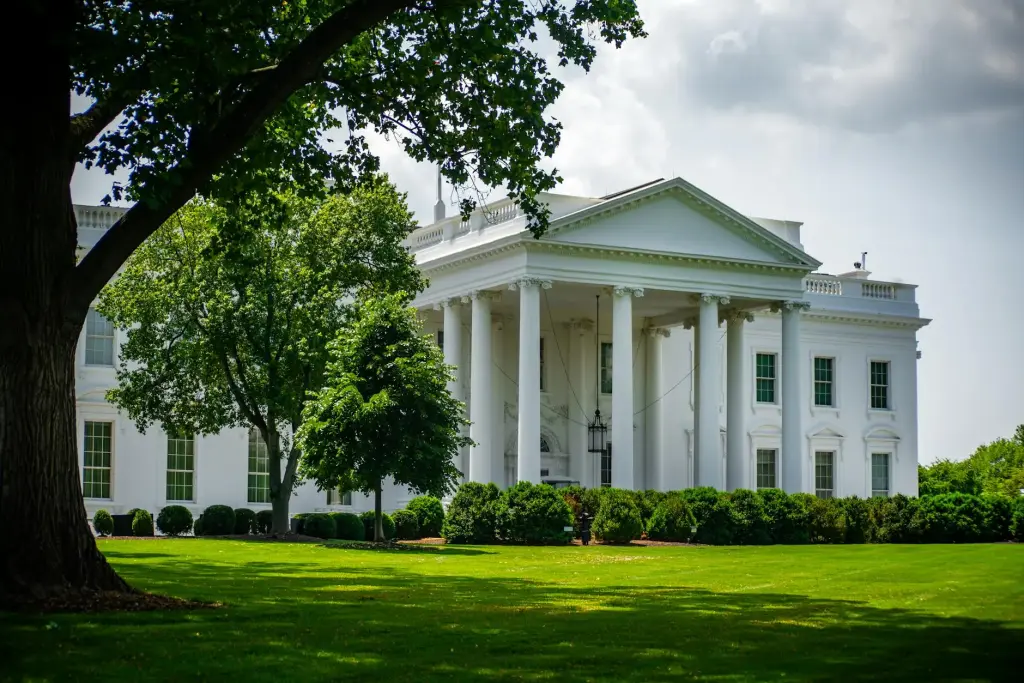
The Trump administration has announced sweeping new tariffs on imports from Canada and Mexico, imposing 25% duties on goods from both countries effective March 4. The Trump tariffs mark a dramatic escalation in U.S. trade policy that has sent shockwaves through financial markets and drawn immediate threats of retaliation from America's closest neighbors.
"We're going to put 25% tariffs on Canada and Mexico," Trump declared during a press conference at the White House. "They've been taking advantage of us for years. Those days are over. We're going to bring jobs back to America."
Markets React Sharply
Financial markets responded immediately to the announcement, with the Dow Jones Industrial Average plunging over 400 points in afternoon trading. The S&P 500 and Nasdaq Composite also fell sharply as investors grappled with the potential for a broader trade war and its impact on economic growth.
Automotive stocks were particularly hard hit, with major manufacturers seeing share prices decline between 3% and 6%. The highly integrated North American auto industry relies heavily on cross-border supply chains, and the new tariffs threaten to disrupt production and increase vehicle costs for American consumers.
"This is exactly what markets feared," said Mark Wilson, chief economist at Capital Economics. "These aren't targeted tariffs on specific products—they're broad-based measures that will raise prices across the board and invite retaliation."
Canada and Mexico Respond
Canadian Prime Minister Justin Trudeau condemned the decision, calling it "unjustified and deeply concerning." In a hastily arranged press conference in Ottawa, Trudeau announced that Canada would impose immediate retaliatory measures if the tariffs proceed as planned.
"We will not stand idly by while our closest ally and trading partner imposes unfair penalties on Canadian workers and businesses," Trudeau stated. "We will defend our national interests with measured but firm countermeasures."
Mexican President Claudia Sheinbaum was equally defiant, declaring that Mexico would "respond with strength and determination." Sheinbaum indicated that Mexican officials are preparing retaliatory tariffs targeting politically sensitive American exports, including agricultural products from key Republican states.
Economic Impact Concerns
Economists warn that the Trump tariffs could have far-reaching consequences for American consumers and businesses. Canada and Mexico are the United States' largest trading partners, with combined annual trade exceeding $1.4 trillion. The 25% duties would apply to a vast range of products including automobiles, agricultural goods, energy products, and manufactured items.
The Peterson Institute for International Economics estimates that the tariffs could cost the average American household between $1,200 and $1,800 annually through higher prices. Energy costs could rise significantly, as Canada supplies approximately 60% of U.S. crude oil imports.
"These tariffs function as a tax on American consumers," explained Mary Lovely, senior fellow at the Peterson Institute. "The costs will be passed through supply chains and ultimately paid by households at the gas pump, grocery store, and car dealership."
Justification and Criticism
The Trump administration has justified the tariffs by citing concerns over illegal immigration and drug trafficking across the northern and southern borders. Administration officials argue that economic pressure is necessary to compel Canada and Mexico to strengthen border enforcement.
However, trade experts and foreign policy analysts have questioned this rationale, noting that tariffs are a blunt instrument ill-suited to addressing complex border security issues. The Canadian government has emphasized that illegal border crossings from Canada into the United States are minimal compared to other sources.
Critics also point out that the tariffs appear to violate the United States-Mexico-Canada Agreement (USMCA), which Trump himself negotiated during his first term. The trade pact, which replaced NAFTA in 2020, was designed to facilitate tariff-free trade across North America.
Industry Reactions
American business groups have expressed alarm at the announcement. The U.S. Chamber of Commerce issued a statement warning that "these tariffs will harm American businesses, workers, and consumers while doing nothing to address legitimate border security concerns."
The American Automotive Policy Council, representing Detroit's Big Three automakers, highlighted the potential for production disruptions. Modern vehicles typically cross North American borders multiple times during assembly, meaning a 25% tariff could be applied repeatedly to the same vehicle.
Agricultural groups also voiced concerns, noting that farmers in the Midwest could face retaliatory tariffs on corn, soybeans, and pork exports to Mexico—a market worth billions of dollars annually. Previous trade disputes have shown that American farmers often bear the brunt of retaliatory measures.
Political Implications
The tariff announcement has triggered fierce debate in Washington, with Democrats universally condemning the move and Republicans divided. Some Republican senators from agricultural states have privately expressed concern while publicly supporting the President's authority on trade matters.
Senate Minority Leader Chuck Schumer called the tariffs "reckless economic warfare against our allies" and vowed that Democrats would explore legislative options to block their implementation. However, presidential authority on trade matters is broad, and overturning the tariffs would likely require bipartisan legislation.
Global Trade Concerns
International observers worry that the tariffs could trigger a broader retreat from free trade principles. The World Trade Organization has already been weakened by previous U.S. actions, and unilateral tariff increases threaten to further undermine the global trading system.
European Union officials have expressed concern that similar tariffs could be imposed on European goods, escalating trade tensions with traditional allies. China, meanwhile, may see the tariffs as an opportunity to strengthen economic ties with Canada and Mexico at American expense.
"This sends a troubling signal to the world," said former U.S. Trade Representative Carla Hills. "When the United States doesn't honor its trade agreements, why should other countries trust us in future negotiations?"
What Comes Next
With the tariffs set to take effect in less than a week, intense diplomatic efforts are underway to avert their implementation. Canadian and Mexican officials have requested emergency meetings with their American counterparts, though the administration has indicated limited flexibility.
Legal challenges are also likely, with business groups exploring whether the tariffs exceed presidential authority under existing trade laws. Previous Trump administration tariffs faced lengthy court battles, though courts have generally been deferential to presidential claims of national security justification.
For American consumers, the immediate future likely holds higher prices on a wide range of goods. Economists estimate that the tariffs could reduce U.S. GDP growth by 0.3 to 0.5 percentage points while adding upward pressure to inflation—precisely the outcome the Federal Reserve has been working to avoid.
As markets continue to process the implications and trading partners prepare their responses, one thing is clear: the era of predictable North American trade relations has been thrown into uncertainty, with profound implications for businesses and consumers across the continent.
Comments 0
No comments yet. Be the first to share your thoughts!
Leave a comment
Share your thoughts. Your email will not be published.